Judo
Judo
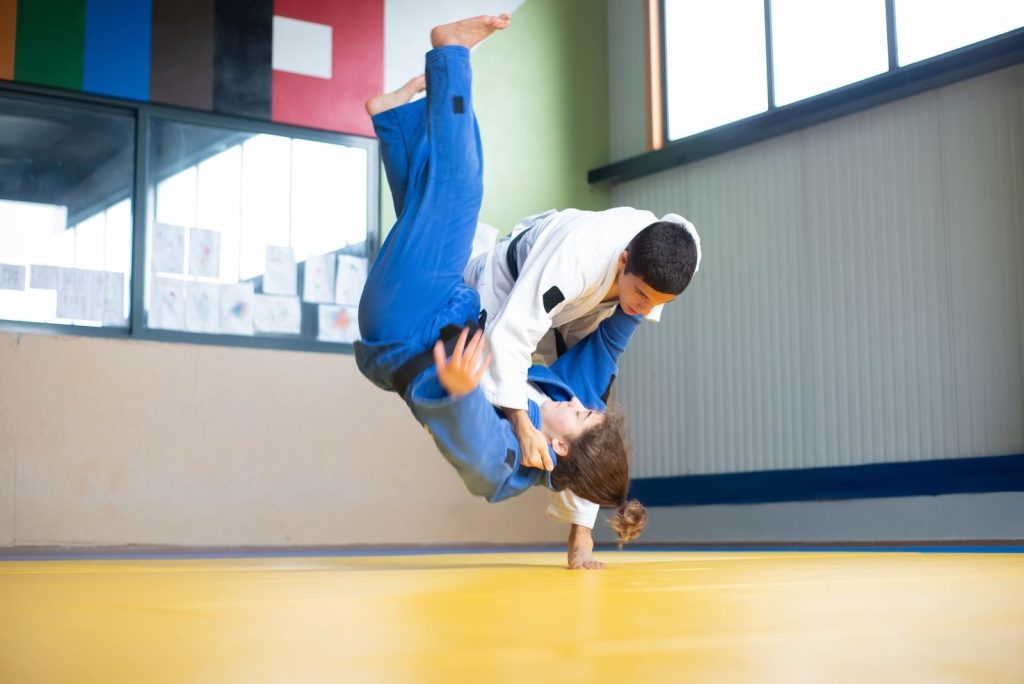
Image: Kampus Production / Pexels · Pexels License
Overview
A modern budō built as a learning system.
Judo connects safe falling, throws, groundwork, free practice, formal study, and ethical principles. Its sporting rules are important—but they are one layer of a wider educational project created by Jigoro Kano in 1882.
Create a direction in which stable resistance becomes difficult.
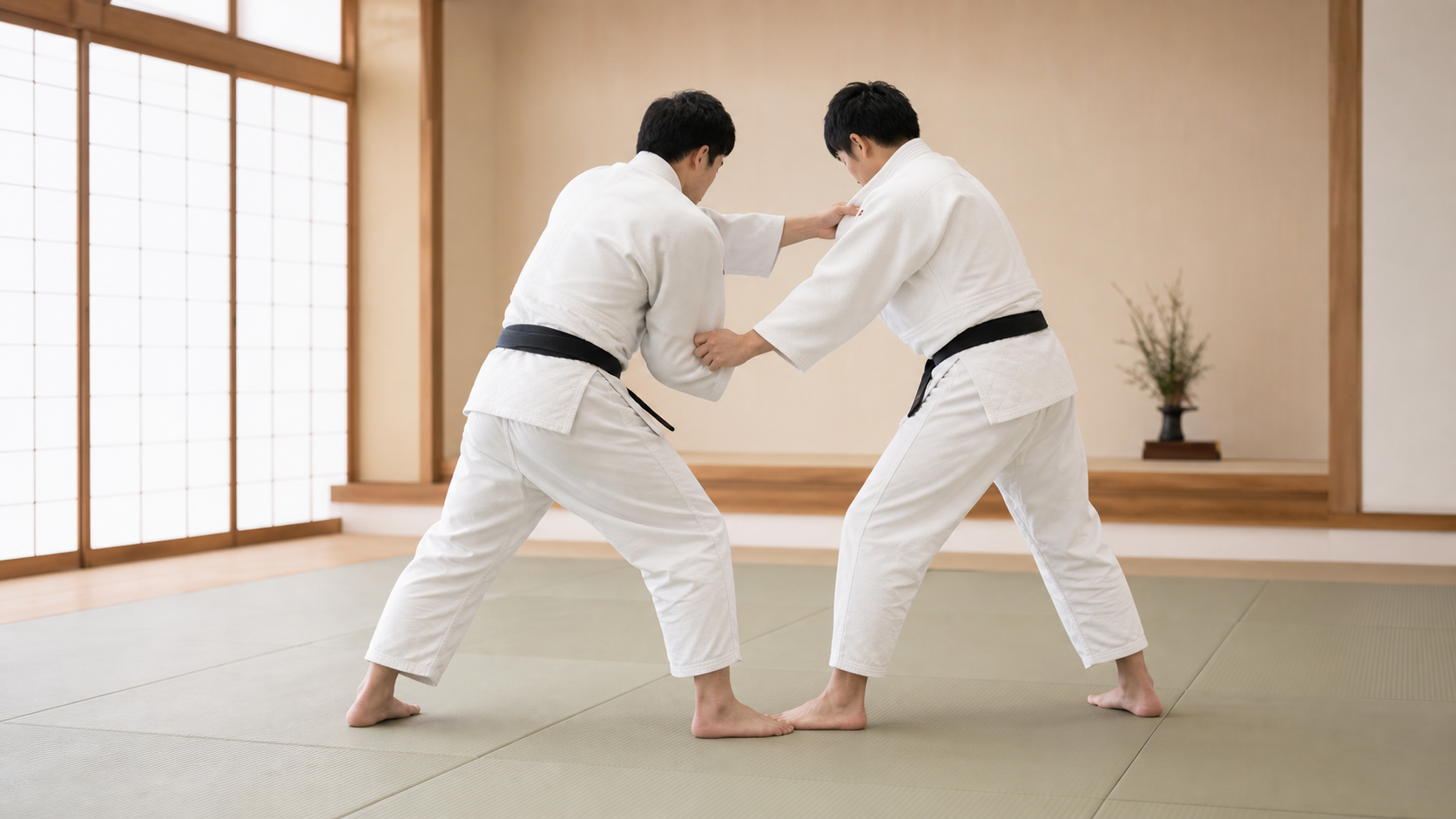
Place posture, feet, hips, and contact for the intended action.
Complete the throw with timing and control—not force alone.
- Japanese
- 柔道
“Gentle way” - Founded
- 1882
Kodokan, Tokyo - Founder
- Jigoro Kano
- Classical study
- Tenjin Shin’yō-ryū and Kitō-ryū jujutsu
- Practice
- Ukemi, kata, randori, throws, and groundwork
- Olympic programme
- Men since 1964
Women since 1992
01Origins
A selective reorganisation of jujutsu—not a clean break from it.
Kano studied older systems, retained methods that could support repeated training, and organised them around education, technical inquiry, and mutual development.
- Before 1882
Classical study
Kano trained in jujutsu, especially Tenjin Shin’yō-ryū and Kitō-ryū. Their approaches to control, throwing, and principle informed his later synthesis.
- 1882
The Kodokan
The first Kodokan dōjō opened in Tokyo. Early members included Saigō Shirō and Sakujirō Yokoyama.
- Early growth
Practice tested the system
Encounters with specialists such as Mataemon Tanabe tested Kodokan groundwork, while teachers including Kyūzō Mifune refined its pedagogy.
- Global era
Education, institutions, and sport
Judo travelled through schools, police training, universities, demonstrations, and competition. It entered the Olympic programme at Tokyo 1964; women’s Judo joined in 1992.
02Technique lens
Similar finishes can hide different mechanics.
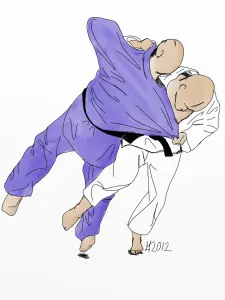
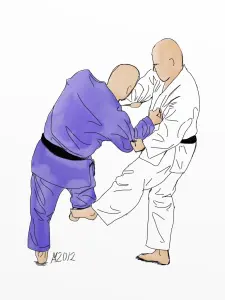
Uki-goshi makes a useful case study: classify the throw by how balance is broken, how the body enters, and what contact completes the action.
Uki-goshi
The partner turns around a lightly placed hip. Timing, posture, and rotation matter more than a high lift.
O-goshi
The hip enters more deeply and provides a stronger lifting platform.
Harai-goshi
Turning action is joined to a sweeping leg, changing the principal mechanism.
Study rule: identify the action that produces the throw—not merely the pose seen at the end.
03Technical structure
Two everyday families, plus methods preserved in kata.
The categories describe how a technique works. Rules determine which methods may be used in a particular training or contest setting.
Nage-waza
Hand, hip, foot and leg, and sacrifice techniques for bringing a partner to the mat.
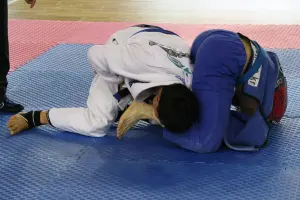
Katame-waza
Pins, strangles, and joint locks, practised within age-, level-, and ruleset-specific safety limits.
Atemi-waza
Striking methods appear in some kata but not in ordinary randori or modern competition.
Explore the structured vocabulary in Judo Techniques, Judo Technique Directory, and Gokyō no Waza.
04Learning engine
Safety enables repetition; repetition makes inquiry possible.
Judo alternates preparation, repeated entry, formal study, and adaptive practice. The parts reinforce one another.
Ukemi
Receive falls safely and protect the head and body.
Uchikomi
Repeat entries and positioning without completing every throw.
Kata
Study posture, distance, direction, and purpose in set form.
Randori
Test timing and decisions with a responsive partner.
Judoka and educator Kenji Tomiki later extended the educational relationship between kata and randori into his development of a competitive Aikido method.
05Guiding ideas
Technique and conduct belong to one educational design.
The principles are not slogans added after practice; they frame how energy, partnership, and responsibility are understood.
Seiryoku Zenyo
Use energy effectively: seek timing, judgement, and purpose rather than waste.
Jita Kyoei
Mutual welfare and benefit: partners improve by protecting and challenging one another.
Rei
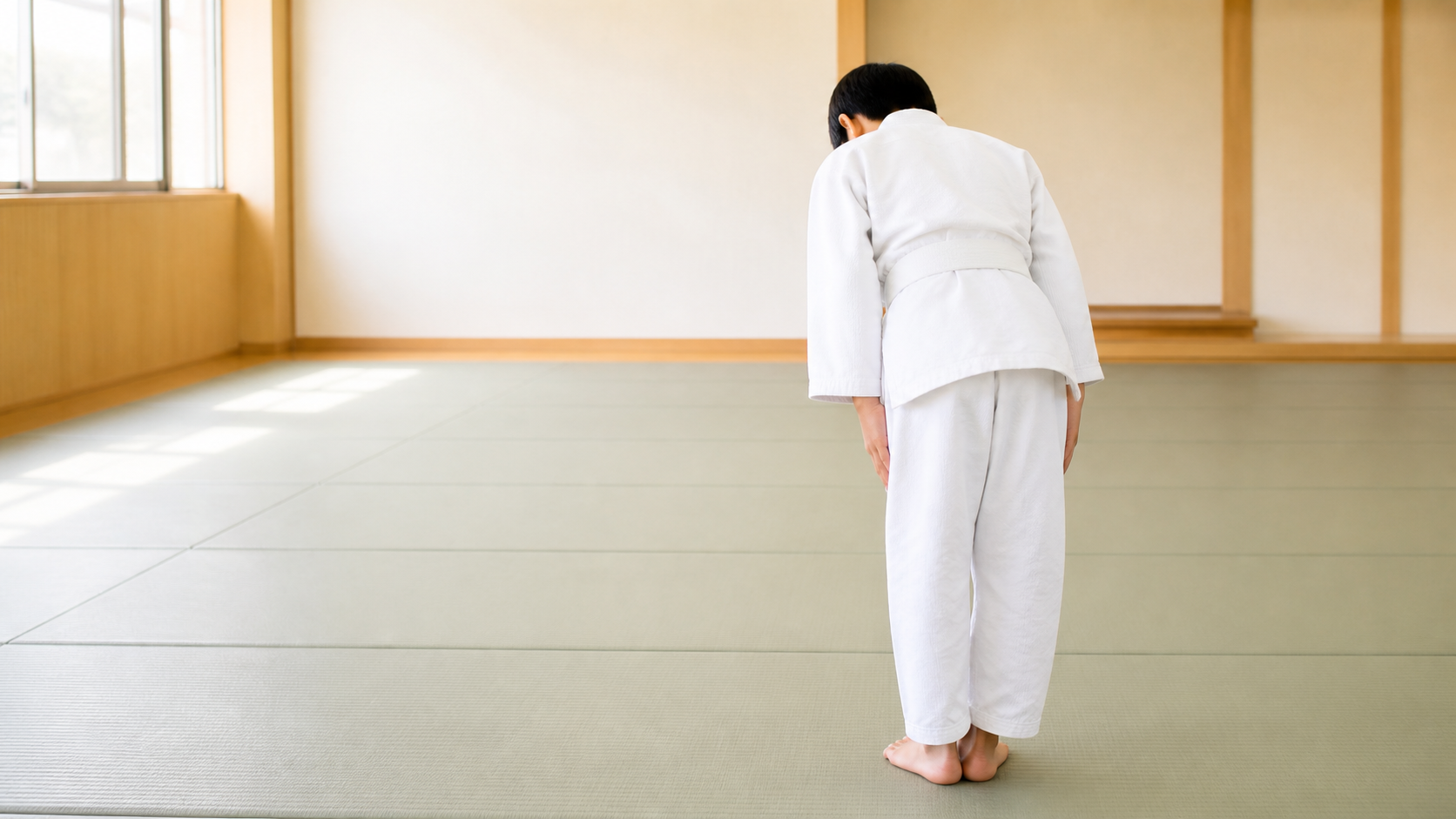
Respect appears through bowing, attentive practice, safe conduct, and gratitude to partners.
06Institutions & world
One art, several public settings.
Dōjō, schools, universities, police institutions, international federations, and the Olympic movement have each shaped how Judo is practised and seen.
Scores and rules
Ippon marks a decisive score; waza-ari recognises a near-decisive action, and shido penalises prohibited or passive conduct. Rules change over time, so current competition questions require a current ruleset.
Nippon Budokan hosted Olympic Judo in 1964 and again for Tokyo 2020. See also Judo at the Asian Games.
Travel and exchange
Mitsuyo Maeda carried Kodokan practice through international demonstrations and contests. Judo also interacted with university groundwork, Brazilian Jiu-Jitsu, Sambo, and later composite systems such as Yoseikan Budō.
Police training, including the Keishicho martial-arts system, remains another institutional setting.
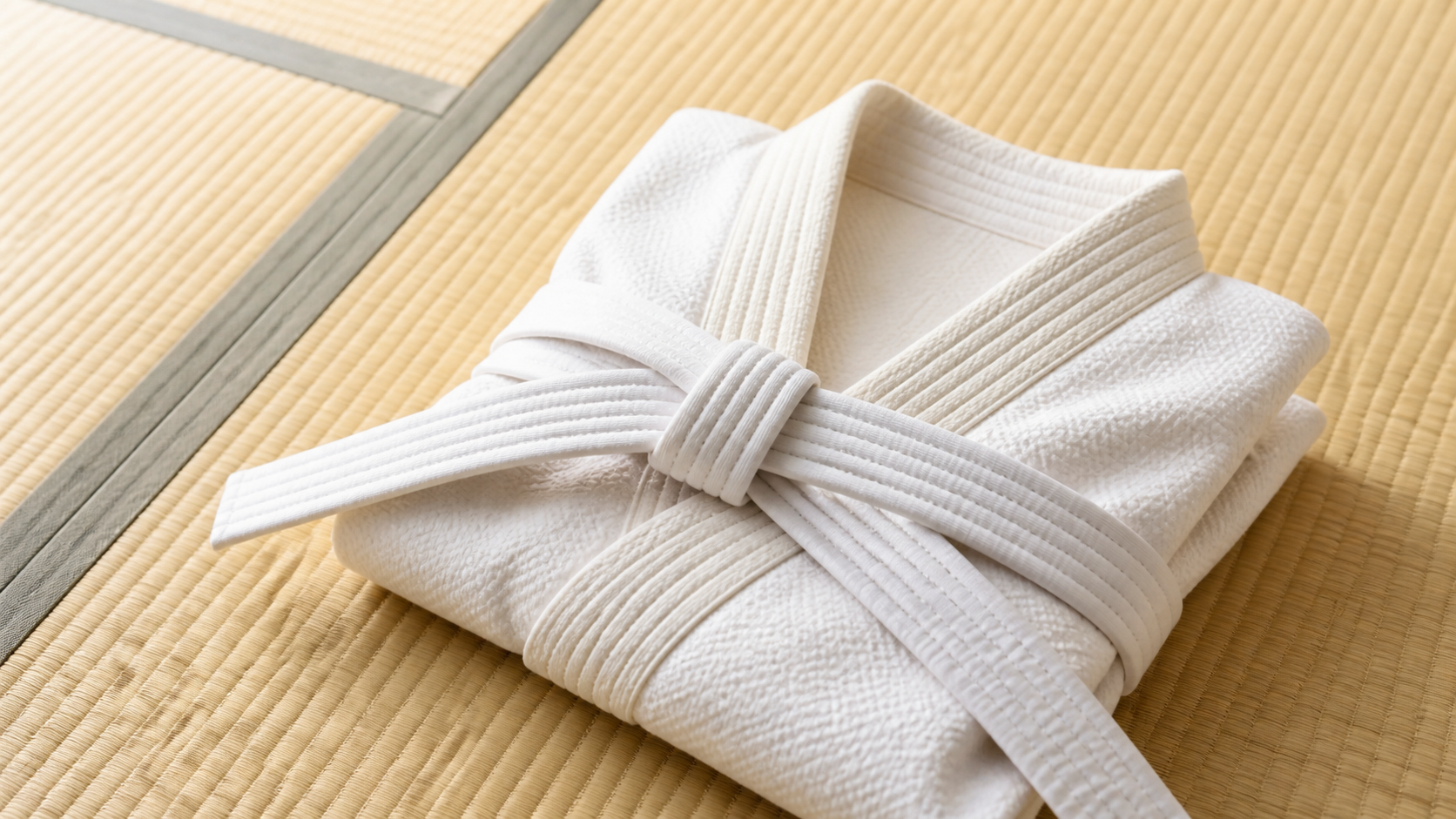
Judo uses kyū and dan grades, but colour sequences vary between countries and organisations. The Dai Nippon Butoku Kai adopted dan grading for Judo and helped spread common rank structures across modern budō. See Judo Belt Ranks.
The Kodokan Judo Institute remains a centre for teaching, history, and international exchange. Check its current guidance before planning a visit.
07Study method
Name a technique from its mechanics.
Record the official name and romanisation, technique family and subdivision, roles of tori and uke, direction of off-balancing, principal contact, and completing action.
- 1Locate the category.
Is it nage-waza or katame-waza, and which subdivision applies?
- 2Follow the mechanism.
Identify balance direction, entry, contact, and the action that completes control.
- 3Check the reference.
Compare the observation with the Kodokan definitions of Judo techniques.
For broader vocabulary, use Judo Terminology, Kuzushi / Tsukuri / Kake, Ne-waza, Sutemi-waza, Kaeshi-waza, Renraku-waza, and Kumi-kata.
Sources and further reading
Last updated: