Judo
Nage-waza
Judo › Nage-waza
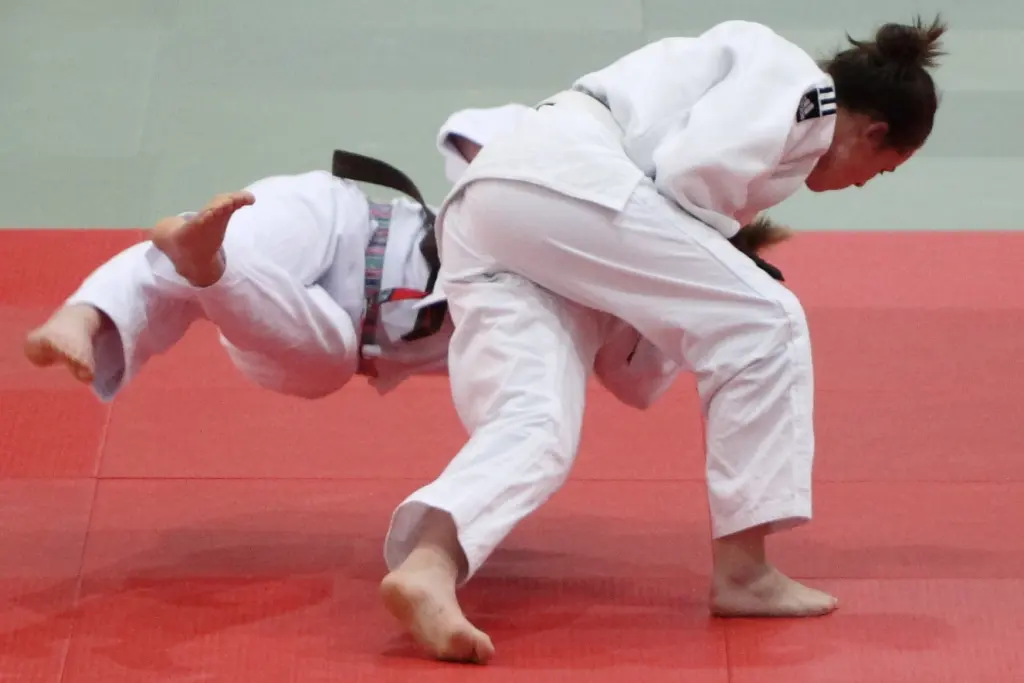
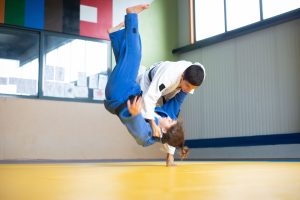
Image: Schnuffel2002 / Wikimedia Commons · CC BY-SA 3.0
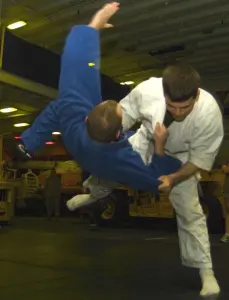
Nage-waza, written 投技, are the throwing techniques in the Kodokan Judo curriculum. The Kodokan and International Judo Federation recognise 68 named nage-waza. They are organised first into tachi-waza, techniques performed while the thrower principally remains standing, and sutemi-waza, techniques in which the thrower deliberately sacrifices standing position. Tachi-waza are further grouped as hand, hip, and foot or leg techniques; sutemi-waza are divided into rear and side sacrifice techniques. Classification identifies the principal mechanism used by the standard form, not every body part involved in a live throw. Effective nage-waza join balance, positioning, and application, and they are studied through repetition, kata, randori, and contest.
Overview
| Japanese | 投技 |
|---|---|
| Meaning | Throwing techniques |
| Kodokan total | 68 recognised techniques |
| Primary divisions | Tachi-waza and sutemi-waza |
| Study methods | Uchikomi, nagekomi, kata, randori, shiai |
Place in Judo
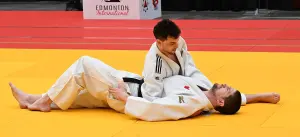
Nage-waza form one of Judo’s three broad technical groups, alongside katame-waza and atemi-waza. Throwing is especially prominent in contest because a sufficiently controlled throw with the required qualities can score ippon.
The classified curriculum is broader than the techniques most often seen in a particular rules period. A named throw can remain part of Judo study even when its contest application is restricted.
Tachi-waza
Tachi-waza are standing techniques. Their three classes are te-waza (hand techniques), koshi-waza (hip techniques), and ashi-waza (foot and leg techniques). The label indicates the principal action in the Kodokan model.
Examples include seoi-nage among hand techniques, harai-goshi among hip techniques, and ō-soto-gari among foot and leg techniques.
Sutemi-waza
Sutemi-waza are sacrifice techniques in which the thrower uses a deliberate fall as part of the throwing action. Ma-sutemi-waza use a principally rearward sacrifice, while yoko-sutemi-waza use a sideward sacrifice.
The word sacrifice refers to giving up standing position, not to abandoning control or safety. Correct direction, contact, and timing remain necessary.
Kuzushi, tsukuri, and kake
Throwing instruction often uses the sequence kuzushi, tsukuri, and kake. These terms describe the management of balance, positioning for the technique, and application or completion.
They provide a diagnostic framework rather than three isolated movements. In effective practice, the opponent’s reaction and the thrower’s entry connect the phases continuously.
Gokyo and classification
The Gokyō-no-waza, or five groups of techniques, is a historical teaching arrangement associated with the Kodokan. It should be distinguished from the complete current list organised by biomechanical family.
Kodokan classifications have changed as techniques were added, restored, or formally recognised. The current official list is therefore the appropriate reference for the number and spelling of recognised nage-waza.
Practice methods
Uchikomi develops repeated entries, and nagekomi adds completion of the throw. Kata studies organised principles, while randori requires selection and adaptation against a resisting partner.
Ukemi is inseparable from throwing practice. Progressive instruction, suitable mats, and qualified supervision allow both partners to study force and control safely.
Contest and safety
Contest scoring considers factors including control, impact, speed, and the part of the body that reaches the mat. Exact criteria and prohibited actions are defined by the current rules of the governing body.
A technique’s traditional name does not make every possible entry legal. Rule revisions can restrict grips, leg contact, landing actions, or transitions while leaving the technique in the wider curriculum.
Sources
Last updated: