Martial Arts Figures
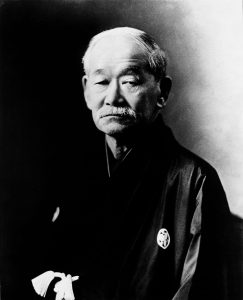
Sakujirō Yokoyama

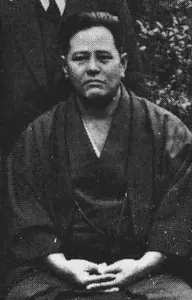
Image: Unknown photographer / Wikimedia Commons · Public domain
Sakujirō Yokoyama (1864–1912) was an early Kodokan judoka, instructor, and writer who helped establish Judo as a teachable modern discipline. Remembered as one of the Kodokan Shitennō, or “Four Guardians,” he belonged to the generation whose public contests and instruction strengthened the young school’s reputation. Yokoyama also contributed to the classification of throwing techniques and co-authored Jūdō Kyōhan, a systematic manual covering the purposes and methods of judo. His importance therefore extends beyond stories about exceptional strength: surviving institutional and bibliographic records show a teacher involved in curriculum, technical transmission, and print culture. Among his students was Kyūzō Mifune, who later became one of the Kodokan’s most influential technicians.
Overview
| Japanese name | 横山 作次郎 |
|---|---|
| Born | 1864 |
| Died | 1912 |
| Occupation | Judoka, instructor, and author |
| Rank | Kodokan 8th dan (1912) |
| Known for | Kodokan Shitennō; judo curriculum and teaching |
| Notable work | Jūdō Kyōhan, co-authored with Eisuke Oshima |
Early Kodokan career
Yokoyama joined the Kodokan during the formative decades of modern judo. The school founded by Jigoro Kano was then defining its curriculum, training culture, and public identity while meeting practitioners from older jujutsu traditions.
Kodokan records group Yokoyama with Tsunejirō Tomita, Yoshitsugu Yamashita, and Saigō Shirō as the Kodokan Shitennō. The title reflects their role in the institution’s early reputation; it should not be read as a formal rank or a complete list of everyone who shaped early judo.
Contests and reputation
Accounts of the Kodokan’s rise frequently connect the Four Guardians with inter-school contests involving police and jujutsu practitioners in the 1880s. These encounters helped make technical performance a public test of the new institution, although later retellings often compress several events into a single decisive tournament.
Yokoyama acquired the popular epithet “Demon Yokoyama” in later judo literature. It conveys his reputation for power and severe practice, but colourful challenge stories should be separated from the better-documented record of teaching, ranking, and publication.
Curriculum development
Yokoyama participated in the technical work that made early Kodokan judo easier to organize and teach. Research on the history of the Gokyō-no-waza, the graded grouping of throwing techniques, identifies him among the experienced instructors involved in the 1895 classification together with figures including Yamashita and Shūichi Nagaoka.
This contribution matters because judo did not emerge as a finished syllabus in 1882. Its teaching order, names, and official groupings were revised through consultation and practice over several decades.
Jūdō Kyōhan
Yokoyama and Eisuke Oshima co-authored Jūdō Kyōhan (“Judo Textbook”). Digitized editions held by the National Diet Library present judo through explanation and classification rather than through biography alone, treating purpose, posture, throwing, groundwork, and other areas of practice.
The book is evidence of a broader shift from knowledge transmitted mainly inside a dojo toward instruction that could circulate in print. It also provides a primary source for how senior practitioners described judo in the early twentieth century.
Teacher of Kyūzō Mifune
Yokoyama taught Kyūzō Mifune after the younger judoka entered the Kodokan in 1903. Kuji City’s local history records that Mifune trained under Yokoyama and received advanced recognition from him in 1906.
Mifune’s later reputation for timing, balance, and inventive technique should not be projected backward as a copy of his teacher’s style. Their documented relationship nevertheless connects the Kodokan’s founding generation with a major twentieth-century interpreter of its technical system.
Rank and final years
Yokoyama remained associated with Kodokan instruction and was promoted to 8th dan in 1912. Historical research identifies him as the first Kodokan judoka to receive that rank. He died later the same year.
Because his career ended comparatively early, his legacy survives less through a long postwar organization than through Kodokan records, students, technical classifications, and the editions of Jūdō Kyōhan preserved in libraries.
Historical interpretation
Yokoyama is often introduced through dramatic anecdotes. A source-based account places those stories beside more durable evidence: institutional recognition, work on the early graded syllabus, authorship, and the careers of students.
The resulting picture is not simply that of a formidable competitor. It is that of a senior practitioner who helped convert the Kodokan’s developing practice into an organized body of instruction.
Timeline
- 1864 — Born.
- 1880s — Became active in the formative Kodokan community.
- 1895 — Contributed to the early Gokyō classification of throwing techniques.
- 1906 — Gave advanced recognition to his student Kyūzō Mifune, according to Kuji City history.
- Early twentieth century — Co-authored Jūdō Kyōhan with Eisuke Oshima.
- 1912 — Promoted to Kodokan 8th dan and died later that year.
Related
Sources
- Kodokan, Hall of Fame: Sakujirō Yokoyama.
- Nippon Budokan, Judo history teaching materials.
- Carl De Crée, The Kōdōkan jūdō Gokyō-no-waza: Its history and pedagogy.
- National Diet Library, digitized Jūdō Kyōhan.
- Kuji City, local history of Kyūzō Mifune.
Image: Portrait of Sakujirō Yokoyama, date unknown. Unknown photographer; Wikimedia Commons. Public domain in Japan and the United States.
Last updated: