Martial Arts Figures
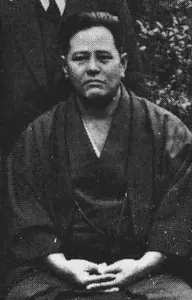
Saigō Shirō

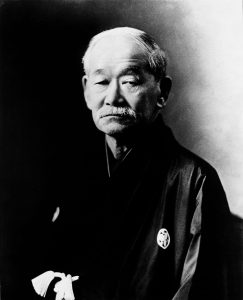
Image: Unknown photographer / Wikimedia Commons (Kodokan collection) · Public domain
Saigō Shirō (1866–1922) was an early student of Kanō Jigorō and one of the best-known representatives of the first generation of Kodokan Judo. He entered the Kodokan in 1882 and was later remembered as one of its “Four Guardians,” a group credited with establishing the school’s reputation in contests with established jūjutsu practitioners. Saigō became closely associated with a throwing method called Yama Arashi, but he left no technical account of it and later descriptions differ. His reputation was greatly enlarged by twentieth-century biographies and by the fictional hero of Sanshirō Sugata. Separating the documented judoka from this later cultural figure is central to understanding his place in Judo history.
Overview
| Japanese name | 西郷 四郎 |
|---|---|
| Born | 4 February 1866 Aizu, Mutsu Province, Japan |
| Died | 22 December 1922 (aged 56) Onomichi, Hiroshima Prefecture, Japan |
| Birth family name | Shida (志田) |
| Occupation | Judoka, martial artist, and journalist |
| Known for | Early Kodokan member; Yama Arashi |
| Teacher | Kanō Jigorō |
| Rank | Kodokan 6th dan |
| Associated institution | Kodokan |
Name and family background
Saigō was born into the Shida family in Aizu and was known in childhood as Shida Shirō. Later accounts connect his adoption and change of surname to the Saigō family of the former Aizu domain. The details of that relationship have often been combined with claims about secret Aizu martial systems. Modern research cautions that adoption history, martial transmission, and later Daitō-ryū lineage narratives are separate questions and should not be presented as one established story.
His Aizu origin mattered to later storytellers because the former domain had a powerful martial reputation. It does not, by itself, prove that he received instruction in a specific hidden tradition. The clearest early training record places him at a Tokyo school of Tenjin Shin’yō-ryū Jūjutsu before he entered the Kodokan.
Early training in Tokyo
Academic research based on Kodokan records dates Saigō’s move to Tokyo to March 1882, when he was seventeen by the traditional Japanese count. Before joining Kanō, he trained at the dōjō of Inoue Keitarō, a Tenjin Shin’yō-ryū instructor. Kanō himself had studied that tradition as well as Kitō-ryū Jūjutsu, drawing on both while building his new system.
Saigō entered the Kodokan on 20 August 1882, only a few months after its establishment at Eishōji temple. The institution was then a very small school rather than the international center it later became. His arrival belongs to the experimental founding phase in which Kanō and his students tested methods, terminology, and training practice against the wider jūjutsu world.
The early Kodokan
Saigō was remembered among the Kodokan Shitennō together with Tsunejirō Tomita, Yoshitsugu Yamashita, and Sakujirō Yokoyama. The collective title reflects their role in the school’s early reputation.
Saigō and Tomita Tsunejirō were among the first Kodokan practitioners to receive dan rank. Saigō’s small build and effectiveness against larger opponents made him a memorable representative of Kanō’s claim that disciplined technique could overcome raw strength. Later Kodokan history grouped Saigō with Tomita, Yamashita Yoshitsugu, and Yokoyama Sakujirō as the Kodokan Shitennō, or Four Guardians.
The title is retrospective rather than the name of a formal team with a fixed roster at every event. It expresses the importance attached to four early students in institutional memory. Nippon Budokan’s official Judo history identifies them as key figures in the contests through which the Kodokan gained recognition during the 1880s.
Matches and reputation
Public and police-sponsored matches between Kodokan practitioners and members of older jūjutsu schools became a central part of Judo’s foundation story. Saigō’s victories were repeatedly cited as evidence of the new school’s effectiveness. The best-known accounts place him against much larger opponents and describe sudden throws after long exchanges.
Match narratives were often written down years later and differ in dates, opponents, rules, and detail. The general conclusion—that Saigō was a successful early representative whose results helped the Kodokan’s standing—is well supported. Exact dialogue, dramatic injuries, and stories of miraculous balance are harder to verify and are better understood as part of his developing legend.
Yama Arashi
Yama Arashi (山嵐, “mountain storm”) is the technique most closely associated with Saigō. It remains a recognized Kodokan throwing technique, but the form standardized under that name cannot automatically be assumed to reproduce Saigō’s personal method. Saigō left no direct technical explanation, and later authors reconstructed the throw from memories and descriptions.
Yabusaki Satoshi’s study of Judo technical books shows that written explanations of Yama Arashi changed over time. Mizoguchi Noriko likewise argues that claims making Saigō the unequivocal inventor of a single fixed technique belong partly to the construction of Judo tradition. A careful historical account can say that Saigō made the name famous while acknowledging uncertainty about grip, foot action, and mechanical classification.
Departure and later life
Saigō left the Kodokan around 1890. Institutional and popular accounts give different explanations for his departure, and dramatic stories should be treated cautiously when contemporary evidence is lacking. He later worked in publishing and journalism, including activity connected with Nagasaki. His career after the Kodokan was therefore longer and more varied than the few famous matches by which he is usually remembered.
In his final years Saigō lived while ill at a temple lodging in Onomichi, Hiroshima Prefecture. He died there on 22 December 1922. Local reference research in Onomichi preserves documentary questions about the exact site, showing how regional archives can add detail that national martial-arts narratives often omit.
Sanshirō Sugata in fiction
Saigō is widely described as an inspiration for Sanshirō Sugata, the fictional protagonist of Tomita Tsuneo’s novel. Tomita was the son of the early Kodokan practitioner Tomita Tsunejirō and drew on stories of the institution’s founding generation. Kurosawa Akira adapted the novel as his first feature film in 1943, bringing the character to a mass audience.
The resemblance does not make the novel or film a biography. Names, events, opponents, personalities, and narrative arcs were altered for fiction. It is more accurate to describe Saigō as one historical model incorporated into a composite cultural hero. The fictional character then shaped how later readers imagined the real Saigō, feeding details back into popular biography.
Legacy
Saigō’s importance lies in three overlapping histories. In institutional history, he was an early Kodokan student whose success helped the new school gain attention. In technical history, his name became inseparable from Yama Arashi even though the exact technique remains debated. In cultural history, stories about him helped create one of modern Japan’s most enduring martial-arts heroes.
His 6th-dan listing in the Kodokan Hall of Fame and his place among the Four Guardians confirm his standing within official Judo memory. At the same time, critical study of his legend is not an attempt to diminish him. It shows how modern budō traditions preserve the past through ranks, commemorations, technical texts, novels, films, and repeated oral narratives.
Historical questions
Several frequently repeated claims remain uncertain. Later sources connect Saigō with Saigō Tanomo, oshikiuchi, or a precursor of Daitō-ryū, but the documentary chain is disputed. Stories that he trained his balance by jumping from buildings or that a single police tournament decisively proved Judo superior are vivid but difficult to confirm in their popular form.
More reliable reconstruction begins with dated Kodokan enrollment and rank records, contemporary institutional histories, technical literature, and regional archives. These sources support a historically significant Saigō without requiring every anecdote attached to the name “Sanshirō” to be factual.
Timeline
- 1866 — Born on 4 February in Aizu.
- 1882 — Moves to Tokyo; studies at Inoue Keitarō’s dōjō; enters the Kodokan on 20 August.
- 1880s — Represents the early Kodokan in matches and becomes known for Yama Arashi.
- c. 1890 — Leaves the Kodokan.
- 1922 — Dies at Onomichi on 22 December.
- 1942 — Tomita Tsuneo publishes the novel Sanshirō Sugata.
- 1943 — Kurosawa Akira’s film adaptation is released.
Related
Sources
- Kodokan Hall of Fame, “Saigō Shirō”.
- Nippon Budokan, Judo: Japanese Budō.
- Mizoguchi Noriko, “The Invention of Tradition in Judo: An Analysis of the Saigō Shirō Myth”, Bulletin of Shizuoka University of Art and Culture 15.
- Yabusaki Satoshi, “A Study of Throwing Technique Yama Arashi: Tendencies in Judo Technical Textbooks”, 2018.
- Aizu Bukeyashiki and others, Yama Arashi Saigō Shirō, 1987.
- National Diet Library Reference Collaborative Database, research record on Saigō’s final residence in Onomichi.
- National Film Archive of Japan, Sugata Sanshirō catalog record.
Image: Portrait of Saigō Shirō, date and photographer unknown, from the Kodokan collection; available through Wikimedia Commons. Public domain in Japan and the United States.
Last updated: