Martial Arts Figures
Kyūzō Mifune

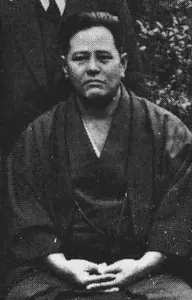
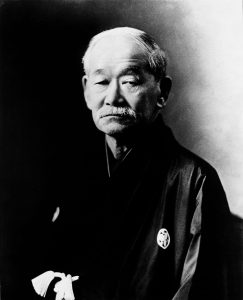
Image: Michi Notomi / Wikimedia Commons (The Mainichi Graphic) · Public domain
Kyūzō Mifune (1883–1965) was a Kodokan 10th-dan judoka, teacher, and author whose technical interpretations influenced twentieth-century Judo. Born in Kuji in present-day Iwate Prefecture, he entered the Kodokan in 1903 and studied under Sakujirō Yokoyama. Mifune became especially associated with precise timing, balance, sumi-otoshi, and the popular expression kūki-nage, or “air throw.” He also contributed to revisions of the Kodokan throwing syllabus, developed a form of counter-techniques, and explained judo through books and filmed demonstrations. The honorific “God of Judo” reflects his later reputation, but his historical significance is better located in documented teaching, technical analysis, institutional rank, and the transmission of practice across generations.
Overview
| Japanese name | 三船 久蔵 |
|---|---|
| Born | 21 April 1883, Kuji, Iwate Prefecture, Japan |
| Died | 27 January 1965, Tokyo, Japan |
| Occupation | Judoka, instructor, and author |
| Rank | Kodokan 10th dan (1945) |
| Teacher | Sakujirō Yokoyama |
| Known for | Technical pedagogy, sumi-otoshi, counter-technique forms, and judo writing |
Early life and education
Mifune was born in Kuji in northern Iwate Prefecture in 1883. Kuji City histories describe his family as rice merchants and record his education at Sendai Second Middle School before he moved to Tokyo.
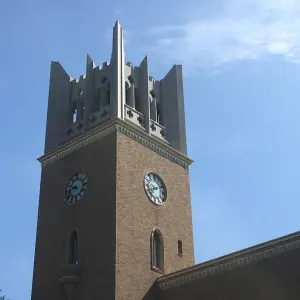
He attended Tokyo Senmon Gakkō, the institution that became Waseda University. His student years coincided with the rapid expansion of clubs, schools, police programs, and public organizations through which modern judo spread.
Entry into the Kodokan
Mifune entered the Kodokan in July 1903 and reached first dan in 1904. He trained under Yokoyama, a member of the institution’s founding generation, and received advanced recognition from him in 1906 according to Kuji City’s historical account.
The relationship placed Mifune within a direct line of early Kodokan teaching. He nevertheless developed a distinctive technical vocabulary suited to his own build and experience rather than relying on physical size.
Technical approach
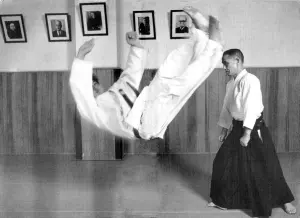
Mifune’s demonstrations emphasize posture, continuous movement, controlled distance, and the use of an opponent’s shifting balance. Film and written explanation made these qualities visible beyond the students who could attend his instruction in person.
His smaller stature became part of later accounts of his skill, but technique should not be presented as effortless or mystical. Mifune’s control rested on long practice, precise body placement, and sensitivity to the direction and timing of force.
Sumi-otoshi and kūki-nage
Mifune is closely associated with sumi-otoshi, a hand technique that sends the opponent toward a rear corner without a sweeping leg action. Popular descriptions often call his execution kūki-nage, “air throw,” because the mechanism can be difficult to see.
The terms are not interchangeable in every historical or technical context. It is safest to treat kūki-nage as an expression associated with Mifune’s subtle throwing skill and sumi-otoshi as the recognized Kodokan technique.
Curriculum and forms
Historical research identifies Mifune among the senior judoka who contributed to the 1920 revision of the Gokyō-no-waza, the graded grouping of throwing techniques. The revision shows that the Kodokan syllabus continued to be evaluated well after Jigoro Kano founded the institution.
Mifune also developed Nage-waza ura-no-kata, a set exploring counters to throwing techniques. It is studied as an important historical form, though it is not one of the Kodokan’s universally required official kata.
Teaching, writing, and film
Among the judoka influenced by Mifune was Minoru Mochizuki, who later connected Kodokan study with Aikido and cross-disciplinary Yoseikan practice.
Mifune taught generations of judoka and recorded his ideas in works including Jūdō no Shinzui and his recollections. English readers know a later presentation of his technical writing through The Canon of Judo.
Books and surviving films should be read together. The texts supply terminology and explanation, while demonstrations show rhythm, spacing, and body action that static descriptions cannot fully capture.
Rank and honors
Mifune received Kodokan 10th dan in 1945. This highest rank placed him among a very small number of senior teachers entrusted with representing the technical and ethical standards of the institution.
His public honors included the Medal with Purple Ribbon in 1956 and designation as a Person of Cultural Merit in 1961. These awards recognized judo as cultural and educational work as well as physical practice.
Legacy and commemoration
Mifune’s legacy rests on a combination of embodied technique and reproducible teaching materials. His demonstrations remain widely studied, but copying their visible appearance without their underlying balance and timing can turn technical principles into performance.
Kuji City commemorates him through the Mifune Jūdan Memorial Hall and judo-related local programs. The museum connection also anchors an internationally known figure in the regional history of northern Japan.
Timeline
- 1883 — Born in Kuji, Iwate Prefecture.
- 1903 — Entered the Kodokan.
- 1904 — Promoted to first dan.
- 1906 — Received advanced recognition from Sakujirō Yokoyama, according to Kuji City history.
- 1920 — Contributed to revision of the Gokyō throwing syllabus.
- 1945 — Promoted to Kodokan 10th dan.
- 1956 — Received the Medal with Purple Ribbon.
- 1961 — Named a Person of Cultural Merit.
- 1965 — Died in Tokyo.
Related
Sources
- Kuji City, local history of Kyūzō Mifune.
- Kuji City, Judo Town Development Vision.
- Carl De Crée, The Kōdōkan jūdō Gokyō-no-waza: Its history and pedagogy.
- National Diet Library Search, Jūdō no Shinzui: Michi to Jutsu.
- CiNii Books, Jūdō Kaikoroku.
- All Japan Judo Federation, Research Bulletin no. 14.
Image: Portrait of Kyūzō Mifune, published 3 June 1953. Michi Notomi; Wikimedia Commons, from The Mainichi Graphic. Public domain in Japan and the United States.
Last updated: