Games
VTuber Culture in Japan
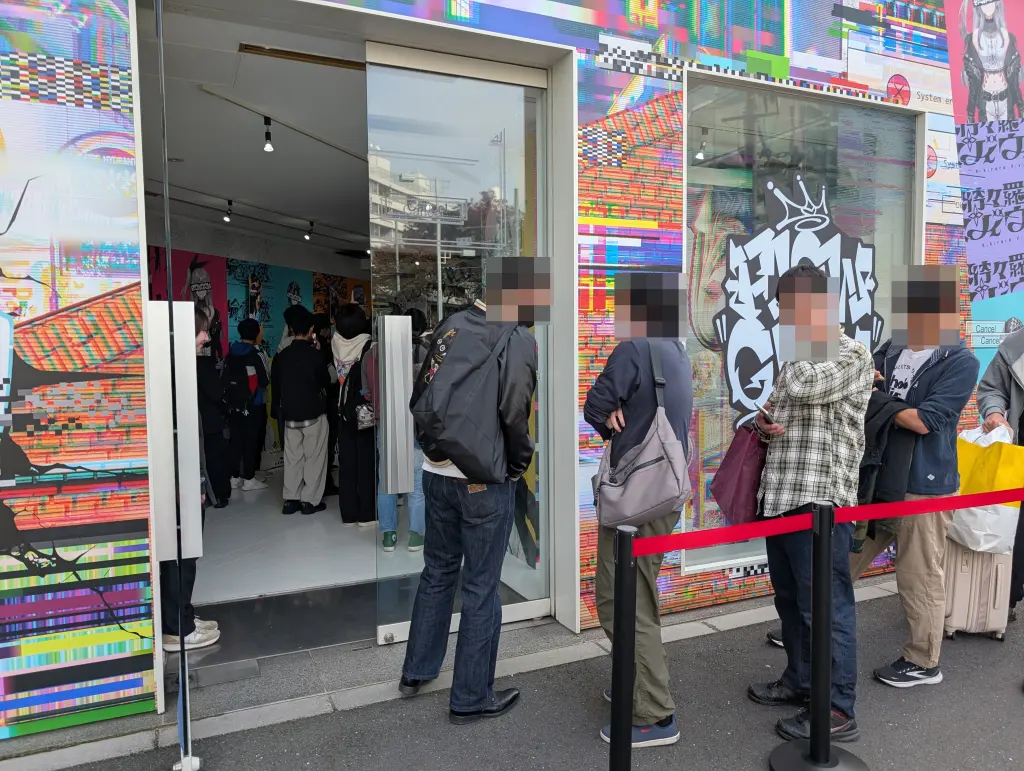
Image: Syced / Wikimedia Commons · CC0 1.0
VTuber culture in Japan centres on creators who perform through animated digital characters in recorded video, livestreams, music, games, events, and social media. The term abbreviates “virtual YouTuber,” but it now includes performers on many platforms. Kizuna AI popularised the label from 2016, and a larger field of independent creators and agency groups developed rapidly from 2017–2018. A VTuber is not necessarily artificial intelligence, an anime production, or a gaming channel: identity emerges through a model, a performer or technical system, repeated characterisation, and audience interaction. Japanese VTuber culture also includes fan art, translated clips, chat rituals, concerts, merchandise, licensing, and debates about privacy, labour, platform dependence, and the ownership of an avatar's continuing history.
Overview
| Japanese terms | VTuber; バーチャルYouTuber; バーチャルライバー |
|---|---|
| Full term | Virtual YouTuber |
| Popularised | From 2016 by Kizuna AI |
| Common forms | Recorded video, livestreaming, music, games, concerts, and social media |
| Performance systems | 2D or 3D models driven by tracking, animation, puppeteering, or other control methods |
| Organisation | Independent creators, agencies, companies, institutions, and collaborative teams |
| Revenue channels | Platform payments, memberships, merchandise, events, licensing, and sponsorship |
| Important boundary | VTubers are not necessarily AI, limited to YouTube, or focused on games |
Term and scope
VTuber is an abbreviation of “virtual YouTuber.” In current use it can include creators active primarily on other video, streaming, and social platforms. Japanese companies also use terms such as virtual liver or virtual talent, which emphasise live performance or entertainment work rather than one website.
There is no single technical test shared by every case. A VTuber may use a 2D model, a three-dimensional model, limited reactive images, prerecorded animation, live tracking, multiple operators, or automated systems. The field is defined through cultural practice and audience recognition as much as through hardware.
Precursors and Kizuna AI
Digital characters, voice performance, motion capture, virtual idols, machinima, and video blogging all predate the term VTuber. The Agency for Cultural Affairs' Media Arts Current Contents identifies Ami Yamato's virtual video-blog practice as one precursor while arguing that several cultural and technical lineages converged rather than producing one simple invention.
Kizuna AI began using the self-description “virtual YouTuber” in 2016 and is widely treated as the pioneer who popularised the category. Her short videos, character continuity, direct address to viewers, three-dimensional movement, and claims of virtual existence gave later creators a recognisable model without fixing every future form.
Growth of livestreaming and agencies
A broader boom followed in 2017. In 2018, NIJISANJI's approach placed strong emphasis on frequent livestreaming with two-dimensional models, while hololive and many smaller groups developed overlapping mixes of chat, gameplay, singing, collaboration, and events. Cheaper tracking and accessible production tools also supported independent VTubers.
Agency history should not be reduced to a contest between two companies. Local groups, individual creators, music projects, game companies, public institutions, and overseas communities developed different models. Debut, hiatus, graduation, transfer, and rebranding practices also changed as the field matured.
Avatars and performance technology
A common system tracks a performer's face, head, hands, or body and maps selected motion onto a digital model. Live2D-style rigs deform layered illustrations, while 3D systems can support full-body movement, virtual cameras, stages, and concerts. Studios may use optical motion capture; home setups can work with webcams, phones, microphones, and consumer trackers.
The model is not a transparent copy of a body. Rigging choices, tracking limits, latency, software, framing, costume design, voice, moderation, and deliberate acting shape what audiences see. Some VTubers are controlled differently, including by teams or automated systems, so “the person behind the avatar” is not always one simple technical role.
Content and live interaction
VTuber content includes conversation streams, gameplay, music, drawing, comedy, education, news-like programmes, roleplay, sponsored broadcasts, and edited video. Gaming is highly visible because it provides an activity around which the performer and chat can react, but it is neither compulsory nor the medium's complete definition.
Livestreaming makes timing and feedback central. Comments, paid highlighted messages, polls, collaborative games, call-and-response phrases, and recurring jokes can affect the performance. Research on VTuber audiences describes this as a bidirectional and co-creative experience, while also noting that interaction can enable or constrain both viewers and creators.
Fandom, clips, and co-creation
Fans draw art, edit clips, make subtitles and translations, compile timelines, produce music and games, organise viewing communities, and circulate memes. These practices can make long Japanese streams accessible across languages and preserve moments that would otherwise be difficult to find.
Fan work is not automatically free of rights or power questions. Companies and creators publish derivative-work rules, platforms apply copyright systems, and clips can remove context or redirect attention. Oshikatsu—the organised support of a favoured performer—also connects online participation with merchandise, concerts, travel, and physical display.
Agencies, independents, and business
Agencies can provide models, management, technical production, studios, legal support, promotion, sales, and collaboration networks. Independent creators may retain more direct control but must assemble many of the same functions themselves or contract artists, riggers, moderators, editors, and managers.
Company disclosures identify several revenue channels: platform payments and memberships, concerts and events, physical and digital merchandise, licensing, sponsorship, and media-mix projects. These models distribute revenue and risk unevenly. Subscriber totals or paid-chat rankings alone do not measure a stable career, creative autonomy, or the contribution of supporting workers.
Identity, privacy, and labour
Scholars distinguish the VTuber, the visual model, and the performer rather than treating one as a disguise for another. Character identity accumulates through voice, movement, stories, relationships, archived streams, and audience expectations. That history can remain meaningful even when corporate ownership and human labour are difficult for viewers to see.
Privacy protects performers from unwanted exposure, while harassment, doxxing, overwork, contract terms, moderation, and platform policy create material risks. Corporate risk statements also acknowledge dependence on popular performers and distribution platforms. Responsible coverage avoids unmasking individuals and separates documented employment or rights disputes from rumour.
Global circulation and media boundaries
Japanese VTuber practices spread through translated clips, overseas branches, independent creators, conventions, game communities, and platform recommendations. Viewers adapt terminology and performance styles in different languages, so global VTubing is not merely a copy exported unchanged from Japan.
VTubers overlap with anime, manga, music, idols, games, and live performance without becoming identical to any one of them. Anime-like character design does not make every stream an anime episode, and a game broadcast remains a performance built around an interactive work rather than the game itself.
Sources
- Agency for Cultural Affairs, Media Arts Current Contents—Are VTubers Animation?.
- Hiroki Yamano, When a VTuber Appears as a VTuber.
- Masao Kakihara, Digital Content Consumption through VTuber–Audience Interaction.
- CHI 2025, Who Reaps All the Superchats? A Large-Scale Analysis of Income Inequality in Virtual YouTuber Livestreaming.
- COVER Corporation, Business.
- ANYCOLOR, Business Risks.
- ANYCOLOR, NIJISANJI Groups Integrated in 2018.
Last updated: