Games
Tokyo Game Show
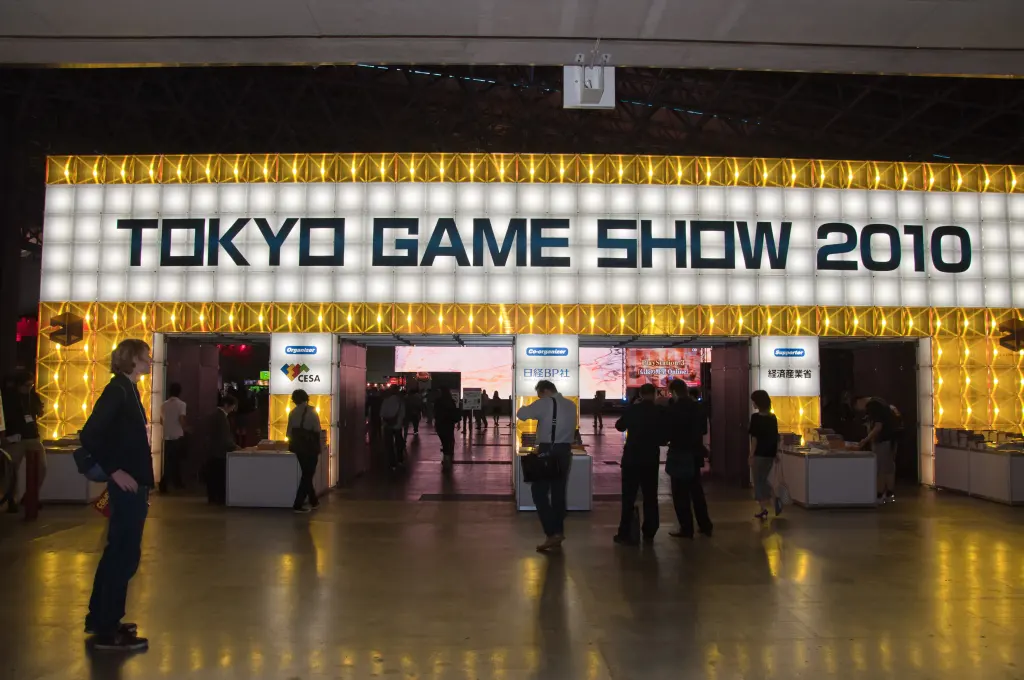
Image: Koichiro Ohba / Wikimedia Commons / Flickr · CC BY 2.0
Tokyo Game Show (東京ゲームショウ), commonly TGS, is a video-game trade fair and public convention organised by the Computer Entertainment Supplier's Association. First held in 1996, it combines industry meetings, press activity, playable demonstrations, announcements, stages, creator and student exhibits, merchandise, streaming, cosplay, and public attendance. Despite its name, the physical venue is Makuhari Messe in Chiba City, not Tokyo Metropolis. The event's form has changed: early editions included spring and autumn shows, the schedule later became annual, and pandemic-era editions used online and limited physical formats. TGS 2026 is scheduled for September 17–21, with two business days followed by three public days. Programmes and access rules should be checked by edition.
Overview
| Japanese | 東京ゲームショウ |
|---|---|
| Abbreviation | TGS |
| Classification | Video-game trade fair and public convention |
| Organizer | Computer Entertainment Supplier's Association (CESA) |
| First held | August 22–24, 1996 |
| Principal venue | Makuhari Messe, Chiba City |
| 2026 dates | September 17–21 |
| 2026 format | Business days September 17–18; public days September 19–21 |
Name, organizer, and location
Tokyo Game Show is organised by CESA with edition-specific co-organisers and supporters. CESA represents parts of Japan's computer-entertainment industry, so TGS functions as an industry institution as well as a public event. Exhibitors include large publishers, hardware and platform companies, independent developers, schools, regional organisations, and overseas businesses.
The name uses Tokyo as an international metropolitan reference, but Makuhari Messe is in Mihama Ward, Chiba City, east of Tokyo. Travel advice should therefore use the official venue and access page. In 2026, an additional hall at TKP Tokyo Bay Makuhari is also included.
Founding and early shows
CESA was established in 1995 and held the first Tokyo Game Show at Tokyo Big Sight from August 22 to 24, 1996. The organiser's historical table records 87 exhibitors, 900 booths, and 109,649 visitors. The event gave software companies a collective venue for showing products to the trade, press, and players during a rapidly changing console market.
Several early years had separate spring and autumn editions. From 2002 the show became annual. This shift means edition numbers and calendar years do not form a simple one-show-per-year sequence across the entire history. Official CESA records are preferable when comparing dates or attendance.
Business days and public days
TGS deliberately serves more than one audience. Business days restrict entry to industry professionals, buyers, developers, media, and other accredited participants. Meetings, interviews, recruitment, licensing, distribution, and international partnerships take place alongside demonstrations and presentations.
Public days admit ticket holders under separate rules and place greater emphasis on hands-on play, stages, merchandise, family activities, cosplay, and fan participation. The division is not absolute—media events and public-facing announcements occur across the schedule—but credentials, opening hours, and available programmes differ.
Show floor and programming
Indie exhibition areas at Tokyo Game Show sit within a wider ecology of Japanese indie games that also includes dōjin events, online stores, and specialist gatherings such as BitSummit.
Exhibition halls are organised into changing corners or zones. Console, mobile, PC, virtual-reality, hardware, business solutions, independent games, schools, merchandise, family programmes, and creator activities may occupy different areas. Booth size and spectacle vary widely, from small tables to large stages and enclosed demonstrations.
Playable demos are important but do not represent finished games. Builds may be shortened, specially prepared, region-limited, or subject to recording rules. Queues and numbered tickets can restrict access. An announcement at TGS is evidence of a plan at that date, not proof that a product later shipped unchanged.
Media, streaming, and global reach
TGS is both a physical gathering and a media-production system. Press reports, interviews, trailers, official programmes, exhibitor streams, social posts, and creator coverage carry the event far beyond the venue. Multilingual pages and overseas exhibitors reflect the international market around Japanese games.
Online reach complicates attendance comparisons. A physical visitor count, programme views, virtual-world participation, and social impressions measure different things. CESA's historical table reports these separately for recent editions, so they should not be added into one undifferentiated audience number.
Pandemic-era and hybrid change
The 2020 edition moved online during the COVID-19 pandemic. In 2021, online programming continued with limited physical attendance and a virtual-reality component. The physical exhibition returned at larger scale in later editions while streaming and digital projects remained part of the event.
These years show why TGS should not be defined only as a hall full of booths. Its institutional identity persisted across online, restricted, and reopened formats, but access, exhibitor practice, programme measurement, and the experience of visitors changed substantially.
Games and cross-media culture
The show is one institutional window onto Japanese video games, a field that also includes arcade, console, computer, mobile, and independent production beyond the exhibition floor.
VTuber culture in Japan connects games with livestreaming, avatar performance, music, merchandise, and fan communities. VTuber appearances and broadcasts at game events show this overlap without making every VTuber a game-focused creator.
The show centres on interactive entertainment, yet contemporary games circulate through anime, manga, music, toys, performance, esports, and film. Cosplay and stage programmes make some of those relationships visible. This does not turn every exhibit into an anime convention or every franchise into one medium.
TGS also connects corporate promotion with education and small-scale creation. Student projects and independent games can appear near established brands, though booth resources and media attention are unequal. The event is therefore useful evidence for studying both concentration and diversity within the game industry.
Archives and historical evidence
Game-show history survives in official reports, floor maps, exhibitor lists, press kits, demo media, photographs, video, tickets, and journalism. These materials record what companies intended to present and how audiences encountered it, but promotional claims require comparison with released products and later evidence.
The Video Game History Foundation Library preserves a Tokyo Game Show 2011 promotional DVD within a larger collection of Japanese game-industry ephemera. Such objects demonstrate why preserving event media matters: websites and streams can disappear even when the games they promoted remain available.
Tokyo Game Show 2026
TGS 2026 is scheduled as the event's first five-day edition and marks thirty years since the first show. Business days run September 17–18 from 10:00 to 17:00. Public days are September 19–20 from 9:30 to 17:00 and September 21 from 9:30 to 16:00, with the organiser noting that public opening may move earlier depending on conditions.
Makuhari Messe exhibition halls 1–11 and the International Conference Hall are listed alongside TKP Tokyo Bay Makuhari Hall. This schedule was checked on September 9, 2026. Tickets, age rules, entry times, exhibitor programmes, queue systems, and recording restrictions remain edition-specific and should be confirmed on the official site.
Sources
- Tokyo Game Show 2026, Official Site.
- Computer Entertainment Supplier's Association, Tokyo Game Show.
- Computer Entertainment Supplier's Association, History.
- Computer Entertainment Supplier's Association, Activity Report, 26 September 2003.
- Video Game History Foundation Library, Tokyo Game Show 2011 Capcom Special DVD.
Last updated: