Judo
Uchikomi
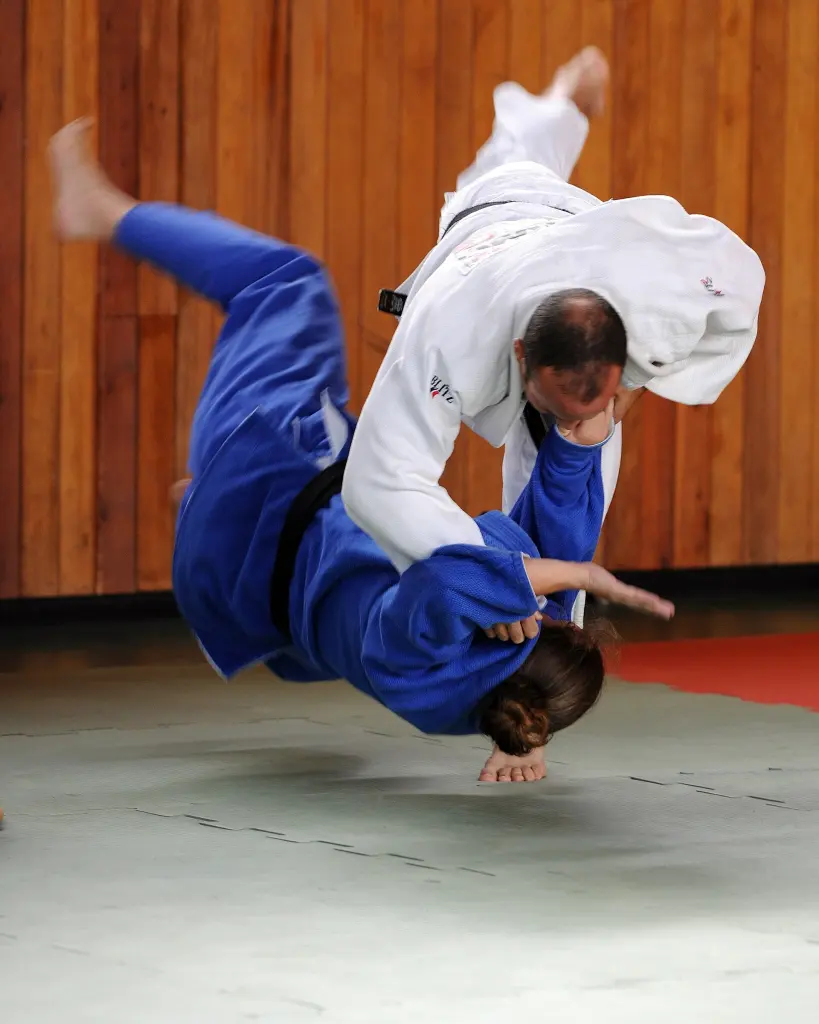
Image: Cpl Laura Bibby/MOD / UK Ministry of Defence via Wikimedia Commons · Open Government Licence v1.0
Uchikomi, written 打ち込み, is a repetition method in Judo in which a practitioner repeatedly enters or fits into a technique with a partner, usually without completing the throw. It can isolate grip, kuzushi, footwork, body position, turning, and rhythm, allowing many technically focused repetitions in a short period. Uchikomi may be static or moving, cooperative or progressively responsive, and performed with a partner, several partners, or resistance equipment. The exercise is not a complete model of live throwing: stopping at the entry can create habits that do not transfer automatically to nagekomi or randori. Its value depends on accurate form, an appropriate task, partner feedback, and connection to completed and variable practice.
Overview
| Japanese | 打ち込み |
|---|---|
| Reading | Uchikomi |
| IJF rendering | Repetition training |
| Usual action | Repeated entry without completing the throw |
| Common variants | Static, moving, band, and multi-partner drills |
| Related practice | Nagekomi and randori |
Definition and scope
Uchikomi is commonly translated as repetition training. In throwing practice, tori establishes the entry and fitting position, then resets so the movement can be repeated. Uke provides posture, grip, movement, and feedback appropriate to the exercise.
The term describes a method rather than one prescribed drill. Dojo, instructor, technique, and training phase determine what part of the action is emphasised.
What uchikomi develops
A well-designed repetition can connect grip use, kuzushi, foot placement, hip or shoulder position, and coordinated action of the hands and body. Repetition makes errors visible and allows correction before speed or resistance increases.
Uchikomi can also develop rhythm and physical capacity, but quantity alone is not proof of technical quality. Repeating a poor distance or incomplete pull can reinforce the very problem the drill is meant to solve.
Static and moving uchikomi
Static uchikomi begins from a stable position and is useful for introducing shape and coordination. Moving uchikomi adds stepping, direction, timing, and changing distance so that entry is connected to locomotion.
Neither form is inherently superior. Static work can clarify a detail, while moving work reduces the gap between isolated entry and the conditions found in randori.
Uchikomi, nagekomi, and randori
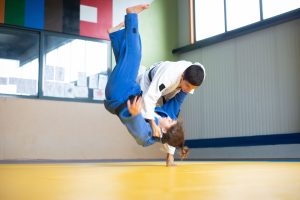
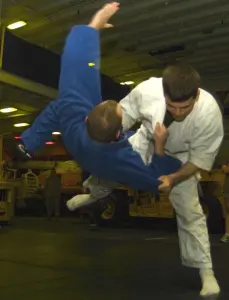
Nagekomi completes the throw and therefore adds projection, control, and ukemi. Randori adds unscripted movement, resistance, decision-making, combinations, counters, and failure.
The methods are complementary. Uchikomi can prepare a movement efficiently, but transfer requires opportunities to finish the technique and adapt it against responses.
Training variations
Common variations include speed intervals, moving entries, alternating sides, entries against several partners, and elastic-band practice without a human uke. Instructors may also specify grip, direction, reaction, or combination.
Equipment changes the force and timing of the exercise. Band uchikomi can support conditioning or movement rehearsal but cannot reproduce balance, touch, and reaction from a partner.
Partner roles and feedback
Uke is not a rigid training dummy. Suitable posture and measured resistance allow tori to feel whether the entry controls balance and space. Too much collapse or obstruction can make the drill meaningless or unsafe.
Partners should change roles and communicate about distance, impact, and fatigue. Repetitions should stop when form deteriorates beyond the task's purpose.
Limitations and safety
High-volume uchikomi can load knees, shoulders, elbows, back, and gripping muscles, especially when speed and resistance are added. Volume must match age, experience, technique, and physical condition.
A familiar drill is not automatically harmless. Adequate space, stable footing, controlled contact, and qualified correction remain necessary even when no throw is intended.
Sources
- International Judo Federation, Sport and Organisation Rules, 14 August 2026.
- Judo Canada, Judo Lexicon.
- Research Journal of Budo, Effect of Uchikomi Movement in Seoi-nage Training.
- The Arts and Sciences of Judo, Uchikomi Movement Phase Analysis.
- Research Journal of Budo, What a School Judo Should Be as Budo.
Last updated: