Judo
Randori
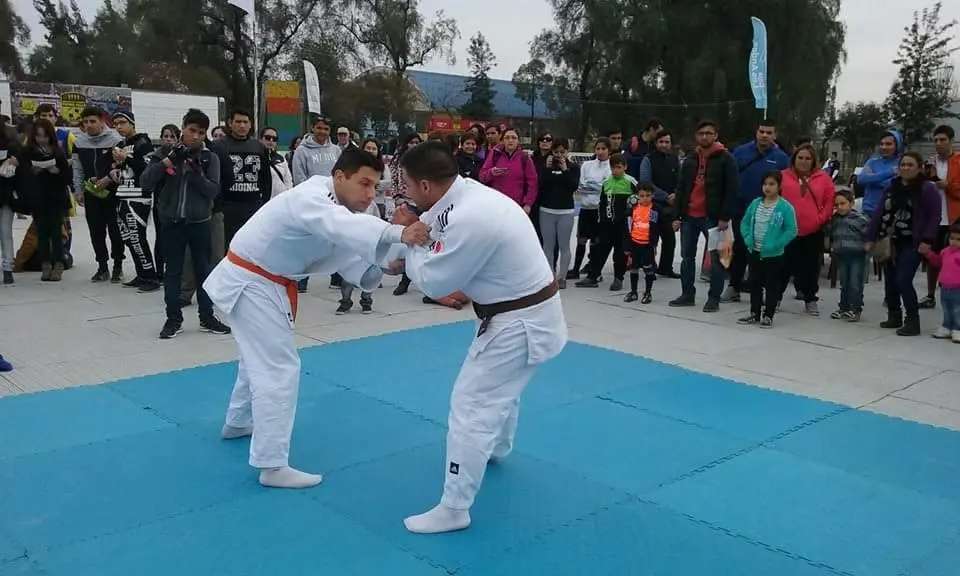
Image: Hokkaido Judo / Wikimedia Commons · CC BY-SA 4.0
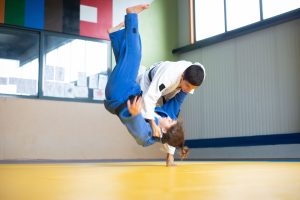
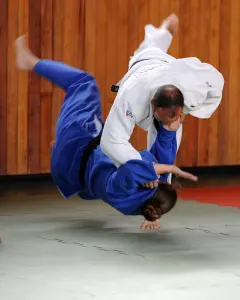
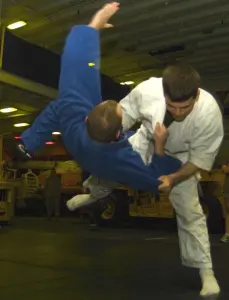
Randori, written 乱取り, is the free-practice method of Judo. Partners apply permitted throwing and grappling techniques while responding to movement, resistance, and changing opportunities. Unlike kata, randori does not follow a predetermined sequence; unlike shiai, its primary purpose is learning rather than recording a winner. Intensity and conditions can be adjusted by the instructor, from cooperative movement to demanding practice, and may focus on standing work, groundwork, or a specific tactical problem. Randori is therefore not simply an informal match. Productive practice depends on control, ukemi, mutual responsibility, and enough freedom for both partners to attack, defend, and experiment safely.
Overview
| Japanese | 乱取り |
|---|---|
| Reading | Randori |
| Meaning | Free practice |
| Main forms | Tachi-waza and ne-waza randori |
| Primary purpose | Adaptive technical learning |
| Distinct from | Kata and formal contest |
Definition and purpose
Randori gives practitioners a changing problem rather than a rehearsed answer. Each partner searches for kuzushi, position, timing, and continuity while the other moves and resists. The aim is to make technique functional without abandoning the educational relationship between partners.
A dojo may set goals, time limits, starting grips, or permitted techniques. Such constraints do not make the exercise kata; they shape the problem while leaving the response open.
Randori and kata
Jigoro Kano treated randori and kata as complementary methods. Kata preserves organised models and principles; randori tests selection and adaptation when the partner's response is not fixed.
The contrast should not be reduced to realistic versus artificial practice. Kata can examine actions unsuitable for free practice, while randori develops perception and decision-making within agreed safety limits.
Standing and groundwork randori
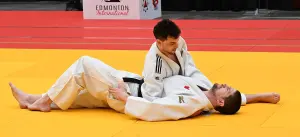
In tachi-waza randori, partners work mainly from standing and seek controlled throws, combinations, counters, and transitions. In ne-waza randori, practice begins or continues on the mat and develops pins, escapes, turnovers, strangles, and joint techniques under appropriate restrictions.
Some sessions connect the two phases; others isolate one. The balance depends on teaching goals, age, experience, and local practice culture.
Intensity and cooperation
Resistance in randori is real but adjustable. Constant defensive rigidity can prevent either partner from learning, while excessive compliance removes the need to adapt. Good practice lets attacks develop, provides honest reactions, and preserves control at the finish.
Randori partners do not have to use equal physical effort. Differences in size, grade, age, fatigue, or task may require a more experienced practitioner to regulate pace and opportunity.
Safety and ukemi
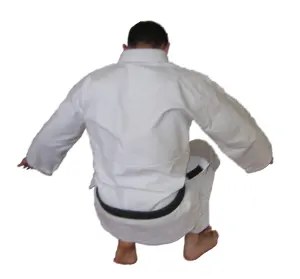
Competent ukemi is a prerequisite for standing randori. Partners must also release or control techniques appropriately, avoid prohibited actions, and respond immediately to submission or an instructor's command.
Rules for children and beginners are commonly modified. Safe progression, suitable mats, supervision, and partner matching matter more than copying the intensity of elite training.
Randori and shiai
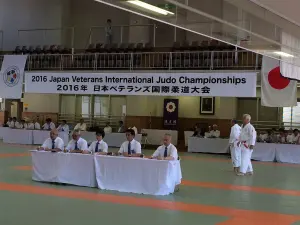
Shiai is a contest conducted to determine a result under stated rules. Randori may use many of the same techniques and can be physically demanding, but the result is secondary to practice. Stopping every exchange to debate a score turns attention away from that purpose.
Contest rules still influence randori, especially in competition-oriented clubs. They do not define every legitimate educational form of randori, and instructors may impose narrower conditions for safety or learning.
Historical development
Free practice existed in several jujutsu traditions before the Kodokan. Research on Meiji-period judo describes how safer randori rules and inter-school contests encouraged the selection and systematisation of techniques suitable for live resistance.
Kodokan randori did not merely copy one older school's practice. It developed through technical exchange, institutional competition, safety choices, and Kano's educational programme.
Sources
Last updated: