
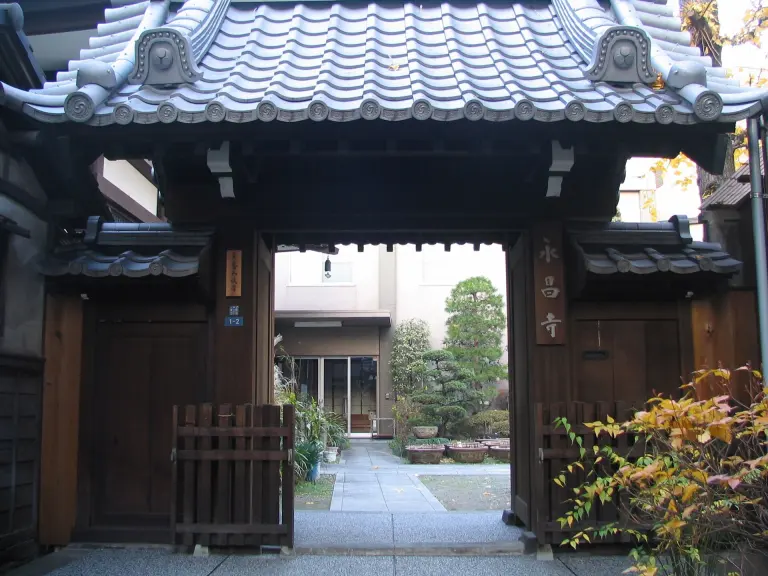
Eishoji Temple
Eishoji is a Jodo Buddhist temple in Higashi-Ueno, Tokyo, remembered as the site where Jigoro Kano opened the first Kodokan dojo in 1882.
Eishoji is a Jodo Buddhist temple in Higashi-Ueno, Tokyo, remembered as the site where Jigoro Kano opened the first Kodokan dojo in 1882.
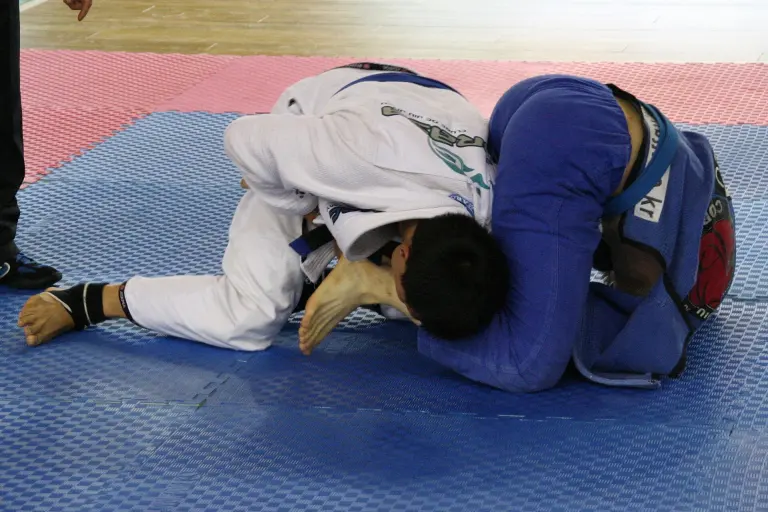
Brazilian Jiu-Jitsu is a Brazilian grappling art and combat sport developed from Kodokan judo and jujutsu transmitted to Brazil in the early twentieth century.
Kyūzō Mifune was a Kodokan 10th-dan judoka known for technical precision, teaching, kata development, and influential writing on judo.
Mataemon Tanabe was a Fusen-ryū jujutsu teacher and judo hanshi whose groundwork became prominent in early inter-school contests.
Sakujirō Yokoyama was an early Kodokan leader, teacher, curriculum contributor, and co-author of an influential judo manual.
Saigō Shirō (1866–1922) was an early Kodokan judoka associated with Yama Arashi whose documented career became intertwined with the fictional hero Sanshirō Sugata.
Yōshin-ryū is an influential family of early-Edo jujutsu lineages associated with flexible response, atemi, grappling, vital-point knowledge, and kappō.
Kitō-ryū is a classical Japanese jujutsu tradition known for throwing principles, armour-based kata, and its important influence on Jigoro Kano and Kodokan Judo.
Tenjin Shin’yō-ryū is a late-Edo jujutsu tradition combining throws, joint controls, chokes, atemi, and revival methods, and was a major source studied by Jigoro Kano.
Fusen-ryū is a late-Edo Japanese jujutsu tradition associated with Takeda Motsugai and Mataemon Tanabe, whose ground-fighting successes became part of early Judo history.