Institutions
Dai Nippon Butoku Kai
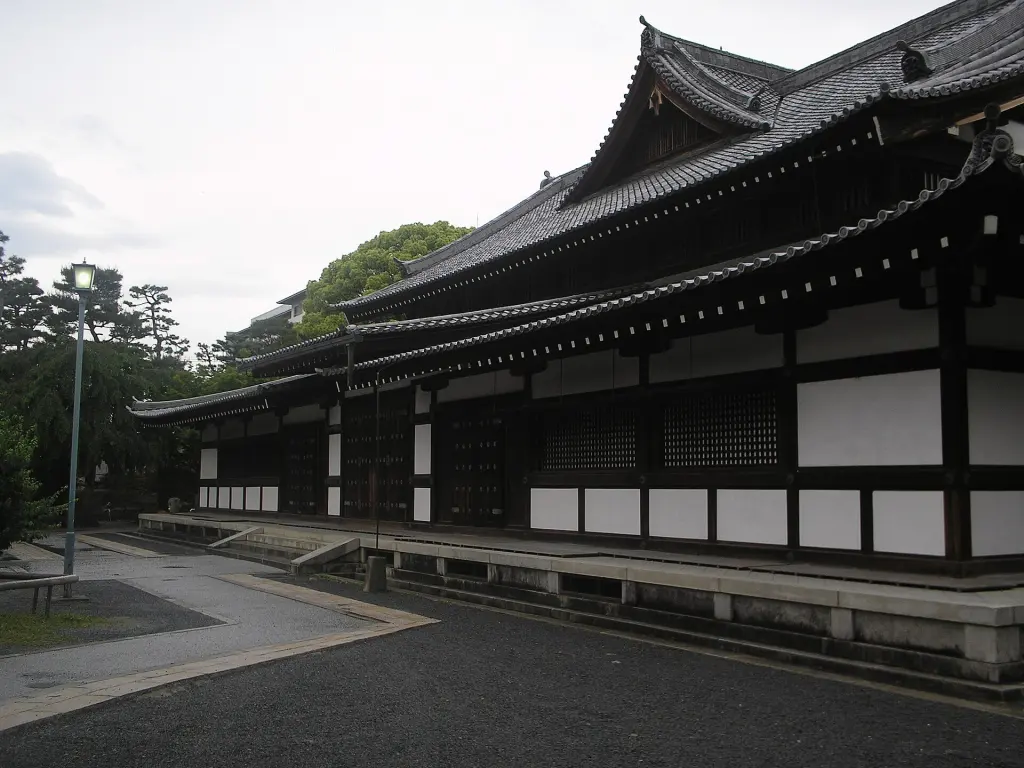
Image: Nicholas de St. Germain / Wikimedia Commons / Flickr · CC BY 2.0
The Dai Nippon Butoku Kai, or Greater Japan Martial Virtue Society, was the largest and most influential national martial-arts organisation in prewar Japan. Founded in Kyoto on 17 April 1895, it promoted martial practice through festivals, instruction, teacher training, titles, ranks, publications, and a nationwide branch structure. Its Butokuden hall became a prestigious centre for demonstrations and examinations. The organisation helped standardise modern kendo and participated in the institutional development of judo, kyudo, and other disciplines. Its history also became increasingly entangled with nationalism, state education, and wartime mobilisation; it was reorganised under closer government control in 1942 and dissolved in 1946 during the Allied Occupation. Later organisations have reused the name, but their claims of institutional continuity should be evaluated separately.
Overview
| Japanese name | 大日本武徳会 |
|---|---|
| English rendering | Greater Japan Martial Virtue Society |
| Founded | 17 April 1895 |
| Headquarters | Kyoto |
| Principal hall | Butokuden |
| Historical end | Dissolved in 1946 |
Founding context
The Butoku Kai was founded during celebrations of the 1,100th anniversary of the transfer of the capital to Kyoto under Emperor Kanmu. The period also followed the Sino-Japanese War and a wider rise in national interest in martial spirit and physical education.
Its stated purposes included encouraging martial arts, cultivating butoku or martial virtue, and strengthening public morale. These goals combined preservation, education, ceremony, and modern nation-building rather than restoring premodern schools unchanged.
Butokusai and the Butokuden
The organisation held its first Butokusai martial festival in 1895, bringing recognised practitioners together for demonstration and evaluation. A permanent Butokuden in Kyoto provided an architectural and ceremonial centre for later events.
Butokuden halls were subsequently built by branches elsewhere in Japan and across the Japanese empire. Their spread made the hall type a physical expression of a national institutional network, not simply a generic word for any dojo.
Titles, ranks, and authority
The Butoku Kai awarded distinctions and teaching titles, including hanshi, kyoshi, and seirensho or later renshi. It also adopted and extended dan and kyu grading in disciplines whose earlier schools had used varied licences and terminology.
Standardisation did not erase every lineage, but it created nationally legible credentials. Research on grading shows that the organisation adopted dan grades for judo and police-derived kyu grades for kendo, later applying dan and kyu systems more broadly.
Teacher training and standard forms
Prewar instruction associated with the Butokukai and school education is part of the complex background from which postwar Naginata was reorganised.
The Butokukai also helped reorganise archery instruction and rank during the transition from kyujutsu to modern Kyudo.
The organisation established specialist education for martial-arts instructors in Kyoto. The school later known as Budo Senmon Gakko, or Busen, trained teachers whose influence extended into schools, police institutions, and regional dojo.
Committees also developed common forms, most notably the 1912 Dai Nippon Teikoku Kendo Kata, ancestor of today's Nihon Kendo Kata. Such projects made selected techniques teachable across institutional boundaries while reducing the diversity of older school-specific forms.
From bujutsu to budo
The modern language and institutions surrounding sword disciplines also provide context for Iaido, whose federation and classical-school forms remain distinct.
The standardisation promoted through the Butokukai formed an important institutional stage in the development of modern Kendo.
In 1919, Nishikubo Hiromichi promoted replacing -jutsu terminology with -do in the organisation's educational setting. The specialist school changed from Bujutsu to Budo, and terms such as kendo, judo, and kyudo gained stronger institutional currency.
The vocabulary change did not by itself create modern budo, nor did it occur everywhere at once. It nevertheless shows how national organisations reframed combat skills as disciplined ways of education, character, and public culture.
Expansion and wartime control
By the early twentieth century the Butoku Kai had branches, mass membership, schools, examinations, and influence over several disciplines. Its educational work cannot be separated from the political environment in which national morality, empire, and physical mobilisation increasingly overlapped.
In 1942 the organisation was restructured under closer supervision involving several government ministries. That wartime form placed budo more directly within state mobilisation and became central to Occupation-era judgments about the organisation.
Dissolution and postwar legacy
The historical Dai Nippon Butoku Kai dissolved in 1946 under Occupation pressure, and its assets and leadership were affected by demilitarisation measures. Postwar federations for individual arts developed through new legal and educational structures.
The organisation's legacy remains visible in terminology, titles, grading, teacher education, standard kata, and surviving Butokuden buildings. Groups founded after the war have used the same name, but shared naming, symbols, or ideals do not alone prove unbroken legal succession from the 1895–1946 body.
Sources
- All Japan Kendo Federation, The History of Kendo.
- Japanese Academy of Budo, A Study on Budo Education by the Dai-Nippon Butoku Kai.
- Yoshiaki Todo and Naoki Murata, A Study of the History and Cultural Value of Dan and Kyu Grades in Budo.
- National Diet Library, Information Concerning Dai Nippon Butoku Kai, 21 November 1946.
- Architectural Institute of Japan, Establishment and Effects of Butokuden Halls in Taiwan.
Last updated: