
Kendo
Kendo
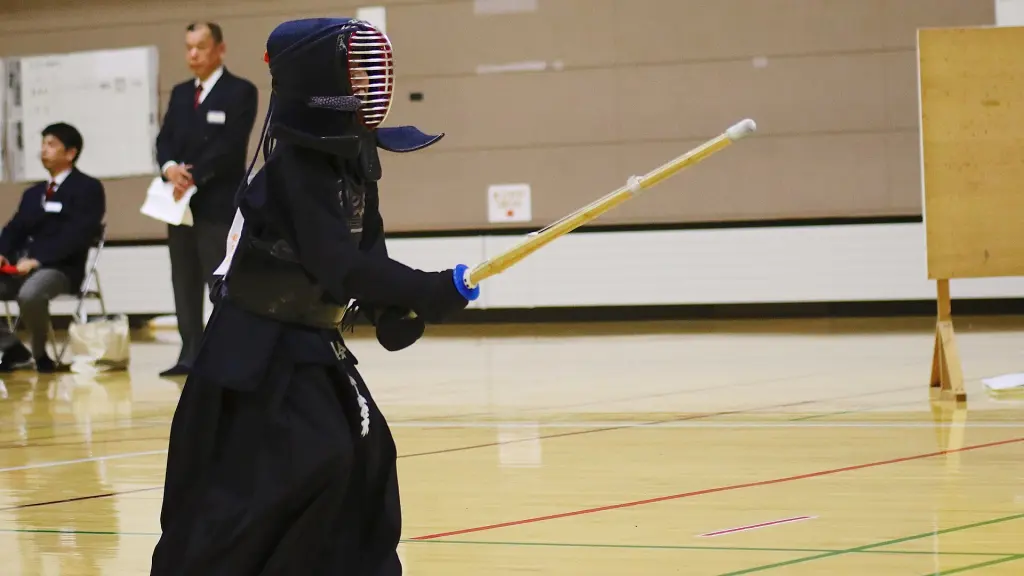
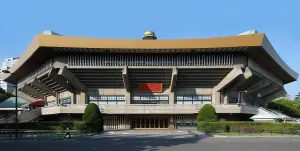
Image: MIKI Yoshihito / Wikimedia Commons / Flickr · CC BY 2.0
Overview
A strike becomes meaningful through the whole action.
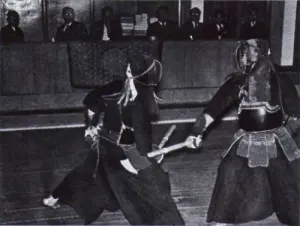
Kendo is a modern Japanese sword discipline practised with a bamboo shinai, protective bōgu, paired forms, and regulated matches. A target touch is not enough. Distance, opportunity, the correct striking part and direction, posture, voiced and bodily commitment, and continued awareness all shape whether an action is recognised. Training also includes Nihon Kendō Kata with wooden swords, linking competitive practice to principles of sword use and to a wider history that modern Kendo reorganised rather than simply preserved. Read Kendo through this sequence, then place competition beside fundamentals, free practice, kata, etiquette, grading, and education.
Read the space from which either person can act.
Act when posture, attention, or timing opens a line.
Target, shinai, posture, movement, and spirit must agree.
Continue balance, readiness, and relation after contact.
- Japanese
- 剣道
“Way of the sword” - Classification
- Modern budō and competitive sword discipline
- Formal study
- Nihon Kendō Kata
- Japan
- All Japan Kendo Federation, founded 1952
- International
- International Kendo Federation, founded 1970
01Historical frame
Older sword schools, safer paired practice, modern institutions.
Kendo is historically connected to Japanese swordsmanship, but it is not one unchanged samurai syllabus. Equipment, public institutions, school education, standard kata, and postwar reorganisation all shaped the modern discipline.
- 18th century
Armoured practice expands
Bamboo swords and improved protection allowed committed strikes with less danger than wooden or metal weapons. Inter-school practice helped the method spread.
- 1895
National organisation
The Dai Nippon Butoku Kai became a major setting for standardisation, grading, instruction, and public presentation.
- 1912
Standard paired forms
The forms later called Nihon Kendō Kata were created to connect diverse sword traditions through a shared curriculum.
- 1952 onward
Postwar reconstruction and global growth
The All Japan Kendo Federation rebuilt national practice. The International Kendo Federation followed in 1970 and organises the World Kendo Championships.
02Equipment map
Protection makes repeated exchange possible; it does not remove risk.
Correct fit, inspection, supervised instruction, and attention to legal target areas are part of practice—not preliminary details outside it.
Shinai
Usually four bound bamboo slats, designed to be resilient while retaining a defined striking side and tip.
Bōgu
Men protects head and throat; kote the wrists; dō the torso; tare the waist and upper legs.
Keikogi & hakama
The jacket and pleated hakama allow movement beneath the armour.
Men · kote · dō · tsuki
Head, wrists, torso, and a restricted throat thrust. A protected surface is not automatically a valid target in every situation.
03Learning system
Build form, repeat coordination, isolate principle, then adapt.
A class may combine these methods in a different order. Together they explain why Kendo cannot be reduced to tournament bouts.
Kihon
Posture, grip, footwork, cuts, and safe receiving distance.
Kirikaeshi
Linked strikes develop rhythm, breathing, coordination, and endurance.
Kata
Paired forms isolate distance, initiative, blade line, and decisive movement.
Ji-geiko
Freer exchange tests timing and opportunity with a responsive partner.
Kata uses bokutō—and, in some forms, a short sword—rather than reproducing an armoured match with shinai.
04Valid-strike lens
Ask five questions before calling a contact a point.
The scoring standard joins physical contact to quality of action. It is interpretive, which is why multiple referees and current competition rules matter.
- 1Was a permitted target struck?
Context matters, especially for thrusting and for target availability during movement.
- 2Did the correct part of the shinai arrive correctly?
Referees consider the striking portion and the orientation associated with the blade edge.
- 3Did posture and movement support the action?
A disconnected reach or accidental brush does not show the same body–sword coordination.
- 4Was commitment expressed?
Voice, intent, and bodily action are read together rather than as a shout added after contact.
- 5Did awareness continue?
Zanshin is visible in balance, readiness, and the relationship maintained after the strike.
For match format, penalties, and refereeing procedure, use Kendo Rules. For the scoring concept itself, see Yūkō-datotsu.
05Two lenses
Kata clarifies; keiko makes decisions unstable.
They are not substitutes. Each makes a different part of sword principle easier to observe.
Nihon Kendō Kata
Fixed roles and sequences foreground distance, initiative, line, timing, and the logic of a decisive action without competition for points.
The forms also connect modern practice to principles of handling a sword, while classical schools retain separate lineages and curricula.
Armoured keiko
A partner can change distance, close a line, resist an opportunity, or counter. The practitioner must recognise rather than merely repeat.
The All Japan Kendo Federation’s educational framing places technical study beside etiquette, safety, self-cultivation, and sincere interaction.
06Institutions & world
Standard rules connect many local training cultures.
Kendo appears in schools, universities, police organisations, community dōjō, and overseas clubs. Shared federation structures make competition and grading portable, while vocabulary, class rhythm, and local participation still vary.
Boundary: classical sword schools may be studied alongside Kendo, but a Kendo grade does not by itself establish membership or licence in a classical lineage.
Sources and further reading
- All Japan Kendo Federation, The History of Kendo.
- All Japan Kendo Federation, The Concept of Kendo.
- All Japan Kendo Federation, Handbook for Kendo Shiai and Shinpan Management.
- Nippon Budokan, Introduction of Budo Disciplines.
- Web Japan, Martial Arts: From Ancient Tradition to Modern Sport.
- Japanese Academy of Budo, An Introductory Study of the History of Budo Technique.
Last updated:

.jpg)