Judo
Judo Belt Ranks
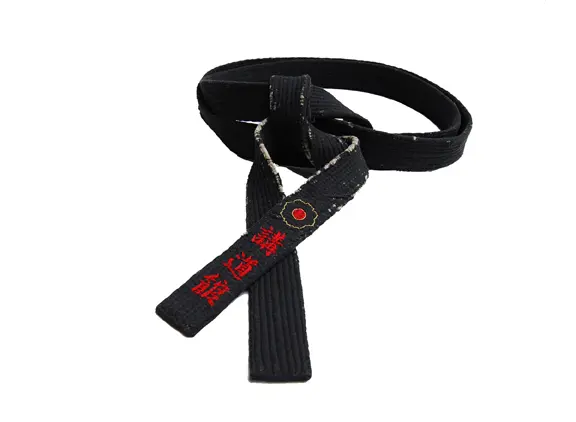
Image: Nikkei National Museum / Wikimedia Commons · Attribution required; commercial and derivative use permitted
Overview
Grade, authority and belt colour.
Identify the awarding organisation before comparing colours. Kyū counts towards first kyū; dan counts upwards from shodan.
Kyū · 級
Higher-numbered kyū → … → 2nd kyū → 1st kyū
Grades below dan; the starting number depends on the system.
Dan · 段
Shodan (1st dan) → 2nd dan → 3rd dan → …
Grades continue upwards under the awarding body’s requirements.
At a glance
- Japanese terms
- 級 (kyū); 段 (dan); 帯 (obi)
- Romanisation
- kyū, dan, obi
- Martial art
- Judo
- Japanese dan authority
- Kodokan Judo Institute
- International reference
- IJF Grades and Dan Commission
- Current IJF documents researched
- January 2026
Context
Judo belt ranks express grade through kyū (級) levels below dan and dan (段) levels from first dan upward. Jigorō Kanō introduced Judo's modern dan system in 1883, and the Kodokan remains Japan's central dan-grading authority. The black belt marks entry into the dan grades, not automatic mastery of every branch of Judo. Beginner colour sequences are not universal: the All Japan Judo Federation explicitly notes that kyū belt colours are not nationally standardised, and international organisations use differing progressions and intermediate grades. In 2026 the IJF issued revised grade, dan, and colour-belt documents intended to create a clearer international reference while retaining substantial national and instructor responsibility.
Kyū and dan
This awarded grade differs from professional sumo’s banzuke, a ranking list rebuilt between tournaments in relation to the competitive field.
Kyū grades count downward toward first kyū: a beginner may start ungraded or at a higher-numbered kyū and advance toward 1st kyū. Dan grades count upward from shodan, 1st dan. The two directions reflect a division between grades below dan and stages within dan.
Rank is awarded under an organisation's regulations. Examination content may include technique, kata, contest record, teaching, time in grade, service, age, and character in different proportions. A belt colour alone does not identify which regulation produced the grade.
Origins of the dan system
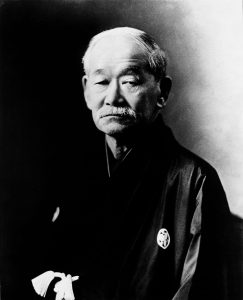
Scholarly research places Kanō's introduction of Judo dan grades in August 1883, when Tomita Tsunejirō and Saigō Shirō received the first shodan awards. Kanō drew on earlier Japanese ranking ideas but rejected long, sparsely divided licence systems in favour of stages that could recognise continued development.
The system was formalised and revised over time. The Kodokan chronology records publication of a Kodokan dan-kyū regulation in 1920, while later academic work notes further codification and amendment. Claims that every modern belt colour appeared fully formed in 1883 are not supported by these sources.
Kodokan rank structure
The Kodokan awards dan from shodan upward. Promotion follows Kodokan qualifications and can be conducted directly or through authorised organisations. Requirements vary with grade and route; rank is not obtained solely by winning a fixed number of contests.
Kodokan youth kyū grades are a separate example. The Institute lists ungraded white, 7th and 6th kyū light blue, 5th yellow, 4th orange, 3rd green, 2nd purple, and 1st brown. This is a Kodokan youth scheme, not a world standard.
Kodokan youth scheme
| Grade | Belt colour |
|---|---|
| Ungraded | White |
| 7th–6th kyū | Light blue |
| 5th kyū | Yellow |
| 4th kyū | Orange |
| 3rd kyū | Green |
| 2nd kyū | Purple |
| 1st kyū | Brown |
Black belt ranks
In the Japanese system described by the AJJF, 1st through 5th dan wear black. Sixth through 8th dan may wear red-and-white, and 9th and 10th dan red. The higher colours identify senior dan levels; they are not additional techniques or separate martial arts.
Tournament dress can be narrower than rank custom. AJJF-hosted contest control, for example, normally requires black belts for dan holders and white for ungraded athletes rather than higher ceremonial colours. Rank and the belt permitted in a particular event should therefore be distinguished.
| Japanese dan convention (AJJF explanation) | Belt |
|---|---|
| 1st–5th dan | Black |
| 6th–8th dan | Red-and-white may be worn |
| 9th–10th dan | Red may be worn |
Colour belts
Coloured belts below black provide visible intermediate goals, especially for young practitioners. Their number, order, names, minimum ages, and use of half-colours or stripes differ among federations. The AJJF states directly that kyū colours are not nationally unified in Japan.
The IJF Colour Belts Programme issued in January 2026 provides a teaching reference. The IJF describes it as guidance rather than a compulsory worldwide syllabus, leaving national federations and instructors room to adapt.
Children and national differences
Many organisations use more kyū steps for children than for adults so that progress can be recognised at shorter intervals. Some retain the same colour for more than one grade; others use tabs, stripes, or mixed colours. Age limits may postpone dan promotion even when technical material is known.
A child transferring between countries may therefore keep experience but be mapped to a different visible belt. Responsible comparison starts with the issuing federation and its current table, not a universal colour chart assembled from unrelated systems.
| System / authority | What it establishes | Colour comparison |
|---|---|---|
| Kodokan | Dan promotion; its own youth kyū example | Read the Kodokan youth chart on its own. |
| AJJF / domestic organisations | Japanese competition and federation context | Kyū colours are not nationally standardised. |
| IJF 2026 framework | International grade recognition and educational references | Colour-belt programme is guidance, not a single compulsory global sequence. |
| National federation / local programme | Age divisions, examinations and grade progression | Use that organisation’s dated table; do not merge colours between systems. |
IJF grading
The IJF Grades and Dan Commission published new regulations, colour-belt material, official dan-award rules, and a Belt Grades Guide in January 2026. The accompanying IJF explanation says that national grading disparities had produced inconsistent international recognition.
From 2026, dan grades awarded by national federations are to be validated through the IJF framework, with a transition period. This international validation does not erase the Kodokan's own grading authority or make kyū colours identical worldwide.
What a black belt means
A black belt indicates dan rank under the awarding body. Shodan literally means the beginning level or first step, and in institutional practice it marks a practitioner who has passed defined foundational requirements. It does not certify invincibility, professional teaching status, or complete knowledge of all kata and techniques.
The practical meaning of a dan grade depends on the regulation, date, age, route of promotion, and organisation. Comparison is most reliable when those details are stated, especially across countries.
Terminology
English phrases such as “black-belt level” can blur grade, skill, and teaching authority. The Japanese terms identify rank status more precisely when the awarding organisation is also named.
| Term | Meaning |
|---|---|
| Mukū | Ungraded |
| Kyū | Grade below dan |
| Ikkyū | First kyū, normally the highest kyū grade |
| Yūdansha | Person holding dan rank |
| Mudansha | Person without dan rank |
| Shodan | First dan |
| Obi | Belt |
Sources
- Kodokan Judo Institute, Promotion qualifications.
- Kodokan Judo Institute, Youth Division Q&A.
- All Japan Judo Federation, Judogi and belts.
- International Judo Federation, Grades and Dan Commission documents, 2026.
- International Judo Federation, Towards a Universal Reference for Judo Grades, 23 January 2026.
- Todo Yoshiaki and Murata Naoki, History and meaning of dan and kyu grades, Japan Journal of Budo.
- Tsujihara Kentaro, Takeda Ryuichi and Niwa Kenichi, A Study on the System of Dan-i in Brazil Judo.
Last updated: