Judo
Te-waza
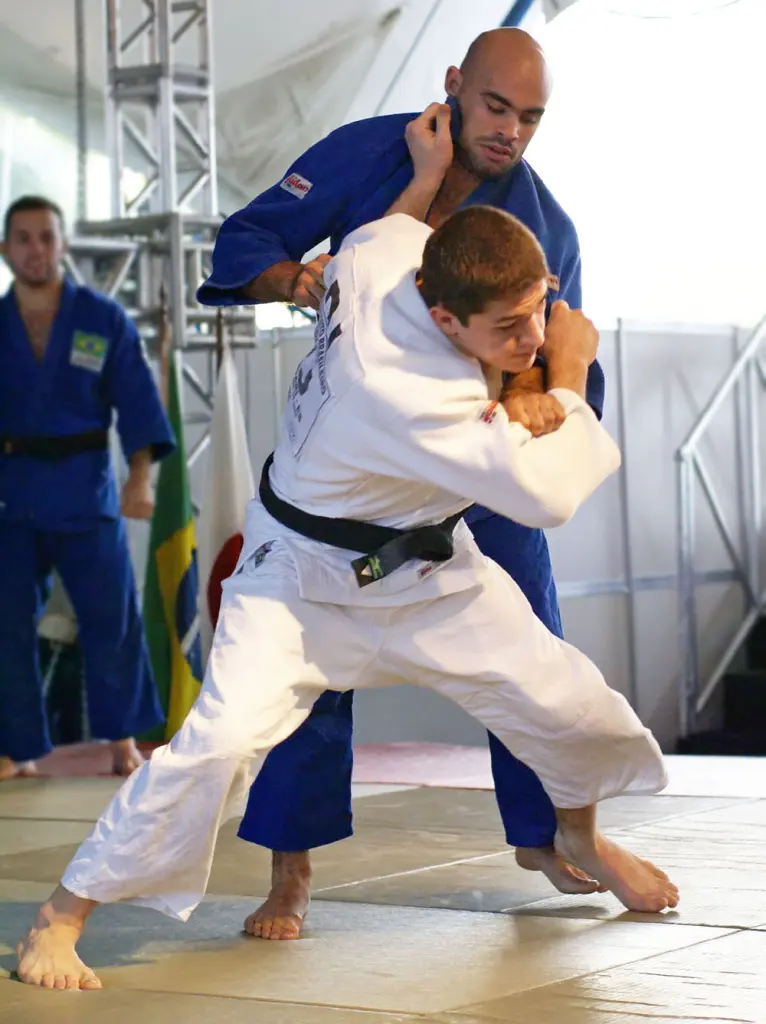
Image: RodrigoFavera / Wikimedia Commons · CC BY 2.0
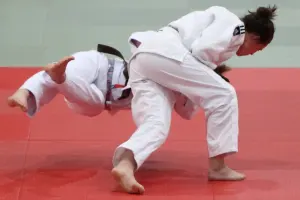
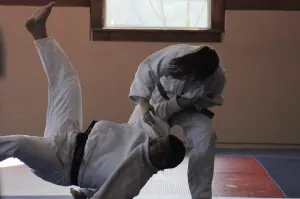
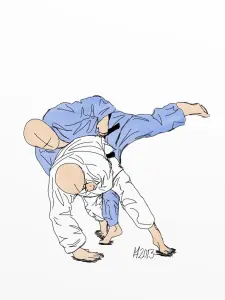
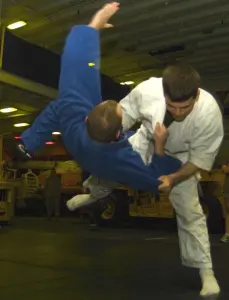
Te-waza (手技, hand techniques) are one of the three standing branches within Nage-waza in Kodokan Judo. The Kodokan currently recognises 16, ranging from shoulder throws and body drops to counters and historically classified leg-gripping throws. The name identifies the hands or arms as the most conspicuous part of the standard throwing mechanism; it does not mean that posture, hips, legs, and footwork are absent. Te-waza matter because the category links formal nomenclature, kata, technical analysis, and competition without making them identical. Several listed techniques remain part of the Kodokan curriculum even though their usual standing entries are restricted under current International Judo Federation rules.
Overview
| Japanese | 手技 |
|---|---|
| Reading | てわざ |
| Romanisation | te-waza |
| Meaning | Hand techniques |
| Martial art | Judo |
| Parent category | Nage-waza → tachi-waza |
| Official Kodokan total | 16 techniques |
| Technical authority | Kodokan Judo Institute |
Name and classification
The Japanese term combines te (手), meaning hand, with waza (技), meaning technique. In the Kodokan system, te-waza are one of the three categories of tachi-waza, or standing throws, alongside Koshi-waza and Ashi-waza. Tachi-waza and Sutemi-waza together form nage-waza.
The label describes the principal or most visibly decisive part of a representative form. The Kodokan's 2026 promotion text expressly cautions that every throw uses the hands, feet, and hips. Classification is therefore a technical convention, not a claim that one body part acts alone.
The 16 Kodokan te-waza
The current Kodokan list, dated 1 April 2017, contains the following 16 names. These are official classifications, not a ranking of difficulty, frequency, or competition value.
| Technique | Japanese |
|---|---|
| Seoi-nage | 背負投 |
| Ippon-seoi-nage | 一本背負投 |
| Seoi-otoshi | 背負落 |
| Tai-otoshi | 体落 |
| Kata-guruma | 肩車 |
| Sukui-nage | 掬投 |
| Obi-otoshi | 帯落 |
| Uki-otoshi | 浮落 |
| Sumi-otoshi | 隅落 |
| Yama-arashi | 山嵐 |
| Obi-tori-gaeshi | 帯取返 |
| Morote-gari | 双手刈 |
| Kuchiki-taoshi | 朽木倒 |
| Kibisu-gaeshi | 踵返 |
| Uchi-mata-sukashi | 内股すかし |
| Ko-uchi-gaeshi | 小内返 |
Technical principle
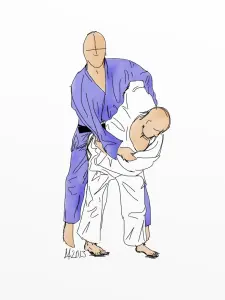
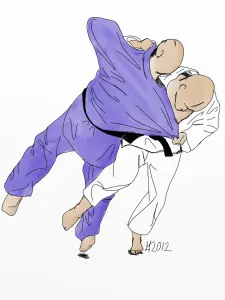
Te-waza include several different mechanisms. In the seoi family, the arms connect the receiving partner to a turning body and shoulder line. In tai-otoshi, the hands direct a fall across a positioned body line without classifying the throw as a leg technique. Uki-otoshi and sumi-otoshi emphasise directional hand action and the use of an already weakened posture. The category also includes counters such as uchi-mata-sukashi and ko-uchi-gaeshi.
Because the group is defined by the principal action rather than by visual resemblance, its members do not all share one entry, grip, or trajectory. A 1999 Japanese movement-structure study proposed a different analytical grouping and showed why the traditional body-part labels do not exhaust the movement structure of nage-waza.
Kuzushi, tsukuri and kake
Kuzushi is the creation or recognition of instability; tsukuri is the positioning and preparation of both partners; and kake is the application or completion of the throw. In te-waza, the hands often make the changes in direction easiest to see, but their effect depends on stance, distance, body rotation, and the receiving partner's movement.
These phases are analytical rather than necessarily separate. A practitioner may create imbalance while entering or continue to redirect the partner during completion. Treating them as three pauses can obscure the continuous character of a successful throw.
Place in kata and the Kodokan syllabus
The te-waza set of Nage-no-kata consists of uki-otoshi, seoi-nage, and kata-guruma. The Kodokan states that Nage-no-kata contains three representatives from each of the five throwing categories. Kata studies agreed attacks, roles, order, and method; it is not a list of every variation used in randori.
Te-waza also appear throughout the Gokyō no Waza, the five-group teaching syllabus for 40 throws. The Gokyo and the current 16-name te-waza catalogue are related but not equivalent: the modern category also contains names outside the 40-throw Gokyo.
Variation and neighbouring classifications
Official definitions describe representative right-sided forms, not the only legitimate performance. Grip, stance, direction, height, and entry may change. Seoi-nage, for example, can be performed from different grips and body levels while remaining recognisable through its principal mechanism.
Some throws combine conspicuous actions from more than one category. Yama-arashi includes a strong leg action yet remains officially te-waza; tai-otoshi positions a leg across the line of movement but is not classified as ashi-waza. The official category follows the recognised decisive action of the standard form, not a simple inventory of which limbs are visible.
Training context
Te-waza are studied through kata, Uchikomi, controlled throwing practice, and randori. Uchikomi can refine fitting, posture, and hand-body coordination, while nagekomi adds controlled completion and ukemi. Randori tests whether a practitioner can select and adapt a throw against a responsive partner.
Training should preserve posture and control rather than treating speed or force as substitutes for timing. Methods involving restricted grips or unusual falls require suitable supervision and should not be inferred from a technique name alone.
Competition rules and restrictions
The rules reviewed here are the IJF Sport and Organisation Rules, version 14 August 2026. They govern IJF competition, not the entire Kodokan curriculum or every national and youth event. Current rules penalise hooking or holding a standing opponent's legs with the hand or arm, gripping the trousers, or touching below the top of the inner thigh while the action remains in tachi-waza.
This restriction affects the ordinary direct forms of morote-gari, kuchiki-taoshi, kibisu-gaeshi, and leg-gripping forms of sukui-nage. These names remain among the 16 Kodokan te-waza. Their inclusion in the catalogue therefore does not make their standard leg-grab entries legal in current IJF competition. The action actually performed, including grip and phase of play, determines legality.
The same rules treat dangerous head-diving actions in throws such as seoi-nage, tai-otoshi, and kata-guruma as direct hansoku-make. Age divisions and national federations may impose additional restrictions, so a current event rulebook should be checked separately.
Sources
- Kodokan Judo Institute, Judo Technique Names.
- Kodokan Judo Institute, Names of Judo Techniques, 1 April 2017.
- Kodokan Judo Institute, Definitions of Judo Techniques.
- Kodokan Judo Institute, Promotion Examination Text: Kodokan Judo, 2026.
- Kodokan Judo Institute, Kata.
- All Japan Judo Federation, Number of Judo Techniques.
- International Judo Federation, Judo Techniques.
- International Judo Federation, Sport and Organisation Rules, 14 August 2026.
- Mito Noriyuki and Kamiya Tadaaki, A Study on the Classification of Judo Throwing Techniques Based on Movement Structure.
Last updated: