Judo
Judo, Jujutsu and Brazilian Jiu-Jitsu
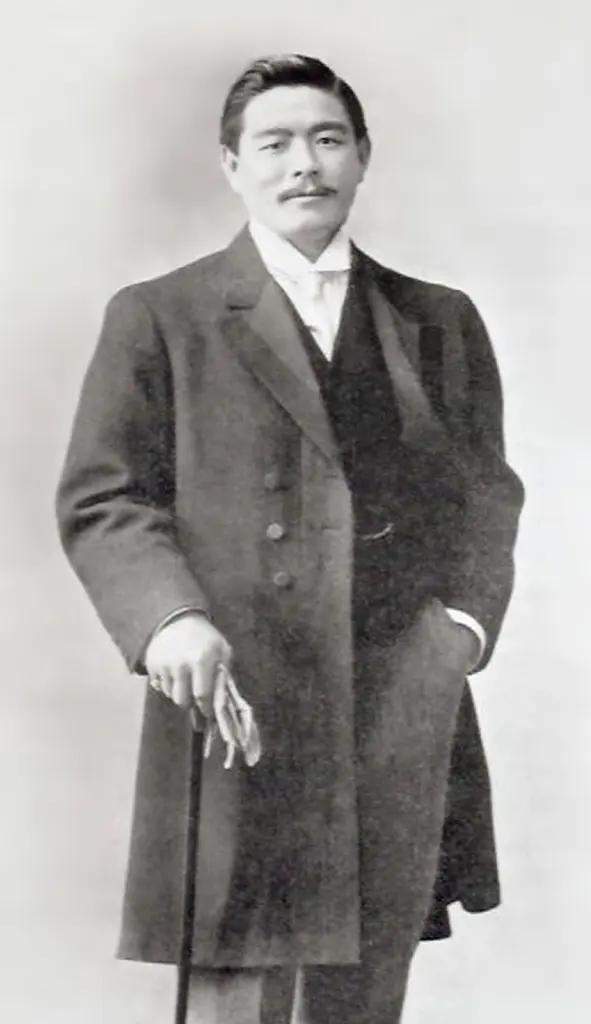
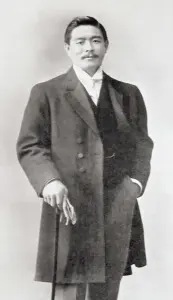
Image: Unknown photographer / National Diet Library of Japan via Wikimedia Commons · Public domain
Judo, Japanese Jujutsu, and Brazilian Jiu-Jitsu share historical and technical connections, but they are not three labels for the same practice. Jujutsu names a diverse field of Japanese schools and modern systems. Kodokan Judo was founded by Kanō Jigorō in 1882 after study of several Jujutsu traditions and developed its own educational institutions, practice methods, and contests. Brazilian Jiu-Jitsu emerged in Brazil through the transmission of Judo and related grappling, followed by local development among multiple teachers and communities. All three may include throws, controls, strangles, and joint techniques, yet they organise those methods differently. A useful comparison therefore separates historical origin from present-day rules and avoids ranking one art as universally superior.
Overview
| Compared subjects | Judo, Japanese Jujutsu, Brazilian Jiu-Jitsu |
|---|---|
| Shared field | Grappling and close combat |
| Key distinction | Tradition, curriculum, rules, and institutions |
| Judo founded | 1882, Tokyo |
| Brazilian development | Twentieth-century Brazil |
Terms and scope
Jujutsu is an umbrella name for numerous Japanese traditions and for some later systems that adopted the name. It cannot be reduced to one curriculum. Judo identifies the modern art and educational system centred on the Kodokan. Brazilian Jiu-Jitsu identifies a grappling tradition developed in Brazil.
The spellings jujutsu and jiu-jitsu reflect different histories of romanisation and international use. They are helpful cultural clues but do not alone prove the origin or content of an organisation.
Historical relationship
Kanō studied traditions including Tenjin Shin’yō-ryū and Kitō-ryū before establishing the Kodokan. He selected, adapted, and systematised techniques within a programme that joined physical education, moral aims, and controlled free practice.
Kodokan judoka later travelled abroad. Mitsuyo Maeda taught and demonstrated in Brazil, becoming an important figure in the history later narrated by Brazilian Jiu-Jitsu communities. Research also points to a broader network of Japanese migrants, instructors, students, and local institutions, so the development should not be reduced to a single encounter.
Curriculum and training
Classical Jujutsu schools commonly transmit school-specific kata and documents. The curriculum may address armed and unarmed circumstances, restraint, striking, throwing, and grappling according to the school’s historical setting. Modern Jujutsu organisations vary widely.
Judo combines kata, repeated technical study, randori, and contest. Brazilian Jiu-Jitsu schools generally place substantial emphasis on positional drilling and live sparring, often called rolling. Actual practice differs among schools in every tradition.
Standing and groundwork
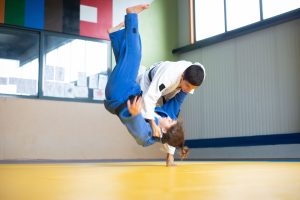
Judo’s classified curriculum contains both nage-waza and katame-waza. Mainstream contest rules strongly reward a decisive throw and regulate how long groundwork continues. Shichitei Judo preserves a different collegiate rules culture with extended ground engagement.
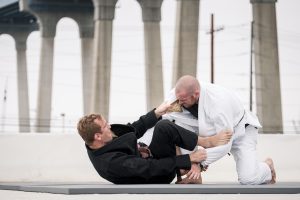
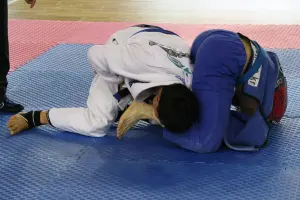
Brazilian Jiu-Jitsu contests usually allow longer positional exchanges on the ground and recognise a wider range of scoring positions and submissions. Jujutsu schools may not divide their curriculum according to either sport’s strategic priorities.
Rules and objectives
An IJF Judo match can be won by ippon through a qualifying throw, hold, strangle, or permitted arm lock. Lesser scores and penalties shape the contest. Brazilian Jiu-Jitsu rules award points for specified positional achievements and also permit victory by submission, with divisions and legal techniques governed by the event rules.
Many Jujutsu traditions are not organised primarily around open competition. Where competition exists, its rules belong to the relevant modern organisation. Current governing-body documents should be consulted because legal actions, scoring, and age restrictions can change.
Rank and institutions
Judo uses the modern kyū and dan framework associated with the Kodokan and national federations. Brazilian Jiu-Jitsu uses its own belt sequence and graduation rules, which are not equivalent grade for grade to Judo. Organisations may recognise rank differently.
Classical Jujutsu schools may use licences such as mokuroku or menkyo rather than coloured belts. Some modern Jujutsu bodies use kyū and dan grades. Institutional identity is therefore essential when interpreting a rank title.
Shared techniques, different systems
A throw, hold, strangle, or joint action may look related across the three arts. That resemblance can reflect historical transmission, common problems of human movement, or later exchange. The same movement can nevertheless have a different name, entry, safety rule, or strategic value.
Cross-training comparisons are most accurate when they specify the school and ruleset. Claims that one art is simply the original, sport, or ground version of another erase the diversity within Jujutsu, Judo, and Brazilian Jiu-Jitsu.
Sources
- International Judo Federation, History of Judo.
- International Judo Federation, From Martial Art to Olympic Sport.
- International Brazilian Jiu-Jitsu Federation, Rules Books and Videos.
- International Brazilian Jiu-Jitsu Federation, Graduation System.
- Research Journal of Budo, Historical Changes from Jujutsu to Kodokan Judo.
- Universidade do Estado de Santa Catarina, The Origins of Brazilian Jiu-Jitsu.
Last updated: