Judo
Kansetsu-waza
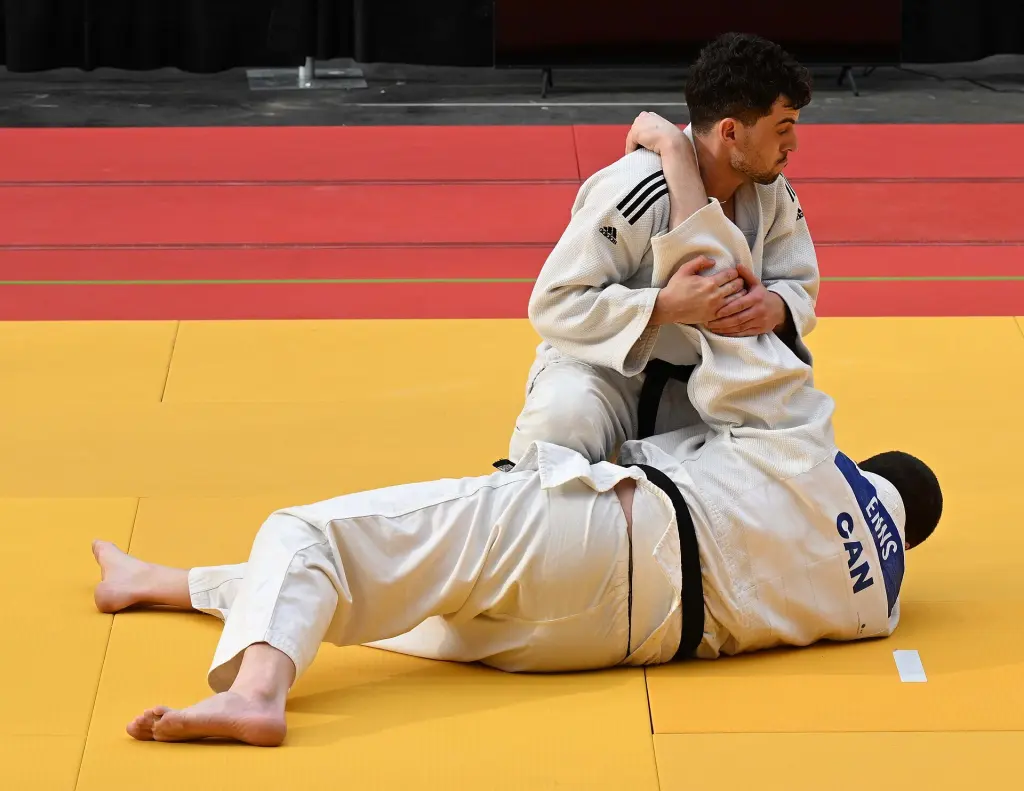
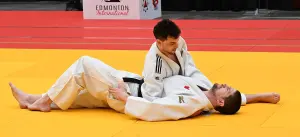
Image: Edmonton International Judo Championship / Wikimedia Commons · Public domain (author dedication via Flickr)
Kansetsu-waza (関節技) are the joint-locking techniques within Kodokan Katame-waza. The Kodokan currently lists ten named techniques, including nine arm-control forms and ashi-garami, a leg entanglement retained in the technical and kata syllabus. Their importance lies in the distinction between Judo as a complete educational system and Judo under a particular competition code. Under the International Judo Federation rules researched for this article, dated 14 August 2026, joint locks in contest must be directed to the elbow; attacks on other joints receive hansoku-make. The official Kodokan catalogue therefore must not be reduced to the smaller set of applications legal in present IJF competition.
Overview
| Japanese | 関節技 |
|---|---|
| Reading | かんせつわざ |
| Romanisation | kansetsu-waza; common search form: kansetsu waza |
| Meaning | Joint-locking techniques |
| Martial art | Judo |
| Parent category | Katame-waza |
| Official classification | 10 Kodokan techniques |
| Current IJF rule reference | Sport and Organisation Rules, 14 August 2026 |
Definition
The Kodokan defines kansetsu-waza as techniques that control an opponent by applying a joint lock. In training and contest the objective is submission or recognised control, not injury. The person receiving the technique can signal maitta—surrender—verbally or by tapping.
Kansetsu-waza are one branch of katame-waza beside Osaekomi-waza and Shime-waza. They are commonly studied in Ne-waza, but the two terms are not synonyms: ne-waza describes the ground phase, while kansetsu-waza is a technical classification.
Kodokan classification
The current Kodokan list contains 32 katame-waza: ten holds, twelve strangles and ten joint locks. This numerical classification describes the recognised technique syllabus. It does not state that every historical form or every possible application is permitted in shiai.
Nine names begin with ude-hishigi or otherwise describe arm control; ashi-garami is the exception directed to the leg. A name identifies the principal structure of control, while entries, grips and transitions can vary without creating a new official technique.
The ten techniques
The table follows the current Kodokan technique list. Romanisation follows Kodokan usage; English glosses explain the name rather than prescribe one execution.
| Kodokan name | Japanese | Name reference |
|---|---|---|
| Ude-garami | 腕緘 | Entangled arm lock |
| Ude-hishigi-juji-gatame | 腕挫十字固 | Cross arm lock |
| Ude-hishigi-ude-gatame | 腕挫腕固 | Arm-controlled arm lock |
| Ude-hishigi-hiza-gatame | 腕挫膝固 | Knee-assisted arm lock |
| Ude-hishigi-waki-gatame | 腕挫腋固 | Armpit arm lock |
| Ude-hishigi-hara-gatame | 腕挫腹固 | Abdomen arm lock |
| Ude-hishigi-ashi-gatame | 腕挫脚固 | Leg-controlled arm lock |
| Ude-hishigi-te-gatame | 腕挫手固 | Hand-controlled arm lock |
| Ude-hishigi-sankaku-gatame | 腕挫三角固 | Triangular arm lock |
| Ashi-garami | 足緘 | Entangled leg lock |
Why the elbow dominates modern contest Judo
The prevalence of elbow locks in contemporary contest is a rules outcome, not a redefinition of the historical Kodokan list. The 14 August 2026 IJF rules permit kansetsu-waza only when directed to the elbow joint. Applying a lock to another joint is a direct hansoku-make offence.
This boundary also explains why ashi-garami remains an official Kodokan technique and appears in kata, yet is not a legal leg lock in IJF shiai. Ude-garami and other arm controls must likewise be applied within the elbow-only contest rule; their name alone does not make every variation legal.
Kata
Katame-no-kata presents five kansetsu-waza: ude-garami, ude-hishigi-juji-gatame, ude-hishigi-ude-gatame, ude-hishigi-hiza-gatame and ashi-garami. Their inclusion preserves formal study of control, response and release beyond ordinary contest selection.
Kata practice follows an agreed sequence and roles for tori and uke. It should not be read as evidence that all five techniques are legal in modern IJF competition; kata and shiai have related but different purposes.
Randori
In Randori, kansetsu-waza are studied through entries, transitions, control and timely release under supervision. The resistance is live, but partners retain responsibility for one another and stop immediately when submission is signalled.
Selection depends on age, grade, local policy and instructor judgement. Ground exchanges can move rapidly, so learners first require posture, escape awareness and a clear understanding of tapping before resistance is increased.
Competition restrictions
Current IJF competition permits elbow-directed kansetsu-waza and prohibits locks to other joints. Dangerous application, continuation after submission or loss of control can be penalised independently of the technique name. Current transition and standing-to-ground provisions also affect whether an action may continue.
IJF rules do not define every Judo event. The All Japan Judo Federation publishes domestic provisions, and youth formats impose additional restrictions. In Japan, special youth rules have prohibited kansetsu-waza and shime-waza for middle-school-age competitors and younger; organisers and coaches must check the version in force for the specific event.
Safety
Joint locks are practised as controlled submission techniques. The recipient should signal before pain or structural stress becomes severe, and the applier must release at once. Progression, qualified supervision and suitable mat space are essential.
The Kodokan’s safety guidance emphasises that kansetsu-waza and shime-waza seek maitta, not injury. Medical research on Judo shoulder and elbow injuries further supports conservative control, prompt reporting of symptoms and training plans appropriate to experience.
Terminology
Kansetsu means a joint, and waza means technique. English sources often use “joint locks,” while “armlocks” describes only the dominant modern contest subset. “Submission hold” is broader and may also include shime-waza.
Juji-gatame is the familiar shortened form of ude-hishigi-juji-gatame. It is one member of the ten-technique category, not a synonym for kansetsu-waza as a whole.
Sources
- Kodokan Judo Institute, Judo Technique Names.
- Kodokan Judo Institute, Names of Judo Techniques.
- Kodokan Judo Institute, Definitions of Judo Techniques, 2022.
- Kodokan Judo Institute, Katame-no-kata.
- Kodokan Judo Institute, New Year Message on Safe Practice, 2025.
- International Judo Federation, Sport and Organisation Rules, 14 August 2026.
- All Japan Judo Federation, Referee Workshop and 2026 Youth Rules.
- Noriaki Koshida, Shoulder and Elbow Injuries in Judo and Their Prevention, 2019.
Last updated: