Judo
Ashi-waza
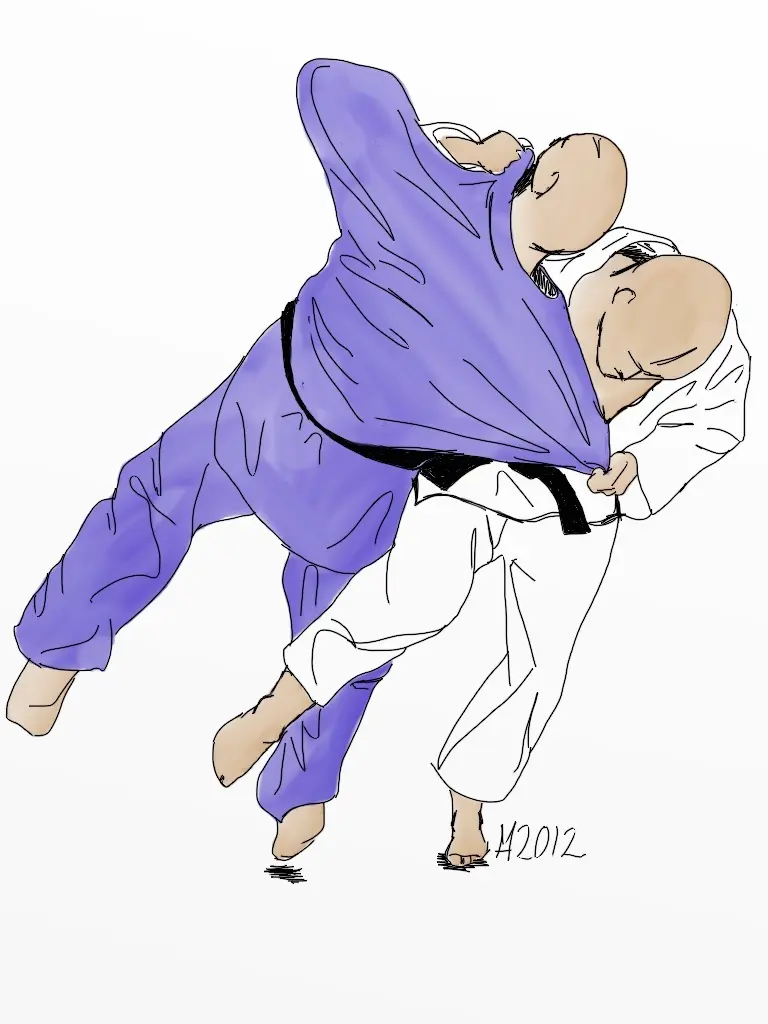
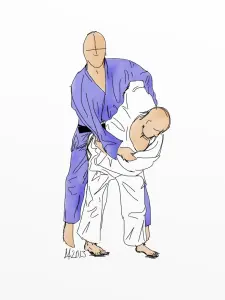
Image: Michael Hultström / Wikimedia Commons · CC BY-SA 3.0
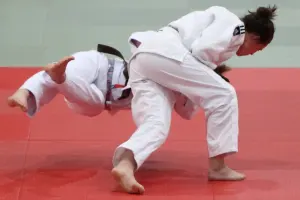
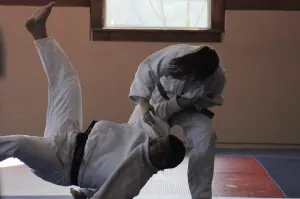
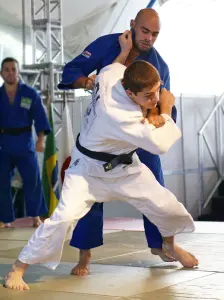
Ashi-waza (足技, foot and leg techniques) are one of the three standing branches of Nage-waza in Kodokan Judo. The Kodokan currently recognises 21, making ashi-waza the largest of the five throwing categories. The group includes sweeps, reaps, supporting actions, hooks, wheels, drops, and counters, from de-ashi-harai and o-soto-gari to uchi-mata and several named gaeshi techniques. The category matters because it connects fine timing and footwork with powerful whole-body throwing. 'Foot technique' does not mean that the hands and trunk are secondary in every phase, and the use of a leg in a throw is not by itself enough to make the action ashi-waza under Kodokan classification.
Overview
| Japanese | 足技 |
|---|---|
| Reading | あしわざ |
| Romanisation | ashi-waza |
| Meaning | Foot and leg techniques |
| Martial art | Judo |
| Parent category | Nage-waza → tachi-waza |
| Official Kodokan total | 21 techniques |
| Technical authority | Kodokan Judo Institute |
Name and classification
Ashi (足) can refer to the foot or leg, and waza (技) means technique. Ashi-waza are grouped with Te-waza and Koshi-waza as tachi-waza, the standing branch of Judo throwing. Sutemi-waza form the sacrifice-throwing branch.
The category name identifies the foot or leg as the most conspicuous part of the recognised throwing mechanism. The Kodokan nevertheless stresses that all throws coordinate the hands, hips, feet, posture, and body movement.
The 21 Kodokan ashi-waza
The current Kodokan list contains the following 21 foot and leg techniques. The final six are named counters, but countering is also possible with techniques from other categories.
| Technique | Japanese |
|---|---|
| De-ashi-harai | 出足払 |
| Hiza-guruma | 膝車 |
| Sasae-tsurikomi-ashi | 支釣込足 |
| O-soto-gari | 大外刈 |
| O-uchi-gari | 大内刈 |
| Ko-soto-gari | 小外刈 |
| Ko-uchi-gari | 小内刈 |
| Okuri-ashi-harai | 送足払 |
| Uchi-mata | 内股 |
| Ko-soto-gake | 小外掛 |
| Ashi-guruma | 足車 |
| Harai-tsurikomi-ashi | 払釣込足 |
| O-guruma | 大車 |
| O-soto-guruma | 大外車 |
| O-soto-otoshi | 大外落 |
| Tsubame-gaeshi | 燕返 |
| O-soto-gaeshi | 大外返 |
| O-uchi-gaeshi | 大内返 |
| Hane-goshi-gaeshi | 跳腰返 |
| Harai-goshi-gaeshi | 払腰返 |
| Uchi-mata-gaeshi | 内股返 |
Sweeps, reaps, supports, hooks and wheels
English descriptions often group ashi-waza by the Japanese action word in the name. Harai indicates a sweeping action, gari a reaping action, gake a hooking action, guruma a wheeling action, otoshi a dropping action, and gaeshi a reversal or counter. These translations are useful orientation, not complete definitions.
The distinction depends on the relationship of the attacking leg, the receiving partner's support, direction of kuzushi, and the larger body action. For example, a sweep timed to a lightly loaded moving foot differs from a reap that removes a weight-bearing support.
Technical principle
Ashi-waza coordinate the attacking foot or leg with the movement of the whole body. Some act directly on a foot or supporting leg; others place the leg as a barrier or axis while the hands and trunk rotate the receiving partner. Uchi-mata applies a rising action to the inner thigh, whereas sasae-tsurikomi-ashi uses the foot as a support against continued forward movement.
Timing is especially visible in foot sweeps, but power and timing are not opposites. A strong reap still requires the receiving partner's weight and posture to be directed into a vulnerable relationship. Likewise, a light sweep depends on purposeful hand action and body movement rather than an isolated tap of the foot.
Kuzushi, tsukuri and kake
Kuzushi creates or recognises instability, tsukuri positions both partners for the selected action, and kake completes the throw. In ashi-waza, kuzushi often determines whether the target leg is light enough to sweep, loaded enough to reap, or fixed enough to use as a pivot.
Footwork and hand action develop together. The thrower may guide a step, interrupt a transfer of weight, or provoke a defensive response before applying the named action. These phases overlap and should not be reduced to a rigid three-count sequence.
Place in kata and the Kodokan syllabus
The ashi-waza set of Nage-no-kata consists of okuri-ashi-harai, sasae-tsurikomi-ashi, and uchi-mata. Together they present different relationships of sweeping, supporting, and lifting leg action within the kata's prescribed attacks and movement.
Ashi-waza are widely distributed through the Gokyō no Waza. The current 21-name category extends beyond that 40-throw syllabus, particularly through officially named counter techniques. The Gokyo is therefore a teaching sequence, not a complete synonym for the modern Kodokan catalogue.
Training and combinations
Ashi-waza are practised through kata, Uchikomi, controlled throwing, movement drills, and randori. Static repetition can introduce posture and contact, but moving practice is necessary to study weight transfer and timing.
The category has a major role in combinations. An attempted foot technique can draw a step or shift that creates another ashi-waza, a hip throw, or a hand technique. Conversely, an upper-body entry may make the supporting leg available. Such links are tactical relationships, not changes to the official classification of the final throw.
Competition rules and restrictions
The IJF Sport and Organisation Rules reviewed here are dated 14 August 2026. Ashi-waza as a category are permitted, but every action remains subject to the general rules on safety, grips, false attacks, stepping out, and transitions. The rules prohibit a hand or arm from hooking or grabbing the legs in standing play; this should not be confused with a legal leg-on-leg throwing action.
The SOR expressly distinguishes prohibited kawazu-gake from permitted o-soto-gari, o-uchi-gari, and uchi-mata in which the foot or leg may become entwined during the recognised technique. The distinction turns on the actual movement and direction, not on visual contact alone.
Dangerous head-diving actions, including during uchi-mata, are punished with direct hansoku-make. IJF rules do not define all dojo practice, and age-specific or national rules may add restrictions.
Sources
- Kodokan Judo Institute, Judo Technique Names.
- Kodokan Judo Institute, Names of Judo Techniques, 1 April 2017.
- Kodokan Judo Institute, Definitions of Judo Techniques.
- Kodokan Judo Institute, Promotion Examination Text: Kodokan Judo, 2026.
- Kodokan Judo Institute, Kata.
- All Japan Judo Federation, Number of Judo Techniques.
- International Judo Federation, Judo Techniques.
- International Judo Federation, Sport and Organisation Rules, 14 August 2026.
- Mito Noriyuki and Kamiya Tadaaki, A Study on the Classification of Judo Throwing Techniques Based on Movement Structure.
Last updated: