Edo Print & Poetry
Ukiyo-e
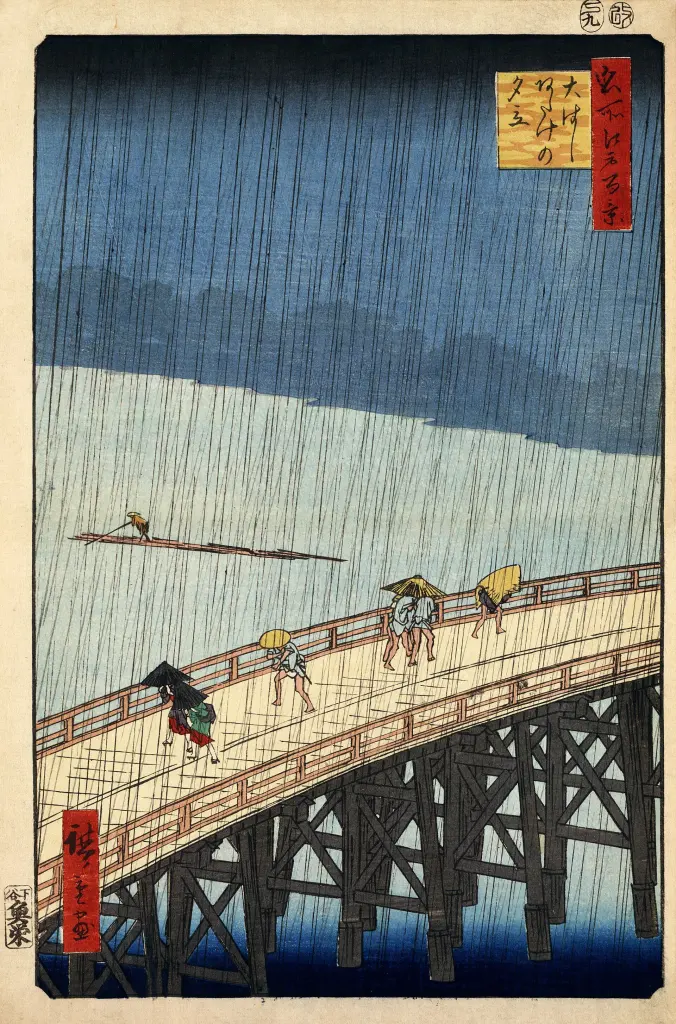
Image: Utagawa Hiroshige / Wikimedia Commons · Public domain
Ukiyo-e, literally “pictures of the floating world,” was a major visual culture of Japan's Edo period (1603–1868). It included paintings as well as commercially reproduced woodblock prints, so the term is broader than a single printing technique. Publishers coordinated artists, block carvers, printers, and distributors to make images of kabuki actors, celebrated courtesans, fashionable people, landscapes, literature, history, and everyday pleasures. Affordable sheets and illustrated books circulated among an expanding urban public, while deluxe commissions served more restricted circles. From the eighteenth century, increasingly sophisticated color printing transformed the medium. Artists such as Katsushika Hokusai later widened its subjects and formats, helping ukiyo-e become both a record of Edo culture and a globally influential art.
Overview
| Japanese name | 浮世絵 |
|---|---|
| Literal sense | Pictures of the floating world |
| Flourished | Edo period, especially the seventeenth to nineteenth centuries |
| Media | Woodblock prints, illustrated books, and paintings |
| Major subjects | Actors, beauties, landscapes, literature, history, and urban life |
| Production | Usually coordinated by a publisher and executed by specialist artisans |
Name and scope
Ukiyo-e combines ukiyo, the “floating world,” with e, “picture.” Earlier Buddhist language used the homophone ukiyo for the sorrowful, impermanent world. In Edo-period urban culture, the written form shifted toward a world of passing pleasure associated with theaters, licensed pleasure quarters, fashion, and seasonal entertainment.
The category includes one-of-a-kind paintings and printed works. It should not be used as a synonym for every Japanese woodblock print: Buddhist texts, practical books, maps, and later artistic movements also used relief printing without necessarily belonging to ukiyo-e.
Urban origins in the Edo period
The city of Edo supplied a dense market of publishers, shops, theaters, entertainment districts, residents, and visitors for ukiyo-e. Edo here means the historical city and should not be used as a simple synonym for the entire Edo period.
Ukiyo-e developed during the seventeenth century as Edo, Osaka, Kyoto, and other cities supported larger markets for illustrated books and single-sheet pictures. Early prints were generally monochrome and could be colored by hand. They circulated within a commercial publishing world rather than a courtly or temple workshop alone.
The growth of merchants and artisans did not erase status restrictions in Tokugawa society, but it created sustained demand for images of leisure, celebrity, fashion, and travel. The medium consequently joined art, information, advertising, fandom, and collecting.
Subjects and audiences
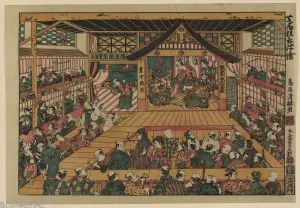
Common genres included bijin-ga, pictures of beautiful people; yakusha-e, portraits of kabuki actors; landscapes; warriors; famous places; historical and literary scenes; nature studies; and privately commissioned surimono. Images could promote actors, shops, fashions, or travel destinations while also displaying artistic invention.
Audiences were diverse. Some sheets were inexpensive popular commodities, while large, technically elaborate, or privately commissioned works could be costly and exclusive. Surviving museum impressions may therefore represent only part of a much larger and uneven market.
Publisher, artist, carver, and printer
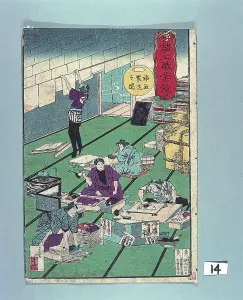
Most commercial color prints were collective products. An artist supplied the design; a specialist carver translated it into a key block and separate color blocks; a printer applied pigments and took impressions; and a publisher financed, coordinated, marketed, and distributed the edition. Censors and commercial networks also shaped what could appear.
Modern catalogues often foreground the designer because that name is most visible, but the finished impression depended on carving, registration, paper, pigments, pressure, and the publisher's decisions. Different impressions from the same blocks can vary in color and condition.
Color and nishiki-e
Early prints used black outlines, sometimes with color applied by brush or with a limited number of additional blocks. By the mid-eighteenth century, printers had developed reliable registration systems for multiple colors. Full-color prints known as nishiki-e, or “brocade pictures,” became established in the 1760s.
Each color normally required a separately carved block. Kento registration marks aligned the paper, while a baren rubbed across its reverse transferred water-based pigment from the block. Techniques such as bokashi gradation produced skies, water, shadows, and atmospheric transitions.
Prints, paintings, and illustrated books
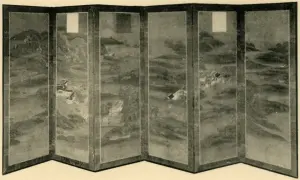
Ukiyo-e appeared in single sheets, diptychs and triptychs, albums, illustrated books, fan prints, paintings, and other formats. A sheet could be collected alone, joined to a multi-panel composition, or encountered within a sequence. Series titles and publisher marks help reconstruct these relationships.
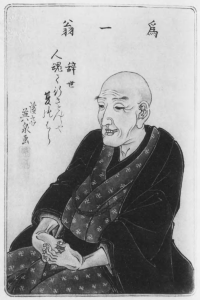
Text and image frequently worked together. Poems, signatures, seals, cartouches, place names, and rebus-like references reward close reading. The boundary between literary culture and visual culture was therefore porous, especially in privately commissioned prints and illustrated anthologies.
Meiji transformation and global reception
Shin-hanga renewed collaborative woodblock production in the twentieth century, combining specialist craftsmanship with modern imagery and international markets.
After the Meiji Restoration of 1868, commercial print culture adapted to new technologies, journalism, political subjects, imported pigments, and changing tastes. Ukiyo-e did not end at a single moment, but its institutions and markets were transformed by photography, lithography, and modern publishing.
Japanese prints reached international collectors and artists in large numbers during the nineteenth century. Their asymmetrical compositions, cropped forms, flat color, and unusual viewpoints influenced European and American art, although “Japonisme” often detached works from their Japanese commercial and social settings.
Sources
- The Metropolitan Museum of Art, Woodblock Prints in the Ukiyo-e Style.
- Victoria and Albert Museum, Japanese Woodblock Prints (Ukiyo-e).
- Asian Art Museum, The Ukiyo-e Woodblock Printing Process.
- The Printing Museum, Tokyo, General Exhibition.
- The Metropolitan Museum of Art, Anatomy of an Artwork: The Great Wave.
Last updated: