Calligraphy
Sumi Ink
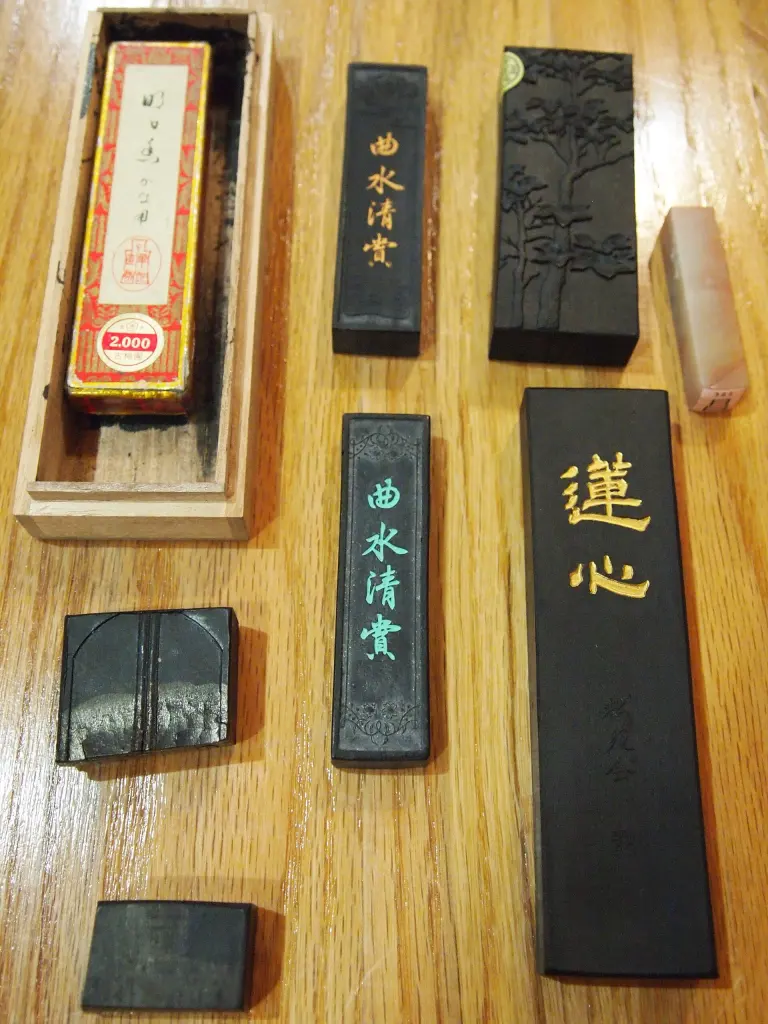
Image: Ph0kin / Wikimedia Commons · Creative Commons Attribution-ShareAlike 3.0 Unported
Sumi (墨) is the black carbon ink used across Japanese calligraphy, painting, religious copying, printing, and related arts. Traditional solid ink is made by combining fine soot with animal glue, forming and drying the mixture as an inkstick. Before writing, the practitioner grinds the stick with water on a suzuri, or inkstone, to prepare liquid ink. The amount of water, grinding time, inkstick, stone, brush, and paper all affect tone and flow. In English, sumi ink may also refer to bottled liquid products, but these do not behave identically to freshly ground ink and may contain different binders or preservatives. Sumi belongs to a wider East Asian ink tradition; Japanese production centres, materials, tool sets, and artistic practices developed within that shared history rather than in isolation.
Overview
| Japanese name | 墨 |
|---|---|
| Romanization | Sumi |
| Traditional form | Solid inkstick |
| Principal materials | Soot and animal glue |
| Preparation | Ground with water on an inkstone |
| Major uses | Calligraphy, painting, copying, and printing |
Name and scope
The character 墨 denotes ink and can refer to the material, an inkstick, or ink practice in context. The English phrase sumi ink helps distinguish it from writing inks based on dyes or iron salts, but it can obscure the difference between traditional solid ink and ready-made bottled liquid. Product composition and permanence should be checked for conservation or professional artwork.
Soot, glue, and fragrance
Fine carbon particles provide the colour. Pine soot historically produced particular bluish or varied black tones, while oil soot can yield a dense, fine black. Animal glue binds the particles into a stick and helps them adhere to the writing surface. Makers may add fragrance and other materials during production. Recipes, ageing, particle size, and manufacturing quality influence grinding and tonal response.
Making an inkstick
Soot and warmed glue are kneaded into a uniform mass, pressed into carved moulds, removed, dried slowly, and finished. Drying a thick stick too quickly can cause distortion or cracking, so production requires close control over moisture and time. Relief designs and inscriptions on the finished stick may identify a maker, brand, literary theme, or commemorative purpose; decoration does not by itself indicate the quality of the ink inside.
Grinding on the inkstone
A small amount of water is placed on the gently abrasive surface of a suzuri. The inkstick is held upright or at a controlled angle and moved steadily until the desired concentration develops. Prepared ink collects in the well. Pressure, speed, stone texture, and water amount affect the result, but there is no single grinding count suitable for every stick, paper, brush, or style.
Tone, brush, and paper
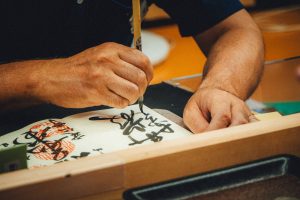
Sumi can produce dense black, dry textured marks, pale washes, and gradations within one work. The result depends on loading and moving the brush as well as the absorbency and sizing of Washi or another support. In Shodō, line quality records speed, pressure, direction, and moisture; blackness alone is not a measure of skill.
Nara sumi and production centres
Nara became a major Japanese centre for solid ink, with traditions linked to the copying and study of Buddhist texts. Nara City identifies sumi as a representative local industry and notes its national traditional-craft designation. Other production histories also exist. Modern Japanese ink includes specialist handmade sticks, workshop products, school supplies, liquid ink, and industrial formulations, so Nara should not be treated as the only source of every form.
Storage and permanence
Dry inksticks are protected from rapid changes in humidity, impact, and prolonged dampness. After grinding, the stick should not be left wet against the stone. Carbon itself is chemically stable, but finished marks remain vulnerable to abrasion, water movement, paper degradation, adhesive failure, and environmental dirt. Conservators assess the complete object rather than assuming that every black ink is identical or permanently fixed.
Sources
Last updated: