
Calligraphy
Japanese Calligraphy Tools
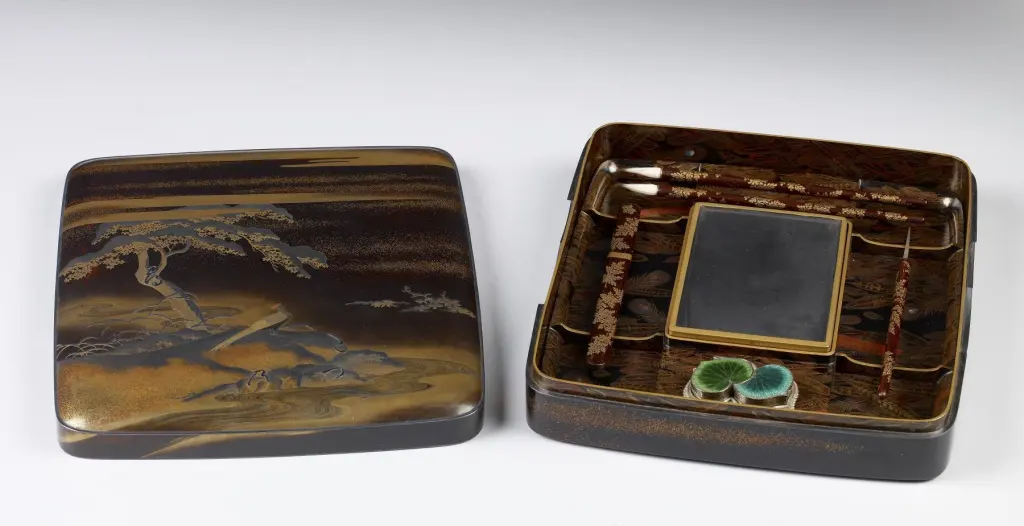
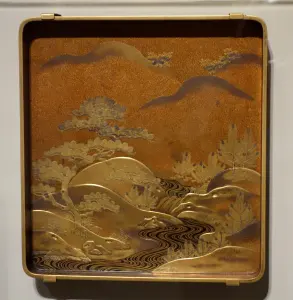
Image: Walters Art Museum / Wikimedia Commons; Walters Art Museum · Creative Commons Attribution-ShareAlike 3.0 Unported
Japanese calligraphy tools are the materials and implements used to prepare ink, control paper, form brush-written characters, and finish or store a work. The central group is brush (fude), ink (sumi), paper (kami), and inkstone (suzuri), known through the East Asian concept of the Four Treasures of the Study. Japanese practice also uses water droppers, paperweights, felt underlays, brush rests, seals, seal paste, and storage boxes. Historic suzuribako could be highly finished works of Urushi and Maki-e, while school and contemporary sets may be deliberately plain and portable. Tools shape absorption, line, rhythm, and preparation, but expensive equipment does not replace instruction. Selection depends on script, scale, paper, ink, purpose, and the practitioner’s stage of study.
Overview
| Japanese expression | 書道用具 |
|---|---|
| Core set | Brush, ink, paper, and inkstone |
| Brush | Fude (筆) |
| Ink and stone | Sumi (墨) and suzuri (硯) |
| Paper | Kami or hanshi; often washi |
| Supporting tools | Suiteki, bunchin, shitajiki, brush rest, and seals |
The Four Treasures
Brush, ink, paper, and inkstone form a shared East Asian framework often called the Four Treasures of the Study. In Japan the set became part of court, temple, literary, artistic, and educational practice. The phrase is a conceptual grouping rather than a fixed retail kit. Materials and tool forms moved across East Asia, while Japanese papermaking, brush production, ink, writing boxes, and teaching settings developed their own histories.
Fude: the brush
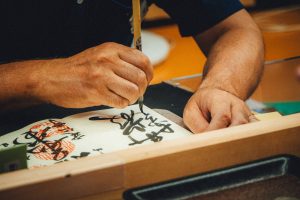
A fude has a handle and a flexible hair tip constructed to hold and release ink. Brushes vary in size, length, firmness, point, and mixture of hairs. A firmer brush can help a beginner feel structure, while softer or longer brushes respond differently to pressure and speed. Labels such as hard, mixed, or soft describe tendencies; suitability depends on script, scale, paper, and teacher.
Sumi and suzuri
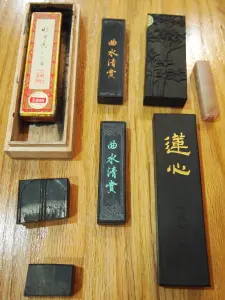
Traditional Sumi Ink is prepared by grinding an inkstick with water on the gently abrasive upper surface of a suzuri. Liquid collects in the stone’s well. Inkstones can be stone, ceramic, or other materials, and differ in texture, size, shape, and craftsmanship. Bottled ink is convenient for practice but changes the preparation process and may behave differently from freshly ground sumi.
Paper and hanshi
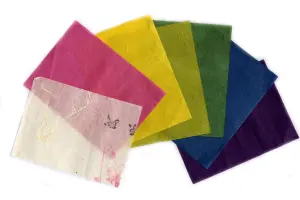
Calligraphy paper controls spread, drag, edge, and drying. Hanshi commonly denotes practice-sized paper used in Japanese calligraphy, while other formats support large works, albums, letters, or mounted pieces. Washi varies greatly in fibre, thickness, sizing, and absorbency. Students normally match paper to the intended exercise rather than treating every handmade sheet as interchangeable.
Supporting implements
A suiteki adds controlled water to the inkstone. A bunchin holds paper in place, and a felt shitajiki protects the table and moderates contact beneath the sheet. Brush rests, brush mats, holders, small dishes, and cloths organise the workspace. Seals and red seal paste may complete a finished work, but placement and use form a separate field of convention and design.
Suzuribako: the writing box
A suzuribako stores an inkstone and selected writing implements. Historic Japanese examples often integrate the stone, water dropper, brushes, knife, and inkstick holder into a fitted lacquered interior. The lid and implements may be decorated as a coordinated literary work in Maki-e or shell inlay. Such boxes demonstrate the status of writing, but they are not required for ordinary calligraphy practice.
Preparing and cleaning tools
The work area is arranged before ink is loaded so that paper can move without interruption. Brushes are rinsed after water-based sumi practice according to their construction and allowed to dry with the tip properly shaped. Ink residue is removed from the stone without harsh abrasion. Paper, sticks, seals, and historic boxes require different storage conditions; one cleaning method should not be applied to every material.
Choosing a beginner set
A practical beginner set needs a serviceable brush, suitable practice paper, dependable ink, a stable inkstone or ink container, a felt underlay, and a paperweight. A teacher’s curriculum provides the best guide to size and firmness. Decorative boxes and rare materials can be studied later. The useful test is whether the tools allow repeated, observable practice of posture, ink control, and the script families described in Kaisho, Gyosho and Sosho.
Sources
- The Metropolitan Museum of Art, Japanese Writing Boxes.
- The Metropolitan Museum of Art, Brush Writing in the Arts of Japan.
- Nara City, Nara craft museum twentieth-anniversary special article.
- Government of Japan, The Land and the Sea: Ogatsu inkstones.
- Kyoto National Museum, Hands-on educational materials.
Last updated:

_with_a_Pheasant_Beside_a_Stream_-_Walters_6775_-_Open_A.jpg)