Clothing & Formality
Obi
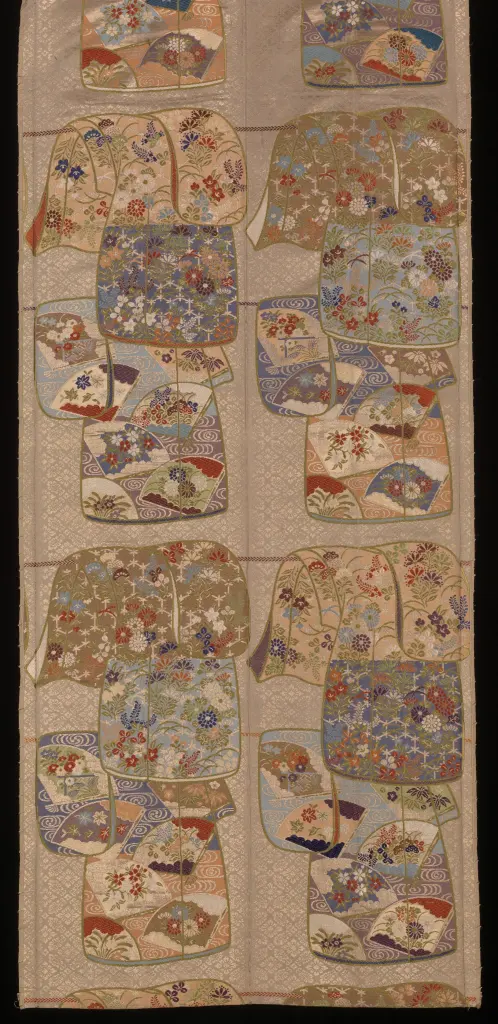
Image: Unknown Japanese maker / The Metropolitan Museum of Art · Public domain / Open Access
An obi (帯) is a sash worn with kimono and other Japanese dress. It secures and visually organizes the wrapped garment, but it is not simply a belt: width, length, stiffness, weave, decoration, tying method, and supporting accessories vary greatly. Early kosode were held by narrow sashes; obi widened and became a major site of textile design during the Edo period as clothing and urban fashion changed. Modern named types include formal maru obi, versatile fukuro obi, everyday nagoya obi, narrow hanhaba obi, and soft informal sashes, though use depends on the whole ensemble. Knots called musubi differ by wearer, occasion, and school of dressing. The title “Japanese Obi” is used here to distinguish the sash from TokyoWaltz’s separate page for the manga Obi o Gyutto Ne!.
Overview
| Japanese name | 帯 |
|---|---|
| Romanization | Obi |
| Classification | Sash for kimono and related dress |
| Main functions | Securing, shaping, and coordinating an ensemble |
| Representative types | Maru, fukuro, nagoya, hanhaba, and heko obi |
| Tied form | Musubi |
Name and functions
The word obi can refer to several sashes rather than one standard object. In kimono dressing it surrounds the torso, covers underlying ties, supports the intended silhouette, and creates a major field of colour and pattern. Some obi are reversible or patterned only where visible. Their practical and decorative roles cannot be separated cleanly.
Historical development
Narrow cords and sashes once secured kosode. During the seventeenth and eighteenth centuries, changing sleeve forms, merchant prosperity, entertainment culture, and textile production encouraged broader obi and increasingly conspicuous tying. Knots moved from front or side toward the back in many women’s fashions. Width and complexity did not develop uniformly for every gender, occupation, or class.
Major types
A maru obi is patterned across its full width and is associated with highly formal dress. A fukuro obi usually concentrates decoration on the visible side and serves many formal uses. The shorter nagoya obi simplifies tying for less formal kimono, while hanhaba obi are half-width sashes common with yukata and casual dress. Soft heko obi appear in relaxed and children’s ensembles.
Weaving, dyeing, and design
Kasuri differs from surface-dyed decoration because its selected yarns receive a resist pattern before they are aligned and woven into cloth.
Nishijin-ori supplies many highly figured obi textiles through Kyoto’s specialised pre-dyed weaving network, including brocade and metallic-weft techniques.
Some obi are pictorially decorated with Yūzen dyeing, while others obtain pattern structurally through brocade and other figured weaves.
Obi decoration may use surface-dyeing techniques including shibori, although a resist-dyed obi differs structurally from a brocade whose pattern is woven into the cloth.
Obi may be woven with silk and metallic threads, dyed after weaving, embroidered, or made from less formal fibres. Kyoto’s Nishijin textile industry is especially associated with complex woven obi, including techniques that insert strips of foil-coated paper as supplementary weft. Motif scale and placement account for the folds and knot, so an obi is designed as a worn three-dimensional composition.
Musubi and accessories
The tied arrangement is called musubi. Common names include taiko musubi and bow-like forms, but the appropriate result depends on obi type, age convention, garment, and occasion. Pads, cords, and cloth accessories may support and finish the knot. Pre-tied or two-piece obi reduce dressing time and are practical alternatives rather than a different cultural category.
Formality, season, and coordination
A formal furisode is usually coordinated with a broad, elaborate obi and formal accessories, whereas a yukata normally uses an informal obi. The sash cannot determine formality independently of the garment, wearer, and occasion.
An obi is evaluated with the kimono, not in isolation. Fibre, weave, motifs, metallic thread, crest-bearing garment, event, and other accessories contribute to formality. Seasonal coordination can be literal, anticipatory, or abstract. Simplified charts are useful starting points, but inherited pieces, regional practice, professional costume, and contemporary styling do not always follow retail rules exactly.
Men’s, children’s, and performance use
Men’s kimono commonly use narrower sashes tied lower on the body. Children’s dress may use soft or decorative obi adapted to age and ceremony. Kabuki, dance, tea, and other performing arts have their own requirements, sometimes preserving styles unlike ordinary modern formal wear. An actor’s or dancer’s obi may be costume architecture as much as personal fashion.
Care, reuse, and misconceptions
Folding, ventilation, protection from moisture, and careful handling matter for heavy silk and metallic threads. Damaged or obsolete obi may be remade as bags, table runners, framed textiles, or other objects, though cutting can erase evidence of original construction. The obi should not be reduced to a corset or a sign of marital status; meaning comes from the particular sash, knot, ensemble, wearer, and context.
Sources
- Victoria and Albert Museum, Kimono.
- The Metropolitan Museum of Art, Kimono: A Modern History.
- Web Japan, Fashion: From Court Dress to Designer Brands.
- Victoria and Albert Museum, How Was It Made? Japanese Hikihaku Obi.
- Japan Creative Centre, Obi: Interweaving History and Fashion.
- The Metropolitan Museum of Art, Obi with Whose Sleeves Pattern.
Last updated: