Tea & Aesthetic Arts
Japanese Tea Ceremony

Image: KuboBella / Wikimedia Commons · Creative Commons Attribution-ShareAlike 4.0 International
Tea · Hospitality · Shared attention
Begin with the encounter.
Chanoyu (茶の湯), also called chadō or sadō (茶道), brings host, guests, matcha, objects and space into a carefully prepared occasion. A full gathering and a brief introduction differ in scope; no single choreography represents every school.
A gathering made together
The host prepares an occasion; the guests complete it through their participation. The scenes below show relationships within a gathering, not a school-specific set of movements.
Arrival & attention
- Host
- Prepares a setting for this season and occasion.
- Guests
- Enter, greet and attend to what has been selected.
- Setting & objects
- The garden approach, room, scroll and flowers frame the encounter.
Hospitality & preparation
- Host
- Manages the pace, food and preparation appropriate to the gathering.
- Guests
- Receive hospitality and respond with consideration for others.
- Setting & objects
- A full chaji includes more stages than a shorter chakai.
Making & receiving tea
- Host
- Prepares and offers matcha using selected utensils.
- Guests
- Receive, drink and return the bowl according to the practice being followed.
- Setting & objects
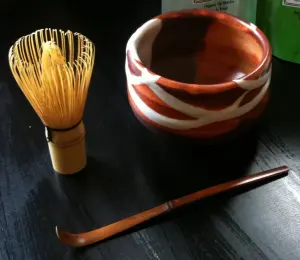
- The bowl, whisk, scoop, water and heat serve different functions.
Appreciation & closing
- Host
- Responds to questions and brings the occasion to a close.
- Guests
- Appreciate selected objects and acknowledge the hospitality.
- Setting & objects
- An object is understood through use, provenance, season and occasion.
Urasenke’s introduction to chadō emphasises the mutual work of host and guest. Particular schools and gatherings organise that exchange differently.
At a glance
- Central practice
- Preparing, serving and receiving matcha
- Participants
- Host, principal guest and other guests
- Formats
- Chaji, chakai and introductory settings
- Variation
- School, season, room and occasion
Names and scope
Chanoyu names the preparation and sharing of tea, while chadō and sadō frame practice as a cultivated way. Usage overlaps, and individual schools may prefer one term. “Japanese tea ceremony” is a convenient English label rather than the name of a single uniform rite.
The subject is also narrower than tea culture in Japan as a whole. Everyday sencha, bottled tea, café service, and other forms of tea drinking have their own histories. Chanoyu centres on matcha, prescribed host and guest actions, and the careful selection of a setting and utensils.
Chaji and chakai are different kinds of occasion
A full chaji is a hosted event rather than a public performance. Its sequence normally includes arrival through a garden approach, greetings in the tea room, a meal called kaiseki, a charcoal procedure, sweets, thick tea (koicha), and thin tea (usucha). Details and order vary with school and season.
A chakai is generally shorter and may focus on sweets and thin tea. Public demonstrations often compress the sequence further. These forms are not interchangeable: the scale of hospitality, degree of preparation, and expectations placed on guests are different.
| Gathering | Typical scope | What the label does not tell you |
|---|---|---|
| Chaji | A full hosted gathering, including food and thick and thin tea. | The precise order, season-specific procedures and school etiquette. |
| Chakai | A shorter gathering, often centred on sweets and thin tea. | That every short event follows the same procedure. |
| Demonstration or introduction | Selected actions presented for learning or observation. | The full experience and obligations of a formal gathering. |
The guest is part of the practice
The host selects the theme, prepares the room and garden, chooses utensils, makes tea, and manages the pace of the gathering. The principal guest helps coordinate the guest side, asks about selected objects, and responds at moments established by the school’s etiquette.
Guests are not passive spectators. Entering the room, viewing the alcove, handling a tea bowl, eating sweets, drinking tea, and returning utensils all form part of the exchange. Practice develops awareness of other people and of actions that might otherwise appear ordinary.
Guests may arrive in formal kimono with zōri, removing outdoor footwear before entering the tea-room interior.
The host’s and guests’ kimono ensembles may include an obi coordinated for season, formality, and ease of movement within the tea room.
Space shapes the encounter
Tea can be prepared in a large room, a small purpose-built tearoom, or a temporary setting. A small room may include tatami, a preparation area, an alcove for a hanging scroll and flowers, and a low entrance. The roji, or tea garden, structures the transition from the outside world to the room.
Architecture does not merely provide a backdrop. The position of the hearth, the season, the route of movement, the light, and the scale of the room influence procedure and mood. A formal room may express different values from a deliberately rustic hut.
The roji extends the tea gathering beyond the room: its waiting places, stepping stones, gate, and water basin organize the guests’ approach and preparation.
The size and seams of tatami help organize positions and movement in many tea rooms, although layouts differ by room type and school.
Roji
Waiting places, paths and preparation connect arrival with entering the gathering.
Tatami & tokonoma
Floor layout influences position and movement; an alcove holds selected display objects.
Heat, water & utensils
The working area and seasonal heat source affect how the host prepares tea. The room is more than a backdrop.
Objects have jobs as well as histories
| Object / group | Role in the gathering | Continue |
|---|---|---|
| Chawan · tea bowl | Tea is prepared or served in the bowl, which guests handle and appreciate. | Chanoyu terminology |
| Chasen · whisk / chashaku · scoop | Different tools for working the tea and portioning the powder. | Use the terminology guide for names and distinctions. |
| Kettle, water jar and associated vessels | Provide and manage hot water, fresh water and used water. | Selection and arrangement depend on procedure. |
| Scroll, flowers and textiles | Frame the occasion through display, materials and seasonal coordination. | Japanese textile arts |
Kimono worn for tea may be coordinated with a woven Nishijin-ori obi, selected according to season, formality, and the restraint appropriate to the gathering.
Tea gatherings also intersect with Japanese textile arts through kimono, obi, bags, silk wrappers, cords, screens, and the seasonal coordination of materials.
Kimono worn for tea are selected with attention to season, formality, movement, and the relationship between host, guests, textiles, and utensils.
Core utensils include the tea bowl (chawan), bamboo whisk (chasen), tea scoop (chashaku), tea container, kettle, water jar, ladle, waste-water vessel, and cloths used in preparation. Their names and functions are introduced in Chanoyu Terminology.
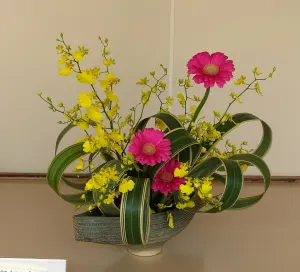
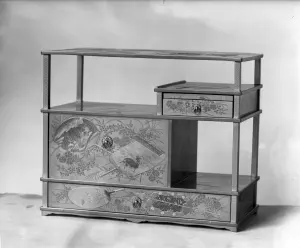
A gathering may place ceramics, metalwork, lacquer, bamboo, textiles, calligraphy, and Ikebana or simpler chabana flowers into a single composition. Value depends on context, provenance, season, and use, not only on visual ornament or market price.
Historical formation
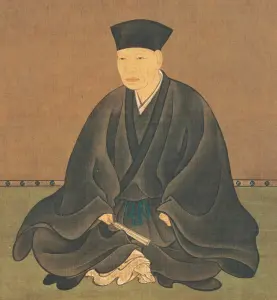
Sen no Rikyū became the most influential sixteenth-century exponent of wabi-cha, reshaping the scale of tea rooms and the status of bamboo, Raku ware, and ordinary objects.
Tea reached Japan through exchanges with continental Asia and was used in Buddhist and elite settings before becoming a wider social practice. During the medieval period, powdered tea, imported Chinese objects, temple culture, warrior patronage, and urban merchant networks contributed to changing forms of tea gathering.
Murata Shukō and Takeno Jōō are associated with the development of restrained tea aesthetics. In the sixteenth century, Sen no Rikyū gave lasting form to wabi-cha, favouring small rooms, locally made or everyday objects, and a concentrated relation among host, guest, season, and occasion.
Schools and transmission
Tea knowledge is transmitted through schools with distinct lineages, procedures, terminology, and preferred utensils. The three Sen-family traditions—Omotesenke, Urasenke, and Mushakōjisenke—share descent from Rikyū, while many other schools preserve different historical lines.
Students learn through repeated observation and practice under a teacher. Written manuals can identify objects and sequence, but timing, posture, placement, and responsive hospitality are embodied skills. There is therefore no single choreography that represents every school.
Contemporary practice
Today chanoyu is practised in private study groups, schools, universities, cultural centres, temples, museums, public gatherings, and international associations. Some settings preserve highly formal procedures; others introduce selected actions to first-time guests.
Contemporary access should not be confused with uniformity. School affiliation, teacher, locality, season, and the purpose of a gathering continue to shape what participants do and how they explain it.
Sources
Last updated: