Clothing & Formality
Hakama
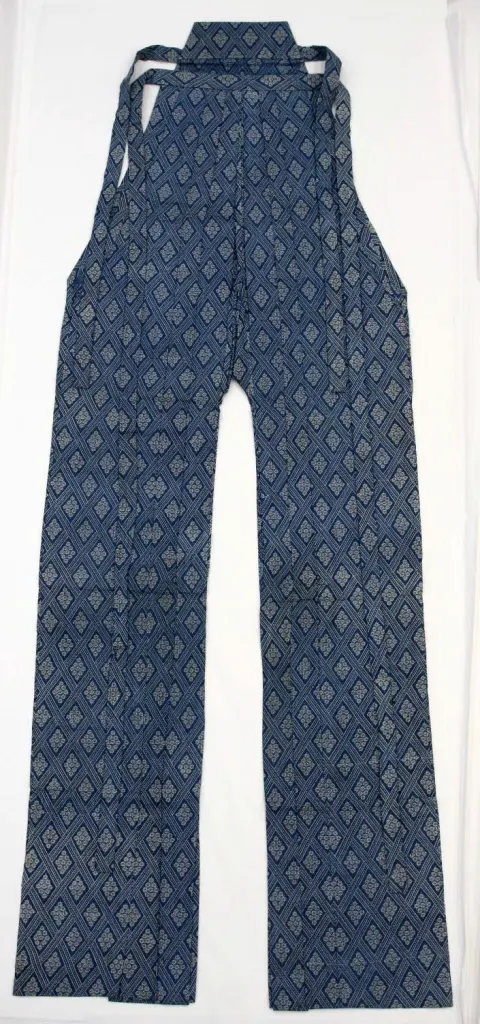
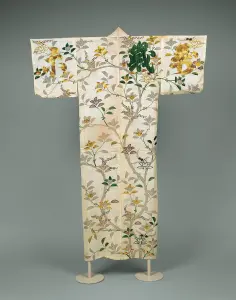
Image: Unknown Japanese maker / The Metropolitan Museum of Art · Public domain / Open Access
Hakama (袴) are pleated Japanese lower garments tied at the waist and worn over a kimono or related upper garment. Some are divided like very wide trousers (umanori), while others are undivided and skirt-like (andon bakama); both can produce a similar outer silhouette. Hakama have appeared in court dress, warrior clothing, travel, religious service, theatre, women’s education, graduation ceremonies, and modern martial arts. They should therefore not be described simply as “samurai pants.” Form, fabric, length, ties, pleats, and supporting garments differ by period and use. Modern viewers commonly encounter hakama in Kendo, Kyudo, Aikido, Iaido, Shinto service, formal men’s dress, and women’s graduation attire. Each setting has its own conventions for wearing, movement, and meaning.
Overview
| Japanese name | 袴 |
|---|---|
| Classification | Pleated lower garment |
| Main forms | Divided umanori and undivided andon bakama |
| Worn with | Kimono or related upper garments |
| Historical contexts | Court, warrior, religious, theatrical, and everyday dress |
| Modern contexts | Ceremony, graduation, performance, and martial arts |
Form and terminology
Hakama are constructed with a broad body, multiple pleats, long front and back ties, and often a firm rear support called a koshiita. Divided hakama allow each leg to move separately, while undivided forms hang as a single tube. English labels such as trousers or skirt describe appearance only approximately and can hide important differences in construction.
Early and court history
Lower garments called hakama appear in early Japanese dress under strong continental influence. Court systems distinguished ranks, colours, materials, and forms, while women’s layered court ensembles used related lower garments. The term persisted through changing institutions and cannot be mapped onto one unchanged object from antiquity to the present.
Warrior and early modern dress
Warrior households used hakama in formal and practical ensembles. The Edo-period kamishimo paired a pleated hakama with a stiff-shouldered kataginu, producing an official silhouette associated with samurai status. Other forms served travel, riding, work, and ceremony. Very long trailing hakama represented particular courtly or status performances, not normal battlefield clothing.
Women, education, and graduation
In the late nineteenth and early twentieth centuries, hakama became associated with women students, whose clothing combined mobility, institutional identity, and new public roles. The image remains influential in graduation dress, where women may pair coloured hakama with a kimono and Western-style boots. This is a modern historical tradition, not a survival unchanged from the medieval warrior class.
Martial-arts use
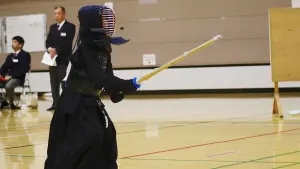
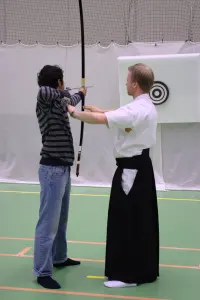
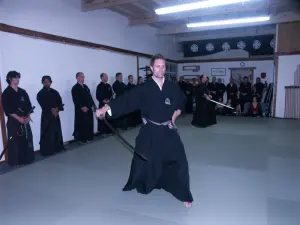
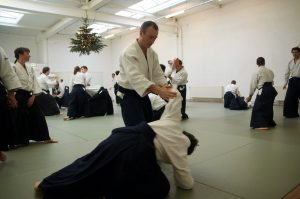
Hakama are worn in arts including Kendo, Kyudo, Iaido, and many Aikido schools. Cut and convention reflect footwork, weapon handling, federation rules, dojo custom, rank, and gender. The pleats do not magically conceal all movement, and symbolic explanations assigned to a fixed number of pleats are usually later pedagogical interpretations rather than the sole origin of the garment.
Religion, theatre, and ceremony
Formal modern menswear may combine a crested haori with montsuki kimono and striped hakama. That ensemble should not be projected onto every historical, theatrical, religious, or martial-arts use of hakama.
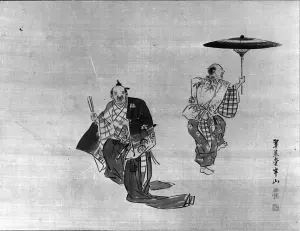
Shinto priests and shrine attendants wear forms of hakama within regulated ritual dress. Noh and Kyōgen costume includes exaggerated or specialised trousers that shape character and movement. Formal men’s montsuki haori hakama remains visible at weddings and public ceremony. Similar outlines can therefore carry very different institutional meanings.
Wearing, movement, and care
Long ties are wrapped and knotted in sequences suited to the garment and setting. Hem length must permit safe walking, kneeling, and weapons practice where relevant. Folding preserves the pleats and avoids tangling the ties. Beginners should learn from their school, dresser, or institution because a theatrical, shrine, graduation, and martial-arts hakama are not tied or fitted identically.
Common misconceptions
Hakama are not exclusively male, samurai, martial, or divided garments. They do not by themselves identify rank, school, or historical period. A reliable description records the garment’s construction, fabric, associated upper clothing, wearer, and context instead of inferring identity from pleats alone.
Sources
- Victoria and Albert Museum, Kimono.
- The Metropolitan Museum of Art, Kimono: A Modern History.
- Web Japan, Fashion: From Court Dress to Designer Brands.
- The Metropolitan Museum of Art, Trousers Hakama Associated with Kyogen.
- Web Japan, Enjoying Kimono More Easily with New-Style Japanese Clothing.
- The Metropolitan Museum of Art, Child’s Formal Ensemble Kamishimo.
Last updated: