Places
National Bunraku Theatre
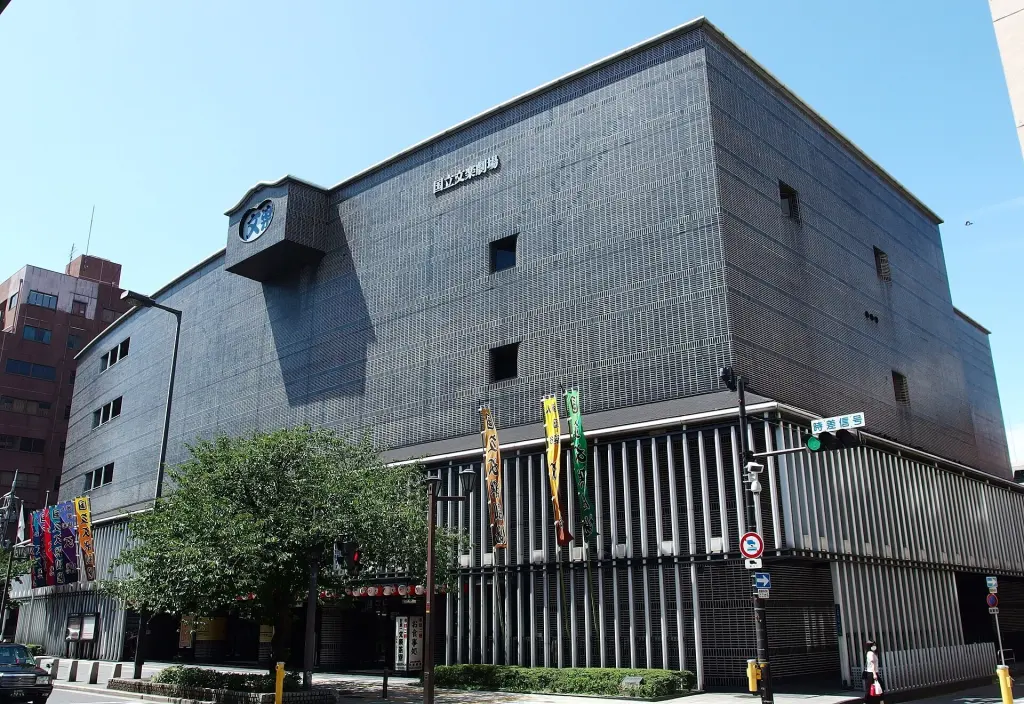
Image: Mc681 / Wikimedia Commons · CC BY-SA 4.0
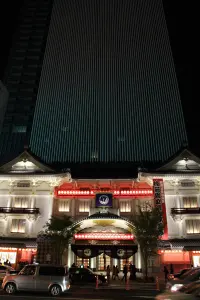
The National Bunraku Theatre is a Japan Arts Council venue in Nipponbashi, Osaka, opened in 1984 as a major base for Bunraku and for other traditional performing arts associated with the Kyoto–Osaka region. Its main theatre incorporates stage equipment for the distinctive coordination of tayū narration, shamisen music, and three-person puppet manipulation, while a smaller hall supports additional genres and programs. The institution stands in Osaka, where ningyō jōruri developed and where the name Bunraku became attached to the tradition. It is a national theatre rather than the sole home of the art: Bunraku is also performed elsewhere, and its transmission depends on performers, training organizations, repertory, workshops, and touring as well as the building itself.
Overview
| Japanese name | 国立文楽劇場 |
|---|---|
| Romanization | Kokuritsu Bunraku Gekijō |
| Type | National specialist theatre |
| Location | Nipponbashi, Chūō, Osaka |
| Opened | 20 March 1984 |
| Operator | Japan Arts Council |
| Primary form | Ningyō jōruri Bunraku |
| Bunraku configuration | 731 seats |
Name and location
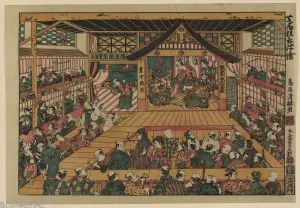
The theatre’s Japanese name identifies it as the national theatre dedicated to Bunraku. It stands in Nipponbashi in central Osaka, near districts historically associated with commerce and popular entertainment. That location matters because ningyō jōruri reached major artistic development in Osaka through theatres such as Takemoto-za and later became widely known by the name Bunraku.
Opening and institutional purpose
The Japan Arts Council opened the theatre on 20 March 1984, following the establishment of specialist national venues in Tokyo. Its mandate includes preserving, presenting, and developing Bunraku as well as supporting other performing arts rooted in the Kyoto–Osaka region. The theatre added a permanent public institution to a tradition already sustained by performers, the Bunraku Kyokai, producers, and earlier stages.
Architecture and stage
The building was designed by Kisho Kurokawa and completed in 1983 before the formal opening the following year. Its main auditorium can be configured with the specialized platform used by the tayū narrator and shamisen player, along with stage depth and mechanisms suited to puppet theatre. The complex also contains a smaller hall, backstage rooms, rehearsal functions, and spaces for audience interpretation.
The Bunraku performance system
A Bunraku performance integrates spoken narration, shamisen accompaniment, and puppets commonly operated by teams of three. The theatre’s design makes these components visible rather than hiding every operator or musician. Productions may present long historical plays in selected acts, domestic tragedies, and explanatory programs for new audiences. The building supports the form, but artistic authority remains with trained performers and the conventions of the repertory.
Other performing arts
Despite its name, the venue is not restricted to Bunraku. The Japan Arts Council also uses it for dance, traditional music, and related performing arts of western Japan. This wider role reflects the national-theatre model: a specialist identity can coexist with responsibility for genres that lack a dedicated permanent stage of their own.
Exhibition and audience development
The theatre provides explanatory materials and exhibition space related to puppets, instruments, performance history, and stage practice. Programs for beginners help audiences distinguish the roles of the tayū, shamisen player, and puppet operators before encountering a complete dramatic sequence. Such interpretation is important because Bunraku’s visible mechanics can be mistaken for technical display alone, when their purpose is coordinated storytelling.
Preservation and living practice
Bunraku is recognized by UNESCO as intangible cultural heritage, but the theatre preserves more than a fixed set of objects. It sustains occasions for performers, audiences, repertory, and stage technology to meet. Casting, pacing, interpretation, and the selection of acts continue to change. The National Bunraku Theatre is therefore an infrastructure for living practice rather than a museum reconstruction of early modern Osaka theatre.
Sources
Last updated: