Places
National Noh Theatre
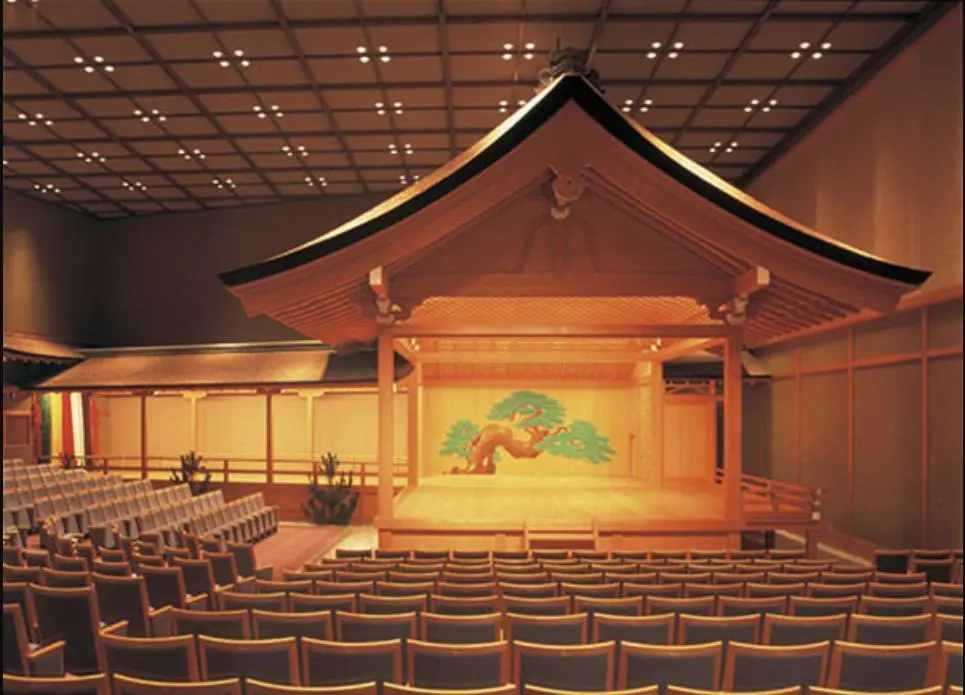
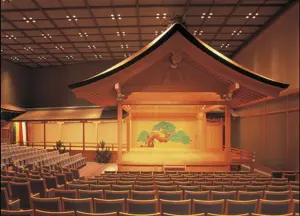
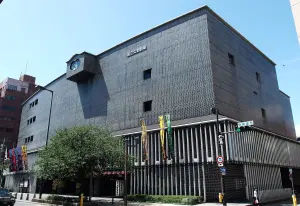
Image: Bokken; later higher-quality version by Artanisen / Wikimedia Commons · Public domain
The National Noh Theatre is a specialist theatre in Sendagaya, Tokyo, operated by the Japan Arts Council for the performance and transmission of Noh and Kyōgen. Opened in 1983, it presents the two genres together as Nohgaku while supporting documentation, exhibitions, lectures, and professional development. Its auditorium encloses a traditional roofed Noh stage within a modern theatre building, allowing audiences to observe conventions that originated in open or semi-open performance spaces. The institution is important not because it created a single national style—Noh continues through several actor and musician schools—but because it provides a shared public venue where different lineages, repertories, and forms of interpretation can be presented and studied.
Overview
| Japanese name | 国立能楽堂 |
|---|---|
| Romanization | Kokuritsu Nōgakudō |
| Type | National specialist theatre |
| Location | Sendagaya, Shibuya, Tokyo |
| Opened | 15 September 1983 |
| Operator | Japan Arts Council |
| Primary forms | Noh and Kyōgen |
| Main auditorium | 591 seats |
Name and mandate
The Japanese name Kokuritsu Nōgakudō literally identifies a national Noh performance hall, but the theatre’s scope includes both Noh and Kyōgen. These complementary forms are commonly grouped as Nohgaku: Noh generally centers on poetic song, dance, masks, and memory, while Kyōgen uses spoken dialogue and comic or satirical situations. The theatre therefore serves a paired performance tradition rather than Noh alone.
Founding and opening
The Japan Arts Council opened the theatre on 15 September 1983 in Sendagaya. Its establishment followed the postwar development of national institutions for traditional performance and gave Nohgaku a dedicated venue separate from the multipurpose National Theatre. The opening did not replace private Noh stages or school-based performance networks; it added a publicly administered platform for productions, education, and preservation.
Stage and auditorium
At the center of the auditorium is a roofed Noh stage with the main playing area, bridgeway known as the hashigakari, musicians’ area, and chorus space. These elements preserve the visual and spatial grammar of established Noh staging inside a climate-controlled building. The audience wraps around the front and side of the stage, making direction, stillness, entrances, and the relationship between actor, chorus, and musicians especially legible.
Programming and schools
Programs can include complete Noh and Kyōgen plays, excerpted dances and chants, explanatory performances, and events designed for beginners. Performers come from hereditary and professional schools responsible for the principal actor, supporting actors, Kyōgen roles, flute, and drums. The theatre does not merge those schools into one standardized company; it provides a venue in which their distinct conventions can be encountered within a shared institutional framework.
Research, library, and exhibitions
The theatre extends beyond performance through a reference library, exhibition activity, lectures, and documentation related to Nohgaku. Such resources help connect living stage practice with masks, costumes, libretti, musical notation, photographs, and historical records. Access conditions may vary, but the institutional purpose is broader than presenting a nightly program: it also supports study and public interpretation of the art form.
Preservation and change
Nohgaku was inscribed by UNESCO as intangible cultural heritage, yet preservation does not mean that every performance is identical. Casting, school practice, tempo, repertory choices, and explanatory framing can differ. The National Noh Theatre makes those variations visible while maintaining the stage conditions and professional networks on which transmission depends. It is therefore both a preservation institution and a site of continuing artistic decisions.
Place in Tokyo’s theatre culture
Located near Sendagaya and Kita-sandō, the theatre forms part of Tokyo’s network of specialist stages rather than its large commercial entertainment districts. It complements venues such as Kabuki-za and the national theatres for Bunraku and other performing arts. Together these institutions show that traditional Japanese theatre survives through multiple organizational models, including public bodies, commercial producers, family lineages, and independent stages.
Sources
Last updated: