
Places
Kabuki-za
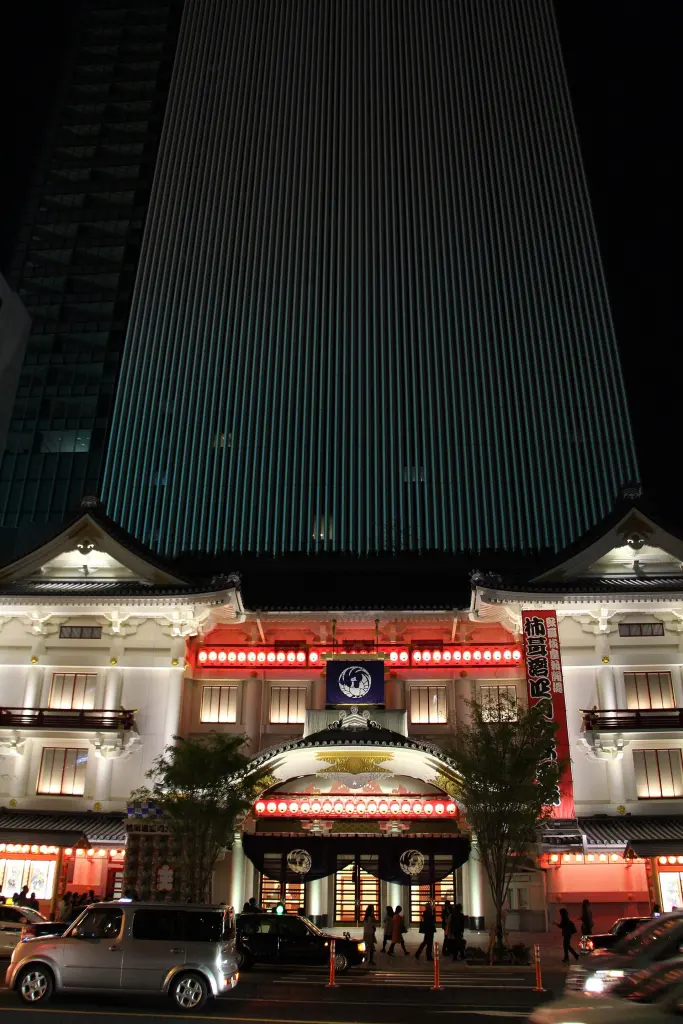
Image: dozodomo / Wikimedia Commons; originally Flickr · CC BY-SA 2.0
Kabuki-za is a purpose-built Kabuki theatre in Ginza, Tokyo, and one of the principal public stages through which the commercial repertory, actor lineages, and production calendar of Kabuki are presented. The first theatre opened in 1889; fire, earthquake, wartime destruction, and reconstruction produced a sequence of five buildings on the site. The current theatre opened in 2013 as part of the Ginza Kabukiza complex, combining a façade that recalls earlier palatial designs with modern stage technology and an office tower. Kabuki-za should not be confused with Kabuki as an art form: the genre is performed at several theatres and on tour, while this venue has a particular institutional and urban history within modern Tokyo.
Overview
| Japanese name | 歌舞伎座 |
|---|---|
| Romanization | Kabuki-za |
| Type | Commercial Kabuki theatre |
| Location | Ginza, Chūō, Tokyo |
| First opened | 21 November 1889 |
| Current building | Fifth phase, opened April 2013 |
| Primary form | Kabuki |
| Principal producer | Shochiku |
Name and position
Kabuki-za means ‘Kabuki theatre.’ The direct name was innovative when the first building opened because many earlier theatres were named after founders or districts. Its location in Kobikichō, now part of Ginza, placed it within the rapidly changing capital of Meiji Japan. Over time the name became associated both with a specific building and with a central stage in the modern Kabuki production system.
Five building phases
The first Kabuki-za opened in 1889. A second Japanese-style building followed in 1911 but was destroyed by fire in 1921. Construction of the third was interrupted by the 1923 Great Kantō Earthquake before it opened in 1925; that theatre was largely destroyed in the 1945 air raids. The fourth reopened in 1951 and remained until 2010, when it closed for redevelopment. The fifth phase opened in April 2013.
The current Ginza Kabukiza complex
The fifth theatre reproduces recognizable features of the earlier façade, including tiled roofs, gables, and a central karahafu form, while integrating the Kabukiza Tower behind it. The design team treated the low theatre frontage and high-rise office component as a single urban complex. This arrangement preserves a visual connection with the fourth building without presenting the 2013 structure as an unchanged historical survival.
Stage and auditorium
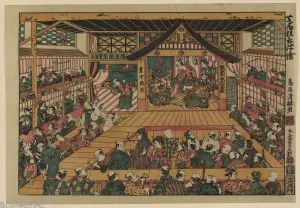
Kabuki-za is equipped for the stage mechanisms and audience relationships associated with Kabuki, including a broad proscenium, revolving-stage technology, lifts, and the hanamichi walkway that passes through the auditorium. These features support rapid transformations, spectacular entrances, and scenes that distribute action beyond the framed stage. The building’s technical systems are modern, even when they serve performance conventions developed in the Edo period.
Programming and actor lineages
Cast announcements at Kabuki-za draw on the name, house, and succession systems described in Kabuki Actors.
Programs draw on historical plays, dance pieces, newly staged work, and major name-succession performances. Kabuki actors inherit professional stage names within lineages, but casts and programs change rather than belonging to a permanent Kabuki-za company in the Western repertory-theatre sense. Shochiku’s production and theatre network links the venue to other Kabuki stages and touring activity in Japan and abroad.
Audience and urban life
Kabuki-za functions as both a performance venue and a Ginza landmark. The complex includes visitor facilities and spaces connected with Kabuki culture, while the surrounding district places the theatre amid retail, offices, transport, and tourism. This public visibility has helped make the building an architectural shorthand for Kabuki, although viewing the exterior alone does not convey the genre’s musical, vocal, choreographic, and actor-centered systems.
Continuity through reconstruction
The theatre’s history illustrates how cultural continuity can depend on repeated rebuilding. Each Kabuki-za responded to contemporary technology, safety, finance, and urban development while invoking selected features of its predecessors. The present building is therefore neither a replica of the 1889 theatre nor a complete break with it. Its significance lies in the continuing use of the site for Kabuki and in the institutional memory carried across successive structures.
Sources
Last updated:
.jpg)