Historical Figures
Zeami Motokiyo
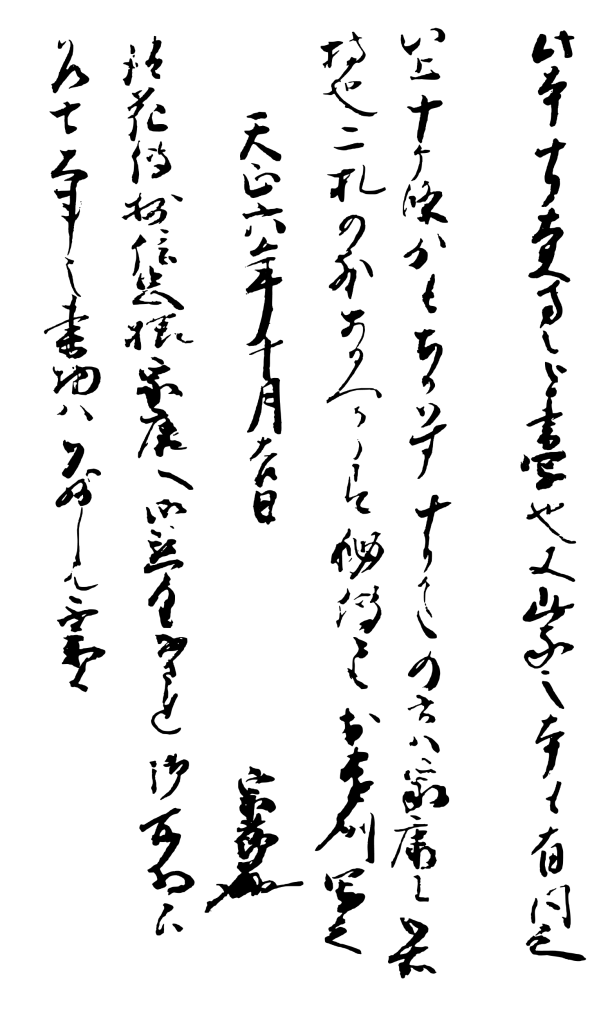
Image: Kanze Sōsetsu, copyist; original text by Zeami / Wikimedia Commons; Izumi Shoin facsimile · Public domain
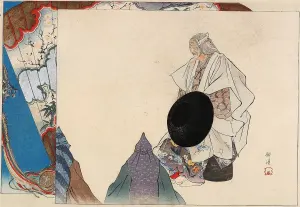
Zeami Motokiyo (世阿弥元清, c. 1363–c. 1443) was a Noh actor, playwright, troupe leader, and theorist. Trained by his father Kan’ami Kiyotsugu, he performed before the shogun Ashikaga Yoshimitsu as a boy and later led the Kanze troupe. Zeami revised inherited repertory, created and adapted plays, and wrote treatises including Fūshi Kaden, which examines training, performance, composition, audience response, and the changing artistic “flower” of an actor. His writings also became central to later discussions of yūgen. Zeami’s final years included political displacement and exile to Sado; the reason for the exile and the exact circumstances of his death remain uncertain.
Overview
| Japanese name | 世阿弥元清 |
|---|---|
| Personal name | Kanze Motokiyo (観世元清) |
| Born | c. 1363 |
| Died | c. 1443; date and place uncertain |
| Occupation | Noh actor, playwright, troupe leader, and theorist |
| Parent | Kan’ami Kiyotsugu |
| Known for | Noh plays and treatises including Fūshi Kaden |
Names and dates
Zeami was born around 1363. His childhood name is recorded as Oniyasha, and his personal name was Motokiyo. Zeami is the art name under which his works and ideas are now usually discussed.
The end of his life is less secure than the beginning of his career. Kanze family tradition gives 1443 as his year of death, but the exact date and place are not documented with certainty; some accounts place his death on Sado and others allow for a return to the mainland.
Training and Yoshimitsu’s patronage
Zeami trained and performed in the Yūzaki troupe led by Kan’ami. As a boy he appeared with his father at a performance attended by Ashikaga Yoshimitsu, whose patronage gave the troupe access to the shogunal and aristocratic cultural worlds of Kyoto.
The courtier Nijō Yoshimoto encouraged Zeami’s knowledge of classical poetry and literature. Those literary resources later informed plays in which allusion, place, memory, and song are as important as visible action.
Leadership of the Kanze troupe
After Kan’ami died in 1384, Zeami assumed leadership of the troupe as its principal performer and manager. He revised parts of his father’s repertory while creating new dramatic and musical structures suited to changing patrons and audiences.
Leadership joined artistic and institutional work. Zeami had to maintain performers, protect repertory, negotiate patronage, train successors, and position his company among other sarugaku and dengaku groups.
Plays and dramatic form
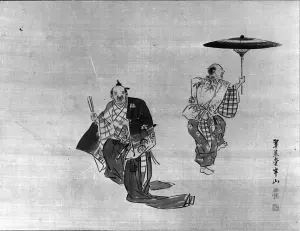
Many plays are associated with Zeami, including works such as Izutsu, Atsumori, and Takasago. Attributions can vary because medieval plays were copied, revised, and transmitted within performance lineages rather than fixed by modern publication practices.
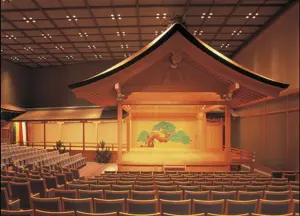
A characteristic structure places a traveller at a significant site, where an apparently ordinary person reveals a connection to a past event or identity. Chant, dance, and recollection then allow an absent historical or literary world to appear on the spare Noh stage.
Treatises and Fūshi Kaden
Zeami wrote a body of treatises for professional transmission. Fūshi Kaden, developed over a long period and passed to successors, discusses training from childhood through old age, the relation between performer and audience, and the changing quality called the flower.
Other writings address play composition, musical and acting forms, and the responsibilities of a troupe. They were not written as a public introduction to Noh; they were restricted professional documents whose modern discovery and publication transformed theatre scholarship.
Flower, yūgen, and training
The flower is not a single visual style. It describes the freshness and effect a performer creates for a particular audience and changes with age, skill, repertory, and circumstance. Durable artistry therefore requires more than youthful beauty or novelty.
Zeami’s use of yūgen is connected with cultivated grace, poetic depth, and suggestion in performance. Later readers have made it a general label for Japanese aesthetics, but in his writings it belongs to a precise professional argument about embodied theatrical practice.
Succession, exile, and death
Succession became difficult as patronage shifted toward Zeami’s nephew On’ami. Zeami favoured his son Motomasa and later transmitted important materials to his son-in-law, the actor and theorist Konparu Zenchiku. Motomasa’s death left Zeami without his intended successor.
In 1434 Zeami was exiled to Sado. Surviving letters and his travel account confirm the exile, but no official record securely explains it. His death is traditionally dated to 1443, and uncertainty should be retained rather than filled with a single dramatic story.
Legacy and modern research
Zeami’s plays, adaptations, and performance concepts remain part of living Noh lineages. His writings also reach far beyond the theatre through studies of aesthetics, pedagogy, artistic careers, and audience psychology.
Modern knowledge depends on manuscript research. Institutions such as Hosei University’s Noh Theatre Research Institute preserve Muromachi-period documents, catalogue later copies, and develop international terminology and translation resources for Zeami’s theoretical works.
Timeline
- c. 1363 — Born, the son of Kan’ami.
- 1370s — Performed before Ashikaga Yoshimitsu and received shogunal patronage.
- 1384 — Succeeded Kan’ami as leader of the troupe.
- Early fifteenth century — Developed plays and treatises including Fūshi Kaden.
- 1434 — Exiled to Sado.
- c. 1443 — Traditional year of death; circumstances uncertain.
Sources
Last updated: