
Aesthetic Concepts
Yūgen
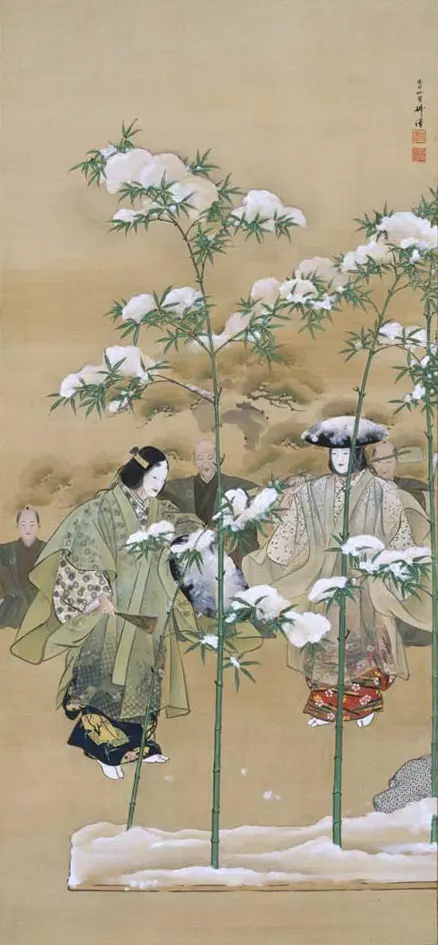
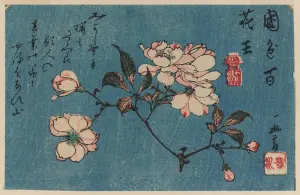
Image: Tsukioka Kōgyo / Wikimedia Commons; Tokyo National Museum · Public domain
Yūgen (幽玄) is an influential Japanese aesthetic term associated with profound mystery, subtle depth, and meanings that exceed direct statement. The word entered Japanese discourse from Chinese Buddhist and Daoist vocabulary and became important in medieval criticism of waka poetry. Fujiwara Shunzei connected it with overtones and effects not fully expressed in words; later poets and theorists developed different versions. Yūgen is also central to discussions of Noh, especially the writings of Zeami, where grace, restraint, performance, and the spectator's imagination create depth beyond visible action. English phrases such as “mysterious beauty” are useful starting points, but yūgen is not simply darkness, obscurity, or anything left unexplained.
Overview
| Japanese | 幽玄 |
|---|---|
| Common translations | Mysterious profundity; subtle depth; mysterious grace |
| Early source | Chinese Buddhist and Daoist vocabulary |
| Major Japanese contexts | Medieval waka criticism and Noh theory |
| Associated figures | Fujiwara Shunzei, Kamo no Chōmei, Shinkei, and Zeami |
| Key method | Suggestion and overtones rather than exhaustive statement |
Name and origins
The characters can suggest what is deep, dim, secluded, or mysterious. In Chinese texts the compound referred to truths beyond ordinary conceptual grasp. Japanese writers adopted the term in several fields, so its meaning cannot be fixed by the characters alone or by one English gloss.
Medieval poetics
By the twelfth century, yūgen had become an evaluative term in poetry. Fujiwara Shunzei used it for the total effect of a poem, joining style and meaning with yojō, or lingering overtones. Kamo no Chōmei and later writers described mist, autumn evening, distance, and indistinct views to explain how imagination can exceed what is plainly seen.
Suggestion and imagination
Yūgen does not require vagueness for its own sake. A carefully selected image, pause, allusion, or restrained gesture can open a field of associations without spelling them out. The audience or reader participates by completing what the work only intimates. This makes yūgen relational: it arises through form, cultural memory, and reception.
Yūgen in Noh
Zeami Motokiyo used yūgen within a detailed theory of cultivated performance, not as a timeless synonym for every form of Japanese beauty.
Kan’ami Kiyotsugu established the performance foundation that Zeami later articulated through concepts including yūgen and the flower.
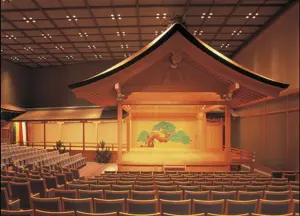
Kan'ami and Zeami helped shape Noh during the fourteenth and fifteenth centuries. In Zeami's writings, yūgen is tied to cultivated grace and the transformation of poetic imagery into performance. Masks, chant, dance, music, costume, and slight movement can make absent places, past events, ghosts, or memories present without realistic scenery.
Dream Noh and hidden depth
Many mugen Noh plays unfold through a traveller's encounter with a person who is later revealed as a spirit recalling the past. Their temporal layering and spare stage action offer a strong context for yūgen, although the term applies beyond ghost plays. Noh repertory also includes present-time drama and varied emotional registers.
Related aesthetic terms
Yūgen influenced later accounts of sabi and wabi, and all may value restraint or indirectness. They remain distinct: wabi-sabi often concerns austerity, age, and material atmosphere, while mono no aware concerns affective responsiveness to things and change.
Modern use and caution
Contemporary writing applies yūgen to photography, film, design, landscape, and music. The extension can be illuminating when a work produces depth through allusion or withheld information. Calling any dark, foggy, or minimalist image yūgen, however, turns a historically argued critical term into a decorative label.
Sources
Last updated:
.jpg)