Historical Figures
Kan’ami Kiyotsugu
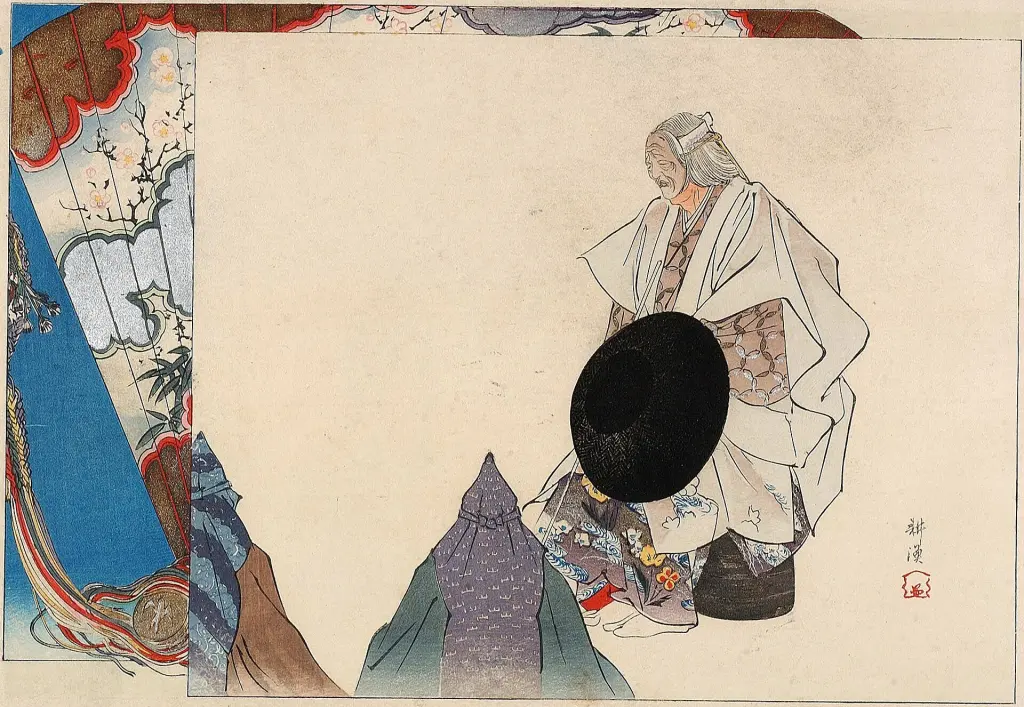
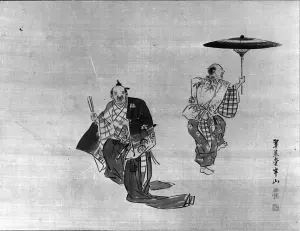
Image: Tsukioka Kōgyo / Wikimedia Commons · Public domain
Kan’ami Kiyotsugu (観阿弥清次, 1333–1384) was a sarugaku actor, playwright, musician, and troupe leader whose work helped form the theatre now called Noh. He led the Yūzaki troupe, one of the four major Yamato sarugaku companies, and was renowned for adapting song, dance, and techniques from dengaku and other contemporary entertainments. A performance seen by the shogun Ashikaga Yoshimitsu brought elite patronage to Kan’ami and his young son Zeami Motokiyo. Kan’ami’s importance lies not in creating Noh from nothing, but in reshaping inherited performance practices, repertory, music, and acting into a form that Zeami and later lineages developed further.
Overview
| Japanese name | 観阿弥清次 |
|---|---|
| Common name | Kan’ami (観阿弥) |
| Born | 1333 |
| Died | 1384, Suruga Province |
| Occupation | Noh actor, playwright, musician, and troupe leader |
| Associated troupe | Yūzaki sarugaku troupe; later Kanze school |
| Known for | Performance innovations that helped form Noh |
Names and historical record
Kan’ami is the art name by which he is usually known. His given name was Kiyotsugu, and sources also associate him with the stage name Kanze. He is regarded as the first Kanze-dayū, or head performer, in the lineage that became the Kanze school.
Documentation for fourteenth-century performers is uneven. Later genealogies and theatre traditions preserve valuable information, but not every detail can be verified in contemporary records. The dates 1333–1384 and his leadership of a Yamato troupe are nevertheless widely accepted.
Yamato sarugaku and the Yūzaki troupe
Kan’ami led the Yūzaki troupe, one of four important sarugaku companies based in Yamato, the area of present-day Nara Prefecture. These companies performed at temples, shrines, festivals, and other public occasions and are connected with the later principal schools of Noh.
Sarugaku combined comic imitation, song, dance, and dramatic performance. Kan’ami worked within this inherited and competitive environment; his achievement was a sustained reorganization of existing materials rather than the invention of a wholly separate genre.
Performance and musical innovation
Japan Arts Council describes Kan’ami as an outstanding actor who incorporated song-and-dance elements from dengaku and features of other popular performing arts into sarugaku. The resulting style expanded the musical and dramatic resources available to his troupe.
Accounts preserved through Zeami also emphasize Kan’ami’s versatility. Although physically imposing, he was remembered as capable of refined female roles. That contrast illustrates the importance of controlled voice, movement, and role transformation in the emerging theatre.
Patronage of Ashikaga Yoshimitsu
In the 1370s, Ashikaga Yoshimitsu saw Kan’ami’s company perform with the young Zeami. The shogun’s enthusiasm brought the father and son unusual access to elite audiences and the literary culture of the Muromachi court.
Patronage did not turn a popular performance into court art overnight. It gave the troupe resources, visibility, and new expectations, while Kan’ami and Zeami continued to draw on temple, shrine, and popular performance worlds.
Plays and attribution
Works traditionally associated with Kan’ami include Sotoba Komachi and Kayoi Komachi. Such attributions should be read carefully: Noh plays were transmitted through performance, copied in later manuscripts, and sometimes revised by Zeami or subsequent performers.
Authorship in medieval Noh can therefore include composition, adaptation, musical shaping, choreography, and repertory management. A named attribution does not always identify a fixed text created by one writer in the modern sense.
Kan’ami and Zeami
Kan’ami trained his son Zeami as a performer and transmitted both repertory and professional leadership. After Kan’ami died while travelling for a performance in Suruga in 1384, Zeami assumed control of the troupe.
Zeami revised works associated with his father and later recorded principles of acting, composition, training, and audience response. Much of what is known about Kan’ami’s artistic values survives through this filial and professional transmission.
Legacy in Noh
Kan’ami’s legacy is embedded in the Kanze school and in Noh’s combination of chant, dance, dramatic revelation, and disciplined acting. Later theatre history often pairs his name with Zeami’s, but their roles were not identical: Kan’ami was the senior performer and innovator, while Zeami became the more extensively documented playwright and theorist.
Describing both men as founders is useful if it does not erase the older performers, ritual settings, and rival troupes from which Noh emerged. Their achievement was a decisive transformation within a much longer history.
Timeline
- 1333 — Born.
- Mid-fourteenth century — Became head of the Yūzaki sarugaku troupe in Yamato.
- 1370s — Performed with Zeami before Ashikaga Yoshimitsu and received shogunal patronage.
- 1384 — Died in Suruga while travelling for a performance; Zeami succeeded him as troupe leader.
Sources
Last updated: