Performing Arts
Bunraku
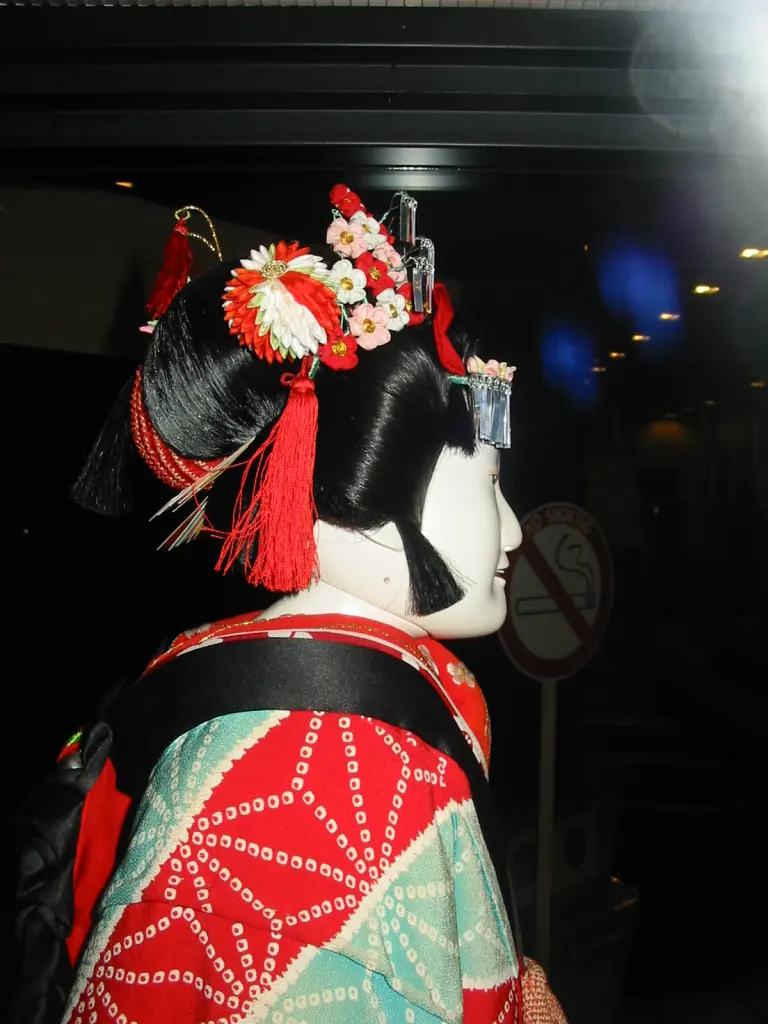
Image: Ellywa / Wikimedia Commons · Creative Commons Attribution-ShareAlike 3.0 Unported
Bunraku (文楽) is the name commonly used for the professional puppet theatre tradition more broadly known as ningyō jōruri. It unites three visibly distinct arts: a tayū recites narration and every character’s speech, a shamisen player shapes rhythm and emotion, and puppeteers animate large figures, often with three operators for one principal puppet. The form took shape around the beginning of the seventeenth century and reached a decisive stage in Osaka through Takemoto Gidayū, the Takemoto-za, and playwright Chikamatsu Monzaemon. Bunraku is therefore not silent marionette theatre and not entertainment intended only for children; its repertory contains extended historical and domestic dramas written for adult audiences.
Overview
| Japanese names | 文楽; 人形浄瑠璃 |
|---|---|
| Classification | Narrated puppet theatre |
| Formative centre | Osaka |
| Core ensemble | Tayū, shamisen player, and puppeteers |
| Narrative style | Gidayū-bushi jōruri |
| International status | Inscribed by UNESCO in 2008 |
Names and definition
Ningyō jōruri literally joins puppets with jōruri, a category of chanted narrative. Bunraku was originally the name of a particular theatrical lineage and venue; it later became the widely recognized label for the professional Osaka-centred tradition. Other regional ningyō jōruri traditions also survive and should not automatically be treated as identical to Bunraku.
The performance depends on the coordination of voice, music, and visible puppet manipulation. No component merely accompanies another. The narration supplies language and viewpoint, the shamisen structures atmosphere and impulse, and the puppet gives the narrated body a precise visual life.
Historical development
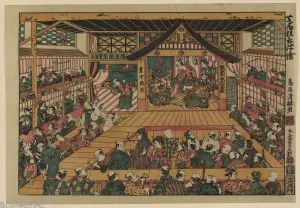
Chikamatsu Monzaemon wrote more than one hundred jōruri plays for a performance world shaped by Takemoto Gidayū and the Takemoto-za, including domestic and historical drama.
Puppetry, narrative recitation, and shamisen music developed separately before combining around 1600. In Osaka, Takemoto Gidayū opened the Takemoto-za and established a powerful narrative style. Chikamatsu Monzaemon’s plays helped make the theatre a major urban dramatic form.
During the eighteenth century, competition among theatres encouraged technical and literary development. Plays moved between puppet and Kabuki stages, sometimes changing performance logic in the process. Later institutional decline was followed by preservation, revival, and national support centred on professional performers and dedicated theatres.
Tayū and shamisen
The tayū performs the narrative text, stage description, and dialogue of multiple characters. Changes of timbre, weight, tempo, and articulation distinguish speakers and emotional states without relying on a different actor for each voice. The text is read from a formal libretto placed on a stand.
A thick-necked futozao shamisen provides more than melody. Its attacks, resonance, pauses, and patterns define atmosphere and dramatic transition. Tayū and player sit together on a side platform called the yuka and must coordinate closely with the action of the puppets.
Puppets and operators
A principal puppet is commonly operated by three people. The chief operator controls the head and right hand; a second controls the left hand; and a third controls the feet. The operators’ combined timing makes walking, breathing, handling objects, and small emotional reactions appear coherent.
The chief operator may perform with face visible, while assistants usually wear black hoods and clothing. This visibility is a convention, not an attempt to fool the audience into believing the puppet moves alone. Training advances through specialist roles over many years before a performer controls the head and right arm.
Stage and visual language
The stage includes railings that establish the puppet’s apparent floor level and conceal parts of the operators’ bodies. Sets use sliding architecture and painted depth suited to the puppets’ scale. The yuka for narrator and shamisen player remains structurally distinct from the main acting area.
Puppet heads can contain mechanisms for eyes, eyebrows, or mouths, and wigs and costumes help identify gender, age, rank, and character type. Emotion emerges through carefully timed orientation and gesture rather than through a continuously changing human face.
Plays and dramatic worlds
Kanadehon Chūshingura, first staged at Osaka’s Takemoto-za in 1748, follows the public and private consequences of a revenge plot.
The repertory includes jidaimono, which place political and ethical conflicts in historical settings, and sewamono, which depict merchants, lovers, and families under social and financial pressure. Famous works explore divided obligations, revenge, loyalty, separation, and double suicide, but humour and dance are also important.
Many long plays are now presented through selected scenes. The same title may exist in Bunraku and Kabuki versions, yet the presence of a single narrating voice and the physical possibilities of puppets give Bunraku a distinct dramaturgy.
Transmission and recognition
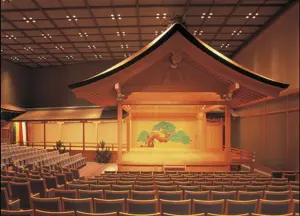
Opened in Osaka in 1984, the National Bunraku Theatre provides a purpose-built stage, exhibition functions, and audience-development programs for the living tradition.
Professional transmission is divided among tayū, shamisen, and puppetry, each with its own apprenticeship and stage hierarchy. The National Bunraku Theatre in Osaka and national-theatre programmes in Tokyo provide major performance and training contexts, alongside regional puppet traditions and educational presentations.
UNESCO proclaimed Ningyo Johruri Bunraku in 2003 and inscribed it on the Representative List in 2008. Preservation concerns include the demanding length of training, continuity of specialist crafts, and maintaining opportunities to perform the large repertory rather than only a few famous scenes.
Sources
Last updated: