Karate
Wadō-ryū Karate
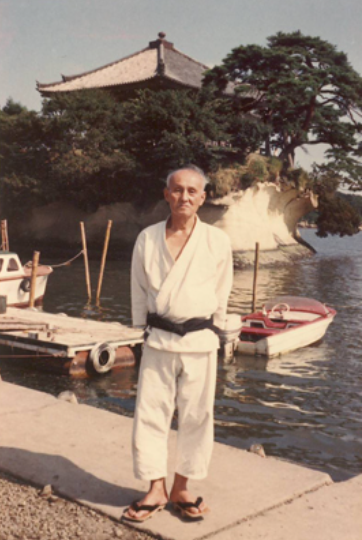
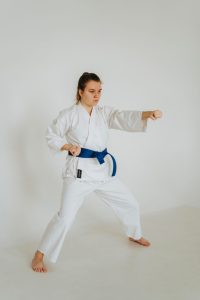
Image: HistoryTuan / Wikimedia Commons · CC BY-SA 4.0
Overview
Wadō-ryū reorganises Karate through a jujutsu-informed way of moving.
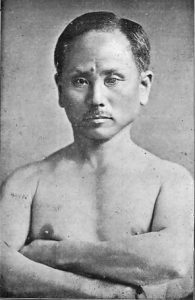
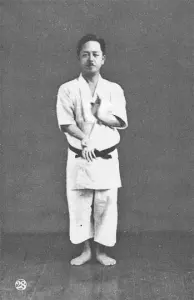
Wadō-ryū (和道流) is a Japanese Karate tradition founded by Hironori Ōtsuka. Before studying Karate with Gichin Funakoshi and exchanging with other Okinawan teachers, Ōtsuka had attained full transmission in Shindō Yōshin-ryū jujutsu. His later system was not Karate with a few throws attached: it reorganised distance, body shifting, entry, paired practice, and tactics through a mature mainland Japanese budō framework. Modern Wadō organisations share this inheritance while differing in kata, paired curricula, competition, and claims of succession.
Body shifting, timing, distance, kata, and formal encounters become one curriculum.
- Japanese
- 和道流
- Founder
- Hironori Ōtsuka (1892–1982)
- Formal founding
- 1934
- Earlier discipline
- Shindō Yōshin-ryū jujutsu
- Karate network
- Funakoshi · Mabuni · Motobu
- Core emphasis
- Timing · distance · body shifting
01Name & principle
“The way of harmony” is both an ethical idea and a tactical relationship.
Harmony in Wadō does not mean passivity or the absence of decisive technique.
Harmony · accord · Japan
A relationship that avoids needless collision and seeks balanced action.
A cultivated way
Technical practice and human development are joined within modern budō.
School or tradition
A transmitted body of practice rather than one universal syllabus.
Technically, accord appears in the attempt to meet an attack from a safer angle, preserve posture, and create a line for counteraction instead of resisting force head-on.
02Hironori Ōtsuka & jujutsu
Ōtsuka encountered Karate with an established martial framework already in place.
His earlier training shaped how he interpreted movement rather than supplying isolated additions.
Shindō Yōshin-ryū
Training under Tatsusaburō Nakayama included body shifting, striking, control, throwing, and weapons-informed principles.
Full transmission
Ōtsuka received the tradition’s highest teaching qualification before beginning serious Karate study.
Comparison rather than addition
Karate material was tested and reorganised through timing, posture, entry, and paired encounter.
03Karate study & founding
A mainland teaching network became an independent curriculum.
One teacher–student line does not explain every element of Wadō-ryū.
Gichin Funakoshi
Ōtsuka became an important early mainland student and instructor in Funakoshi’s expanding Karate community.
Kenwa Mabuni · Chōki Motobu
Contact with other Okinawan teachers broadened his comparison of kata, partner practice, and fighting method.
The Wadō organisation dates its formal founding to 1934. Its name and institutional form developed further during the late 1930s as Japanese Karate schools registered styles within national budō structures.
04Tai sabaki & distance
Removing the target and taking an angle can be one continuous action.
Avoidance still depends on stable posture, precise timing, and a credible counterattack.
Nagasu
Letting force pass while changing position and maintaining connection.
Inasu
Turning or receiving an attack so direct collision is reduced.
Noru
Riding or entering with an action so initiative and structure change.
Different branches use these terms and drills in different proportions. Comparatively upright, mobile stances are a visible tendency, but strong structure and direct technique remain essential.
05Kata & paired curriculum
Solo forms and formal encounters organise complementary kinds of information.
Lists, spelling, detail, and paired systems vary among present-day organisations.
Pinan · Kūshankū · Naihanchi
Core sequences edited through Ōtsuka’s interpretation of posture and movement.
Kata and paired work illuminate different sides of distance and timing.
Seishan · Chintō
Related names across styles do not imply identical kata.
Kihon kumite
Predetermined attacks develop entry, evasion, centre control, and counteraction.
06Kumite & competition
Fast entry and distance control translated readily into point competition.
Tournament skill is one expression of the system, not its complete curriculum.
Scored exchange
Rules reward timing, controlled technique, rapid entry, and management of distance and boundary.
Kata and paired forms
Formal training preserves technical and ethical study that may not appear in a tournament bout.
07Organisations & legacy
A shared founder led to several institutions rather than one uncontested succession.
Name the organisation when describing a modern syllabus or authority claim.
Renmei · Wadō-kai · Academy
Post-war organisations and national associations transmit overlapping curricula with distinct governance.
Movement and tactical principles
Differences in kata, paired forms, grading, and competition sit within a recognisable Wadō family.
Sources and further reading
Last updated: