Karate
Shotokan Karate
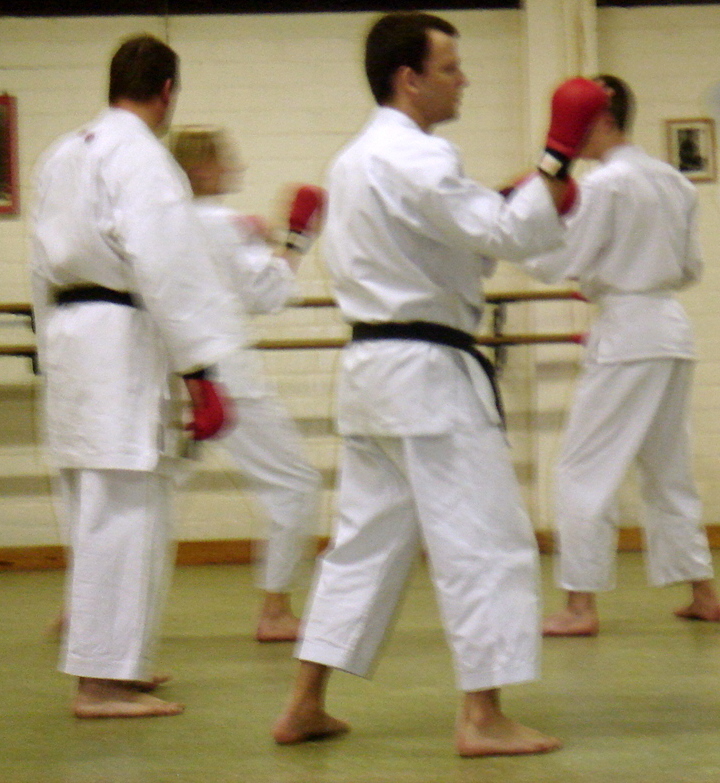
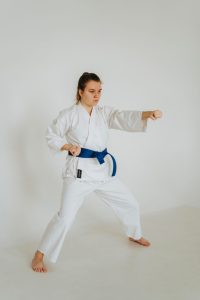
Image: Kameraad Pjotr / Wikimedia Commons · CC BY-SA 3.0
Overview
A teacher’s Okinawan inheritance became a global Karate family through institutions.
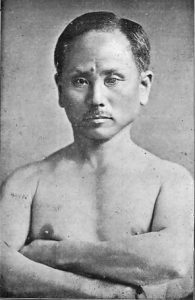
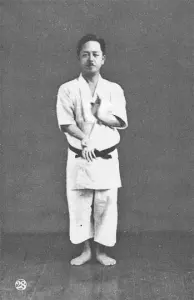
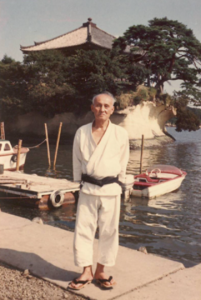
Shotokan is one of the world’s most widespread Karate traditions. It grew from the Okinawan Karate taught on mainland Japan by Gichin Funakoshi and was further systematised through his students, university clubs, and post-war organisations—especially the Japan Karate Association. The name originally identified a Tokyo dōjō: Shōtō was Funakoshi’s pen name and kan means hall. Modern schools usually combine kihon, kata, and kumite, but stance, kata detail, competition, grading, and authority differ across Shotokan-derived organisations.
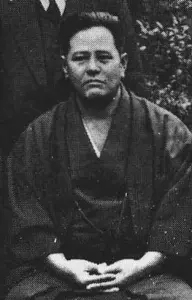
Funakoshi studied principally with Ankō Asato and Ankō Itosu.
Demonstrations, books, clubs, and teaching after 1922.
- Japanese
- 松濤館
- Principal teacher
- Gichin Funakoshi (1868–1957)
- Development
- Okinawa → mainland Japan
- Name
- “Hall of Shōtō”
- Core training
- Kihon · kata · kumite
- Major post-war body
- Japan Karate Association
01Name & identity
A dōjō name became the label for a much larger tradition.
Funakoshi generally called his art Karate rather than defining a sharply bounded “Shotokan style”.
Shōtō
Funakoshi’s literary name, often associated with the sound or movement of pine waves.
Kan · hall
The dedicated Tokyo training hall opened in 1939.
Shotokan
A practical name for Karate associated with Funakoshi and his teaching network.
After Funakoshi’s teaching spread through university clubs, the dōjō name became an identity for the broader body of practice. Today it covers several organisations that share historical and technical inheritance without recognising one governing authority.
02Funakoshi & mainland Japan
Transmission to the mainland also meant translation into modern budō institutions.
The 1922 Tokyo demonstration was a milestone, not the end of development.
Asato and Itosu
Funakoshi’s teachers belonged to networks now discussed through the historical Shuri-te label.
Demonstrations, books, clubs
After 1922, Funakoshi taught through public and private groups and universities.
Modern budō culture
Terminology, uniforms, ranks, etiquette, group teaching, and revised kata names made Karate legible in new settings.
These adaptations were collective and continued beyond Funakoshi’s earliest teaching. University communities became especially important laboratories for training volume, partner practice, and organisational identity.
03Kihon, kata & kumite
Three training modes isolate, connect, and test movement.
The balance among them varies by teacher, organisation, grading system, and competition focus.
Kihon
Repeated correction of stance, shifting, receiving, striking, and kicking.
Kata
Technical relationships, rhythm, direction, posture, and transitions organised into set forms.
Kumite
Practice ranging from prearranged exchanges to freer, rules-based sparring.
Early teaching placed greater weight on kata. Structured and free kumite developed strongly through university practice and the post-war period, creating several modern balances between budō, self-defence interpretation, physical education, and competition.
04Movement & technique
Long-range directness is a visible tendency—not the whole technical vocabulary.
Kata and branch practice also contain angles, close-range methods, sweeps, turns, and changes of level.
Stance · distance · timing
Training often emphasises stable posture, acceleration, controlled relaxation, hip rotation, and a focused finish described as kime.
Not entirely linear
Movement changes with kata, teacher, age, athletic purpose, competition, and application study.
Different organisations also vary stance depth and the relative weight placed on formal aesthetics, powerful long-distance projection, practical interpretation, and tournament movement.
05Kata curriculum
A familiar progression creates structure without making every syllabus identical.
Movement counts, grading positions, applications, and technical details remain organisation-specific.
Heian · Tekki Shodan
Common early study before more specialised forms.
Kata are a structured archive, not only performance routines.
Bassai Dai
Often follows the introductory group; details vary by organisation.
Kankū Dai
A central advanced reference with organisation-specific counts and execution.
Other widely taught kata include Enpi, Jion, Hangetsu, and further specialised forms. Application is interpreted through partner study, historical comparison, and school priorities; tournament kata adds codified judging as another layer.
06The JKA & post-war development
Standardisation and instructor formation accelerated international spread.
The JKA shaped modern Shotokan profoundly without creating or controlling all Shotokan practice.
Post-war organisation
The association brought instructors, examinations, and competition into a coordinated system.
Japan Karate Association
Courses, publications, tournaments, and overseas assignments.
Global organisations
Later divisions produced associations with different technical, competitive, and philosophical emphases.
07Competition & global reach
Tournament specialisation became one major pathway among several.
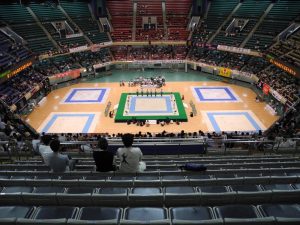
Competition highlights distance, entry timing, technical control, and kata precision under rules.
Kata and point-based kumite
Rules encourage specialised preparation, but tournament success is not the only standard used in Shotokan dōjō.
Universities and travelling instructors
Networks spread Shotokan across Europe, the Americas, Africa, Asia, and Oceania.
Shotokan now functions as budō, recreation, physical education, competition, and self-defence practice. Which of these is primary depends on the organisation and teacher.
Sources and further reading
Last updated: