Social Customs
Zōri
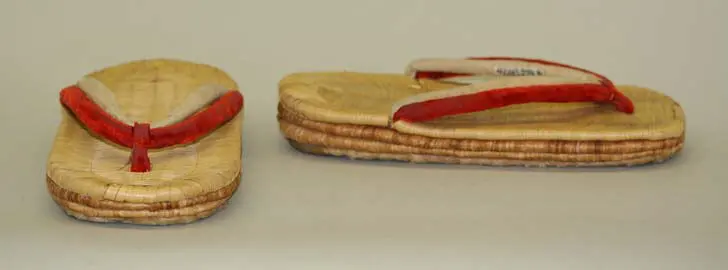
Image: Unknown Japanese maker / The Metropolitan Museum of Art · Public domain / Open Access
Zōri (草履) are Japanese sandals with a relatively flat sole and a Y-shaped thong called hanao. Historical examples were woven from rice straw or other plant materials, while modern zōri may use brocade, leather, vinyl, cork, rubber, or layered synthetic components. Their easy-on, open form suited a humid climate and customs of removing footwear at interior thresholds. Zōri range from practical straw sandals to highly finished footwear coordinated with formal kimono; material, shape, colour, heel, and occasion determine use. They differ from raised wooden geta and from waraji, whose long straw cords secure the foot and ankle for travel or work. Most people in Japan now wear Western-style shoes in daily life, but zōri remain visible in ceremony, traditional arts, sumo, shrine settings, and kimono dress.
Overview
| Japanese name | 草履 |
|---|---|
| Romanization | Zōri |
| Classification | Flat thong sandal |
| Traditional material | Woven straw or plant fibre |
| Modern materials | Textile, leather, vinyl, cork, rubber, and synthetics |
| Common contexts | Kimono, ceremony, traditional arts, and specialised use |
Form and name
A zōri has an oval or foot-shaped sole and a thong that divides between the big and second toes. Unlike an enclosed shoe, it can be put on and removed without laces. The characters literally refer to grass footwear, but modern zōri need not contain straw. The singular and plural form is usually the same in English.
Straw origins and urban types
Woven plant-fibre footwear has a long East Asian history. Japanese straw zōri developed as easy-to-remove sandals suited to work and domestic thresholds. During the Edo period specialist makers supplied expanding towns with varied forms. Setta combined a woven top, leather-covered underside, and heel fitting and became a durable urban style associated especially with men.
Materials and construction
The sole may be woven, moulded, layered, covered, or stitched, with padding and a harder walking surface beneath. Formal women’s zōri often use textile or glossy coverings and a raised layered sole, while men’s forms tend to be flatter and more restrained. These are conventions, not universal biological divisions, and contemporary makers offer many hybrid designs.
Kimono and formality
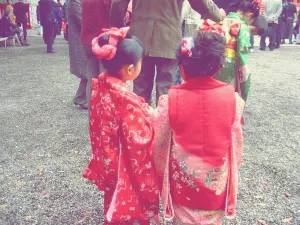
Zōri are coordinated with the kimono ensemble, bag, tabi, and occasion. Colour, textile, sole height, condition, and decoration help set the level of formality. Weddings, coming-of-age ceremonies, Shichi-Go-San, dance, and tea may use different footwear. Practical venue rules and the wearer’s safety take precedence over generalized online charts.
Wearing, fit, and tabi
Formal zōri are commonly worn with split-toe tabi socks, which allow the thong to pass between the first two toes. The heel may align with or project slightly beyond the sole depending on style. Hanao placement and padding affect comfort; forcing the toes to the very front or wearing an unsuitable size can cause pain.
Zōri, geta, and waraji
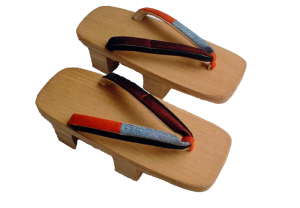
Zōri have a comparatively flat sole. Geta raise a wooden platform on supports or a shaped base. Waraji use long cords that wrap around the foot and ankle and were historically suited to travel and labour. Rubber beach sandals descend from the same broad thong-sandal logic, but modern flip-flops are not automatically zōri in Japanese cultural classification.
Thresholds and modern use
Easy removal connects zōri to the genkan and to distinctions among outdoor, wooden-floor, and tatami zones. Western shoes displaced them from most daily street use, while ceremonial dress and specialist settings preserved demand. Straw or plastic zōri also remain in sumo stables, festivals, craft demonstrations, and casual contexts that differ from formal brocade footwear.
Care and misconceptions
Woven and textile surfaces should be kept dry, and worn thongs or detached soles require repair. Zōri are not all straw, not all women’s formalwear, and not interchangeable with geta. Describing the exact material, sole, thong, wearer, and occasion gives more useful information than translating every form as “Japanese sandals.”
Sources
Last updated: