Historic Cities
Osaka
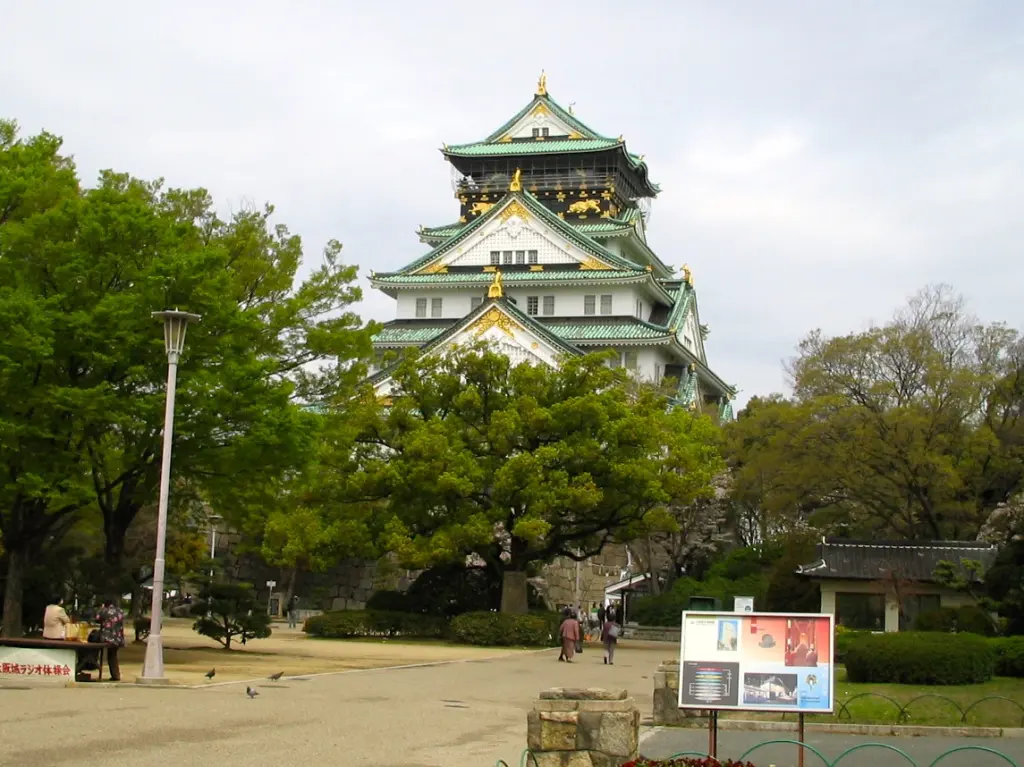
Image: Didier Moïse / Wikimedia Commons · CC BY-SA 4.0
Osaka is the capital of Osaka Prefecture and the principal city on Osaka Bay. Its history reaches from the ancient port of Naniwa and palace sites through temple and castle towns, Tokugawa-period commerce, industrialization, wartime destruction, and postwar metropolitan growth. Water routes connecting the Seto Inland Sea, Yodo River, and inland canals made the city a gateway for exchange and a distribution center. Toyotomi Hideyoshi began Osaka Castle in 1583, but the present main tower is a reinforced-concrete museum completed in 1931; older stone walls and moats belong to later Tokugawa rebuilding. Osaka City should be distinguished from Osaka Prefecture and the broader Keihanshin urban region linking Osaka, Kyoto, and Kobe. Its historical identity includes commerce, performance, food, publishing, manufacturing, and everyday neighborhood life—not only the castle or modern entertainment districts.
Overview
| Japanese name | 大阪市 |
|---|---|
| Romanization | Ōsaka-shi |
| Prefecture | Osaka Prefecture |
| Region | Kansai |
| Historic names | Naniwa; spellings of Osaka varied historically |
| Urban character | Ancient port, castle town, merchant center, and industrial metropolis |
Name, geography, and scope
Osaka Prefecture also includes distinct cities with their own histories. The Kishiwada Danjiri Festival belongs to Kishiwada City south of Osaka City, where castle-town space and neighbourhood organisations shape its float processions.
Osaka occupies lowlands and the Uemachi Plateau where rivers meet Osaka Bay. The Yodo river system linked the city with Kyoto and inland Japan, while the bay connected it to the Seto Inland Sea and maritime routes. Canals, bridges, reclaimed land, and flood-control works shaped the city’s growth.
Osaka City is one municipality within Osaka Prefecture. The prefecture also includes Sakai, port and industrial municipalities, satellite cities, and mountain districts. Historical claims about “Osaka” may refer to the city, the former province, the prefecture, or the wider metropolitan economy.
Naniwa port and ancient palaces
Naniwazu served as an entry point for envoys, technologies, goods, and religious ideas moving between the archipelago and the Asian continent. The Naniwa Palace complexes associated with the seventh and eighth centuries show that the area also held important court and administrative functions.
Shitennō-ji, traditionally founded in 593, became a major religious institution and pilgrimage destination. Shorelines and river courses changed greatly, so reconstructed palace parks and archaeological displays help visitors imagine landscapes no longer visible at street level.
Temple fortress and Toyotomi castle town
Toyotomi Hidenaga, Hideyoshi’s younger brother, was a senior commander and administrator within the wider regime that supported Toyotomi consolidation.
Toyotomi power also reordered warrior service and territory. Ishikawa Kazumasa, formerly a senior Tokugawa retainer, entered Hideyoshi’s service in 1585, received land in Izumi, and was transferred to Matsumoto in 1590.
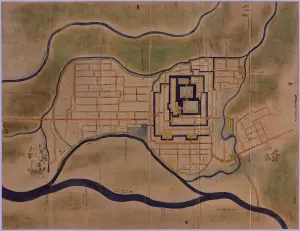
Ishiyama Hongan-ji developed on the Uemachi Plateau as a fortified religious and urban center before Oda Nobunaga forced its surrender in 1580. Toyotomi Hideyoshi then began a monumental castle and surrounding jōkamachi in 1583.
The Toyotomi castle and town were destroyed in the sieges of 1614–1615. The Tokugawa shogunate reconstructed the castle on a larger stone base and directly controlled it. The current tower recreates an imagined historic exterior but was built in 1931 as a modern museum, making it a different historical object from the surviving walls and moats.
Merchant city and waterways
During the Edo period, Osaka became a national exchange and distribution center often called the “Kitchen of the Nation.” Domain warehouses, wholesalers, shipping networks, and the Dōjima rice market concentrated commodities and financial information.
This economy depended on laborers, boat operators, artisans, shopkeepers, and household networks as well as celebrated merchant houses. Rivers and canals made the city a “water metropolis,” while bridges connected commercial districts whose names and functions continued to evolve.
Performance, learning, and food culture
Ningyō jōruri, now widely known as Bunraku, flourished with urban audiences alongside kabuki, storytelling, music, and publishing. Merchant patronage and private academies supported scholarship, including the Tekijuku school of Western learning in the nineteenth century.
Osaka food culture grew from trade, markets, restaurant districts, and regional ingredients. Dishes now treated as city icons are modern and changing, but the importance of dashi, kombu distribution, street food, and convivial eating connects culinary practice with the city’s commercial history.
Industry, war, and reconstruction
Nagoya offers a different industrial-city history in central Japan, joining a Tokugawa castle town, a twentieth-century international port, wartime destruction, broad-road reconstruction, and a manufacturing region extending beyond municipal boundaries.
From the late nineteenth century Osaka became a major industrial city, especially in textiles, machinery, chemicals, and small-scale manufacturing. Rapid growth brought infrastructure, new working-class districts, pollution, labor organization, and municipal expansion.
Air raids in 1945 destroyed large areas and killed civilians. Postwar reconstruction, expressways, rail development, port industry, and suburbanization remade the metropolis. Redevelopment has continued around Umeda, Namba, the waterfront, and former industrial land while older shopping streets and workshops remain active.
Reading the modern city
Kita around Osaka and Umeda stations, Minami around Namba and Shinsaibashi, the castle area, Tennoji, Shinsekai, bay districts, and residential neighborhoods express different histories. No single entertainment zone represents the whole city.
The most revealing routes follow water, markets, performance, industry, or transport between districts. Official boundaries, museum interpretation, and current access rules should be checked separately, especially when an attraction marketed as “Osaka” lies elsewhere in the prefecture.
Sources
Last updated: