Crafts & Skills
Nishijin-ori
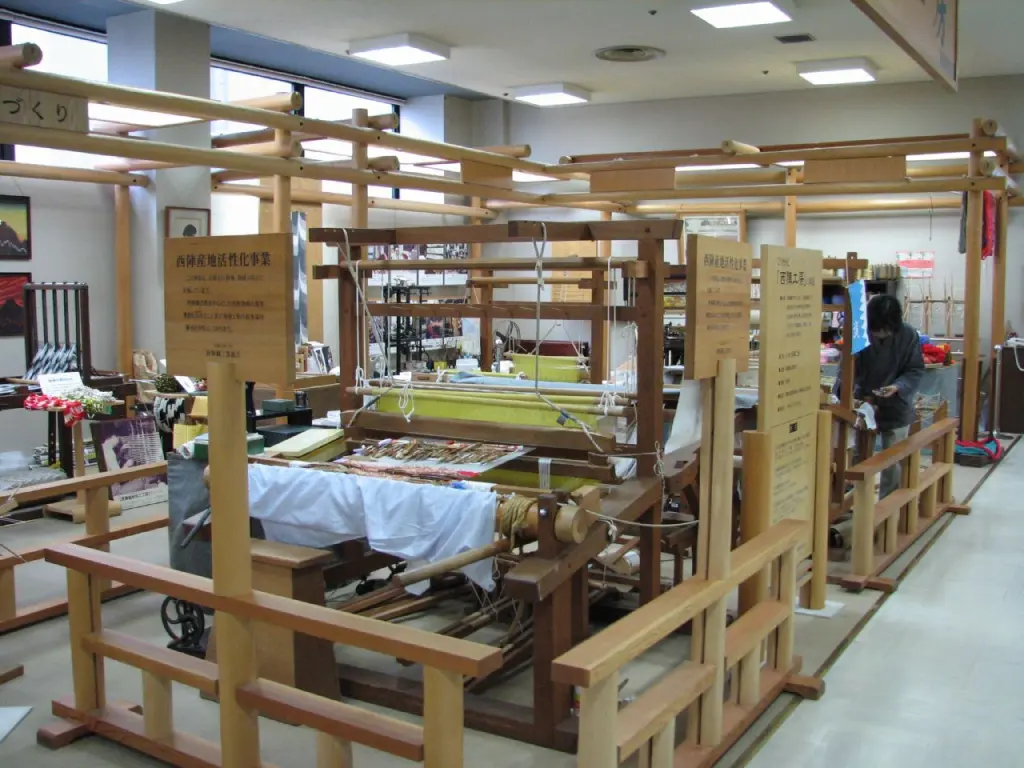
Image: POHAN CHEN / Wikimedia Commons; Flickr · Creative Commons Attribution 2.0
Nishijin-ori (西陣織) is the collective name for diverse pre-dyed figured textiles produced through the Nishijin weaving network in Kyoto. It is not one weave or motif. Silk and other yarns may be dyed before weaving and combined in brocade, satin, gauze, velvet, tapestry, or other structures; twelve product types are specified within Japan’s traditional-craft designation. Nishijin production is known for small quantities, great variety, and a division of labour that can separate design, graphing, yarn preparation, warping, weaving, and finishing among specialist workshops. Obi are the best-known products, but fabrics also serve kimono, Noh costume, Buddhist textiles, furnishings, neckties, bags, and contemporary design. The name refers to an industry and place-linked production system, not every textile woven in Kyoto or every gold brocade made in Japan.
Overview
| Japanese name | 西陣織 |
|---|---|
| Romanization | Nishijin-ori |
| Production centre | Nishijin area and associated workshops in Kyoto |
| General type | Pre-dyed figured textiles |
| Recognised varieties | Twelve types under the traditional-craft designation |
| Principal products | Obi, kimono cloth, costume, furnishings, and accessories |
Definition and designation
The Nishijin Textile Industry Association defines Nishijin textile as a general term for pre-dyed figured cloth produced through the Kyoto industry. National designation as a traditional craft dates to 1976 and specifies materials and techniques for recognised categories. “Traditional craft” is therefore a regulated production designation as well as a general cultural description. Workshops also make innovative products outside the narrow designated specifications.
Place, name, and industry
Nishijin is a historical district name rather than a modern administrative ward with a fixed boundary. It derives from the western army’s encampment during the Ōnin War of 1467–1477. Kyoto weaving long predates that conflict, but returning craftspeople re-established production in the area after the war. The modern name connects a broad network of firms and specialists rather than one factory or guild hall.
Pre-dyed yarn and figured weaving
In sakizome production, yarn is dyed before the cloth is woven. Figured structures can add supplementary coloured, silk, or metallic wefts to a ground weave, allowing pattern and fabric to emerge together. This differs from post-dyeing a completed white cloth. Nishijin includes multiple technical families, so brocade is prominent but not an adequate synonym for the whole industry.
Division of labour
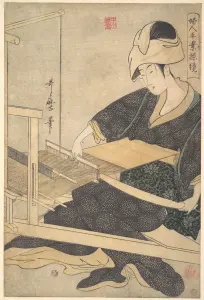
A complex textile may pass through planning, design, colour selection, pattern graphing, yarn procurement, dyeing, warping, loom preparation, weaving, inspection, and finishing. Different firms or households can perform these stages. Jacquard cards and later digital systems encode the lifting of warp threads, but the quality of yarn, tension, shuttle handling, metallic material, finishing, and design still depends on specialised knowledge.
Twelve recognised varieties
The industry’s designated varieties include several forms of nishiki brocade as well as tsuzure, donzu, shuchin, kasuri, omeshi, mojiri-ori, and others. The categories are based on weave structure, yarn, or method rather than simply visual motif. A single English phrase such as “Kyoto brocade” therefore hides important technical distinctions.
Historical development
Kyoto court and temple demand supported fine weaving over many centuries. After the Ōnin War, the Nishijin district became strongly identified with urban textile production. Edo-period luxury markets and regulation shaped designs, while the Meiji period brought French Jacquard technology and new export and exhibition systems. War, changing dress, power looms, and postwar lifestyles repeatedly reorganised the industry.
Obi, costume, and other uses
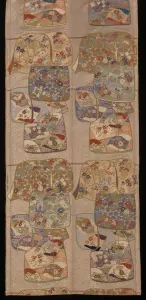
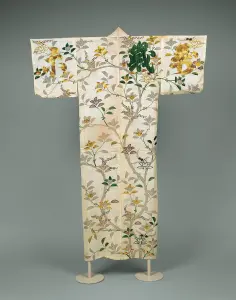
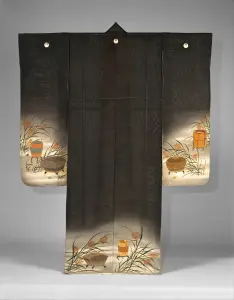
Formal fukuro and maru obi often display the detailed figured surfaces associated with Nishijin. Woven cloth also supports Noh costume, kimono, priestly and Buddhist furnishings, decorative panels, and small goods. The hikihaku technique featured by the V&A cuts metallic or decorated foil-backed paper into narrow strips that are inserted as weft, demonstrating how material preparation and weaving combine.
Contemporary production and challenges
Reduced everyday kimono use, long training, equipment costs, ageing workshops, and fragmented supply chains place pressure on production. Makers respond through fashion, interiors, art, technology, tourism, restoration, and collaborations beyond kimono. Preservation involves sustaining relationships among specialists, not merely storing old looms. An object should be called Nishijin-ori only when production evidence supports the attribution.
Sources
- Nishijin Textile Industry Association, About Nishijin Textile.
- Nishijin Textile Industry Association, Origin of Nishijin.
- Government of Japan, The New Traditions of Nishijin Textiles.
- Victoria and Albert Museum, How Was It Made? Japanese Hikihaku Obi.
- Government of Japan, Nishijin Kinran: Kyoto’s Magnificent Gold Brocade.
- Government of Japan, Japanese Fabrics and the Evolution of the Kimono.
- Kyoto National Museum, Past Textile Exhibitions.
- Victoria and Albert Museum, Kimono.
- Traditional Crafts Aoyama Square, Textiles.
Last updated: