Martial Arts Figures
Chōjun Miyagi
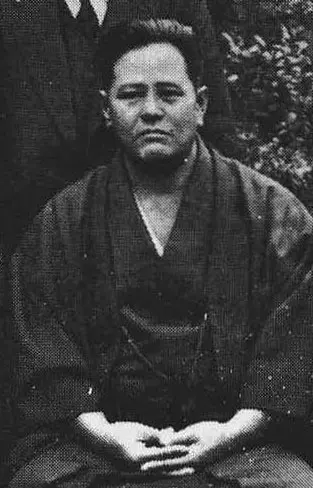
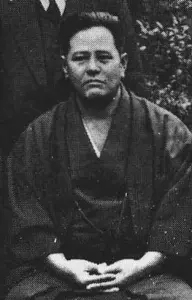
Image: Nakasone Genwa (publication source) / Karate-dō Taikan (1938), via Wikimedia Commons · Public domain
Chōjun Miyagi (宮城長順, 1888–1953) was an Okinawan Karate teacher and the founder of Gōjū-ryū Karate. A student of Kanryō Higaonna, he organised a Naha-based body of kata, conditioning, breathing practice and partner study into a modern teaching system. Miyagi matters not because he created Karate from nothing, but because he interpreted an inherited Okinawan tradition for schools, police instruction, public demonstrations and a widening international audience. His 1934 manuscript and documented teaching visit to Hawaii make him unusually important to the written and transnational history of pre-war Karate. Later Gōjū-ryū organisations trace themselves to different pupils and institutional lines, so his legacy should not be reduced to one modern federation or a single authorised performance of the style.
Overview
| Japanese | 宮城長順 |
|---|---|
| Reading | みやぎ ちょうじゅん |
| Romanisation | Miyagi Chōjun; English name order: Chōjun Miyagi |
| Born | 25 April 1888, Naha, Okinawa |
| Died | 1953, aged 65 |
| Martial art | Karate |
| Associated style | Gōjū-ryū |
| Principal teacher | Kanryō Higaonna |
| Historical setting | Okinawan Naha-te and the modernisation of Karate |
Name and dates
His name is written 宮城長順 and read Miyagi Chōjun in Japanese order. TokyoWaltz uses Chōjun Miyagi in the title and macrons in article text; Chojun Miyagi remains a common search spelling.
The Okinawa Traditional Karatedo Promotion Association records his birth on 25 April 1888 in Higashimachi, Naha. It and the All Japan Karatedo Federation give 1953 as his year of death. One online institutional history contains obvious typographical errors in the Hawaii and death dates; the 1934 Hawaii date is independently confirmed by Okinawa Prefecture.
Naha-te and Kanryō Higaonna
Miyagi began studying with Kanryō Higaonna at about fourteen. Higaonna was a central figure in the body of Karate later described as Naha-te, the Naha tradition. That relationship places Miyagi within an existing Okinawan network rather than outside history as an isolated inventor.
Accounts of Higaonna's training in Fuzhou and the precise Chinese sources of particular kata contain unresolved details. Institutional lineage histories are evidence for how the tradition understands its descent, but they are not a substitute for contemporary travel, curriculum or teaching records.
The formation of Gōjū-ryū
The JKF identifies Miyagi as the founder of Gōjū-ryū and describes his systematisation of Naha-te-derived material, breathing methods and further research. Gōjū (剛柔) means “hard and soft,” while ryū (流) means school or tradition.
Gōjū-ryū was a modern name for a curriculum with older components. The familiar explanation connecting the name to a line in the Chinese martial text Bubishi belongs to documented Gōjū-ryū tradition; the exact path by which every element entered Miyagi's curriculum is not equally well evidenced.
Teaching and technical system
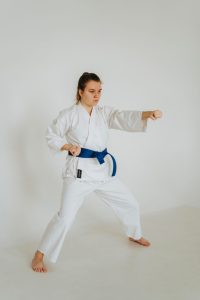
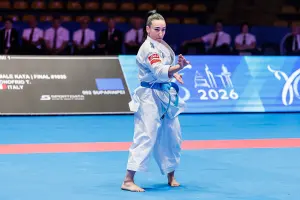
Gekisai Dai Ichi gives a focused example of the introductory kata associated with Miyagi’s modern Gōjū-ryū teaching system.
Miyagi's teaching linked kata with basic movement, supplementary conditioning, partner practice and breathing. Sanchin occupied a central place, while later introductory material, including Gekisai forms, served the needs of broader instruction.
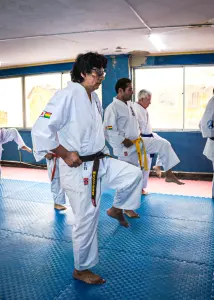
This organisation should not be mistaken for a frozen universal syllabus. Post-war Gōjū-ryū schools preserve different emphases, supplementary exercises and versions of kata, even when they recognise Miyagi as founder.
Written record and public education
Miyagi wrote Karate-dō Gaisetsu (唐手道概説, “Outline of Karate-dō”) in 1934. The surviving manuscript is an important primary record because it shows a pre-war teacher explaining Karate historically and educationally rather than leaving only later oral recollections.
Institutional histories record his teaching in schools, police contexts and universities. These activities placed Karate within the emerging structures of modern physical education and budō while retaining a base in Okinawan dōjō culture.
Hawaii in 1934
Okinawa Prefecture records that Miyagi travelled to Hawaii in 1934 at the invitation of the Japanese-language newspaper Yōkoku Jihōsha and taught Karate there. The visit is significant evidence that Okinawan Karate circulated internationally before the post-war expansion of Japanese martial arts.
A later association webpage gives 1939, but the prefectural account and Miyagi chronology support 1934. TokyoWaltz therefore uses 1934 and treats the other date as an editorial error rather than a rival historical interpretation.
War, loss and post-war teaching
The Battle of Okinawa disrupted the island's communities and martial-arts networks. Miyagi resumed teaching after the war, including police instruction and private training in Naha, but the conditions and surviving circle were not the same as before 1945.
He died in 1953. Later reconstruction of his curriculum relied on students, written materials and institutional memory, which helps explain why distinct Gōjū-ryū organisations can share a founder while differing in practice and genealogy.
Students, succession and later lineages
Prominent pupils associated with Miyagi include Seikichi Toguchi, Meitoku Yagi, Eiichi Miyazato, Gōgen Yamaguchi and others in Okinawan and mainland lines. Lists vary according to period, duration of study and organisational affiliation.
Claims that one person was Miyagi's sole universal successor are contested among later organisations. A neutral account distinguishes direct study, appointed roles within particular groups and later hereditary or organisational succession.
Legacy
Miyagi's influence is visible in Gōjū-ryū kata, breathing and conditioning systems practised in Okinawa, mainland Japan and abroad. His life also connects Karate Kata with public education, police training and early international transmission.
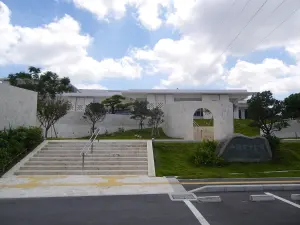
His importance is best understood through dated writings and institutions, not stories of superhuman training. The Okinawa Karate Kaikan and Okinawan archives now provide public contexts for studying the culture in which he worked.
Sources
- All Japan Karatedo Federation, Gōjū-ryū.
- Okinawa Traditional Karatedo Promotion Association, History of Okinawan Karate.
- Okinawa Prefecture, Okinawa Karate: A Traditional Culture Proudly Shared with the World (3).
- Okinawa Prefectural Library, Reference Guide to Miyagi Chōjun and Karate-dō Gaisetsu.
- National Diet Library Search, Miyagi Chōjun no Okinawa Karate ni Karate o Manabu.
- All Japan Karatedo Federation, Ayumi, Vol. 6.
Last updated: