Dojo & Institutions
Okinawa Karate Kaikan
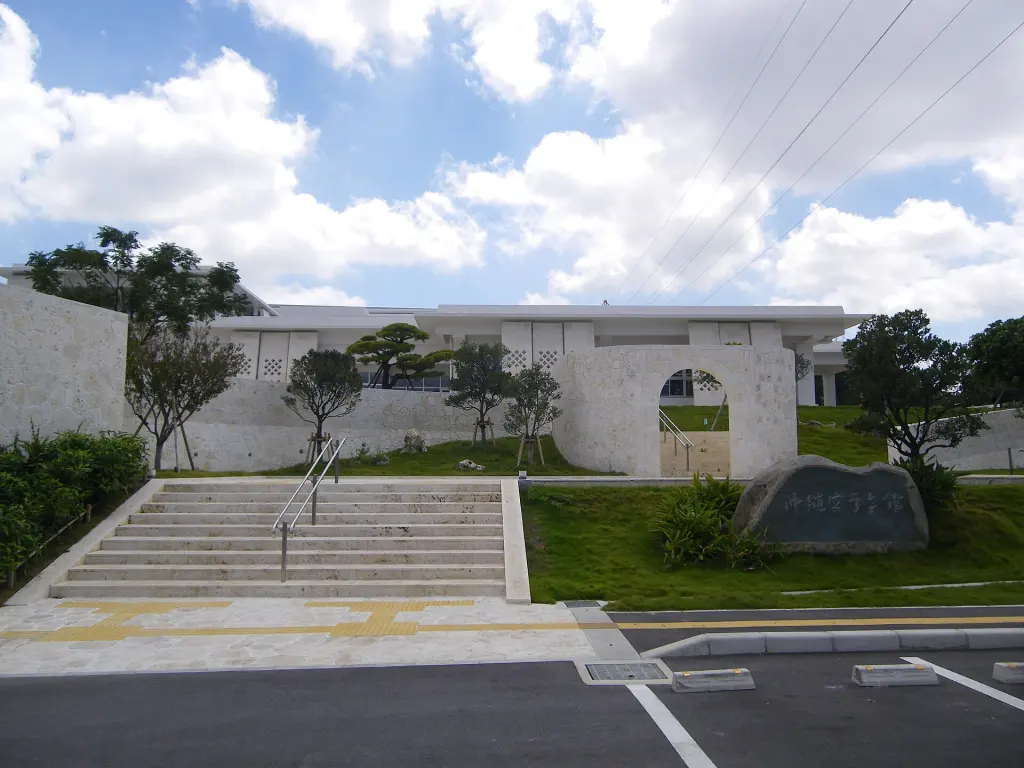
Image: Kugel~commonswiki / Wikimedia Commons · CC BY-SA 4.0
The Okinawa Karate Kaikan (沖縄空手会館) is a public cultural and training complex in Tomigusuku, Okinawa Prefecture. Opened on 4 March 2017, it was established to preserve, transmit and develop Okinawan Karate and to present Okinawa's role in the art's history to visitors from Japan and abroad. The site combines a large training hall, conditioning rooms, an exhibition and archive area, meeting facilities and the formal Shurei no Yakata dōjō. It matters because it places living practice, public history and international exchange in one institution. The Kaikan is not the headquarters of a single style and does not certify one universal Okinawan curriculum; it hosts practitioners and organisations from several traditions while serving the cultural-policy goals of Okinawa Prefecture.
Overview
| Japanese | 沖縄空手会館 |
|---|---|
| Reading | おきなわからてかいかん |
| Romanisation | Okinawa Karate Kaikan |
| Meaning | Okinawa Karate hall or centre |
| Opened | 4 March 2017 |
| Location | 854-1 Tomigusuku, Tomigusuku City, Okinawa Prefecture |
| Type | Prefectural cultural, exhibition and martial-arts facility |
| Major facilities | Karate hall, exhibition and archive areas, training rooms and Shurei no Yakata |
| Related service | Okinawa Karate Information Center |
| Current information checked | 2 September 2026 |
Purpose
Okinawa Prefecture states that the Kaikan was created to preserve, inherit and develop Okinawan Karate as a distinctive culture, communicate Okinawa as its birthplace and provide a base for learning its essence.
That wording combines cultural policy with public promotion. Historical scholarship still distinguishes documented evidence from origin narratives, and the Kaikan's mission does not make every exhibition statement the final answer to a disputed question.
Location and site
The Kaikan stands at 854-1 Tomigusuku in Tomigusuku City, south of Naha, on the former Tomigusuku Castle Park site. The prefectural overview gives the grounds as approximately four hectares.
Its location connects a modern public institution with Okinawa's wider historical landscape. It should not be confused with the Japan Karatedo Kaikan, the Tokyo headquarters of the Japan Karatedo Federation.
Training facilities
The main hall provides four competition areas and spectator seating. A conditioning room, outdoor practice areas, seminar rooms and related facilities support training, examinations, lectures and events.
The complex can accommodate both traditional practice and modern competition, but the presence of competition floors does not define all activity by sport rules. Facility use depends on reservations, event conditions and current operating policy.
Shurei no Yakata
The special dōjō is called Shurei no Yakata (守禮之館), “Hall of Observing Courtesy.” Its red-tiled roof and timber interior evoke Okinawan architectural forms and create a ceremonial setting distinct from the larger competition hall.
The facility guide states that it is used for high-level grading, Karate Day demonstrations and other designated occasions rather than ordinary open use. It is an institutional performance space, not the historic private dōjō of one founder.
Exhibition, archive and research
The exhibition area introduces Okinawan Karate for both experienced practitioners and general visitors through objects, text, video and interactive material. A reading and research area provides access to books and collected documentation.
This public-history function is important because early Karate survives unevenly across manuscripts, newspapers, photographs and later testimony. Exhibitions necessarily select and interpret; researchers should still consult the cited primary record where possible.
Okinawa Karate Information Center
The Okinawa Karate Information Center operates within the Kaikan as an information service for training, dōjō contacts, events, interpretation and historical visits. Its English-language resources are especially useful to international practitioners trying to approach Okinawan dōjō appropriately.
The service facilitates contact; it does not replace permission from an instructor or guarantee access. Visitors should check current information because dōjō availability, interpreters, events, fees and opening arrangements change.
Styles and the Okinawan Karate community
Okinawan Karate provides the historical map connecting the Kaikan’s preservation work with Shuri-te, Naha-te, Tomari-te, later styles, and modern institutions.
The Kaikan is designed for a community that includes Gōjū-ryū, Shōrin-ryū, Uechi-ryū, Kobayashi-ryū and other Okinawan organisations, as well as kobudō groups and international visitors. Hosting them together does not erase differences in lineage or kata.
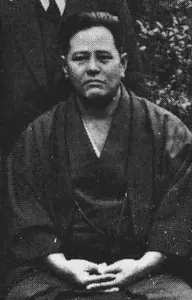
Figures such as Chōjun Miyagi and Kenwa Mabuni belong to the history interpreted at the facility, but neither man trained in the present building, which opened decades after their deaths.
Karate Day and public events
Okinawa designated 25 October as Karate Day, and demonstrations and related events form part of the prefecture's public presentation of the art. The Kaikan and Shurei no Yakata provide venues for some commemorative activities.
Event programmes are time-sensitive and may also use other Okinawan venues. The building's enduring encyclopedic role is as infrastructure for preservation, training and exchange rather than as the site of every major Okinawan Karate event.
Visiting and training context
The exhibition can be visited without being a Karate practitioner, while training spaces are used through facility procedures and organised programmes. Current hours, fees, closures and booking rules should be checked on the official site before travel.
Training at the Kaikan is not the same as entering an Okinawan teacher's private dōjō. The Information Center can help visitors understand introductions, scheduling and local etiquette, but each dōjō remains responsible for its own admission and instruction.
Institutional significance
The Kaikan gives Okinawa Prefecture a permanent platform for Karate policy, archives, exhibitions and international programming. Its tenth anniversary falls in March 2027, underlining that the institution itself is recent even though the traditions it presents are older.
This distinction between modern institution and historical tradition is essential. The building is evidence of twenty-first-century cultural investment in Karate, not evidence that earlier masters practised within a unified prefectural system.
Sources
- Okinawa Prefecture, Okinawa Karate Kaikan.
- Okinawa Karate Kaikan, Facility Guide.
- Okinawa Karate Information Center, English homepage.
- Okinawa Traditional Karatedo Promotion Association, History of Okinawan Karate.
- Okinawa Prefectural Archives, Karate Day.
- Okinawa Prefecture, Okinawa Karate: A Traditional Culture Proudly Shared with the World.
Last updated: