Food Culture
Onigiri
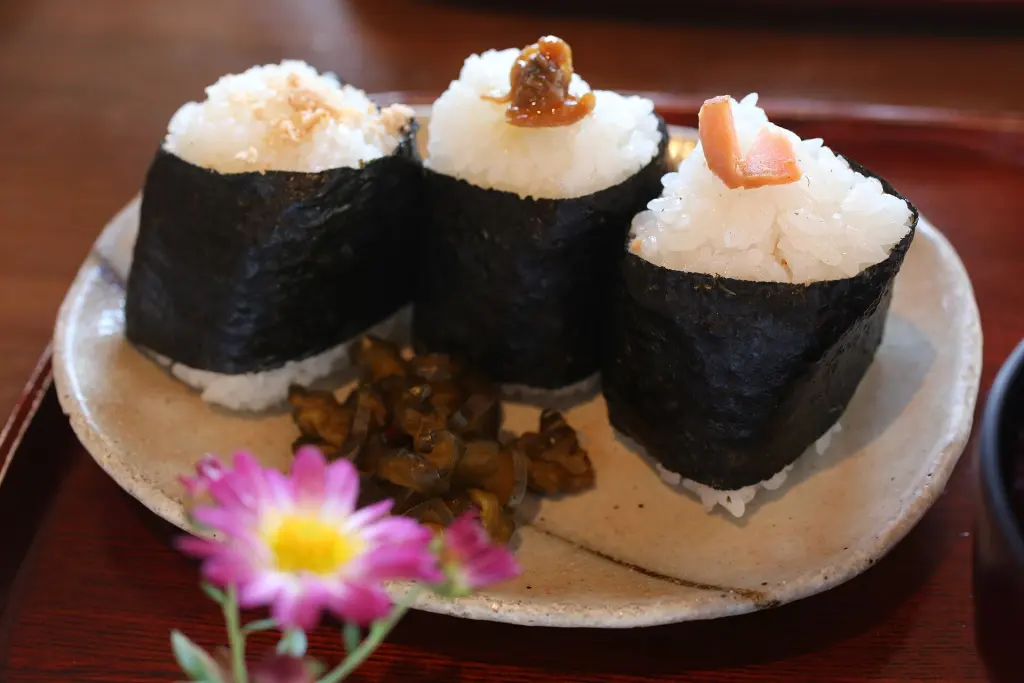
Image: Pcs34560 / Wikimedia Commons / Japanese Wikipedia · Public domain
Onigiri are portable portions of cooked rice shaped into triangles, rounds, cylinders, or other forms. They are also called omusubi or nigirimeshi, with usage varying by household and region. The rice may surround a filling, be mixed with seasonings, be grilled, or be partly wrapped in nori. Onigiri connect the long history of rice as travel and working food with home cooking, picnics, lunch boxes, specialist shops, emergency meals, and modern convenience stores. They are not a type of sushi unless prepared as a sushi form: ordinary onigiri use plain or seasoned cooked rice rather than vinegared sushi rice. Shape and filling do not follow one national rule, and safe storage depends on handling, ingredients, temperature, and time.
Overview
| Japanese | Onigiri (おにぎり・御握り) |
|---|---|
| Alternative names | Omusubi and nigirimeshi |
| Primary ingredient | Cooked Japanese rice |
| Common shapes | Triangle, round, and cylinder |
| Common additions | Nori, umeboshi, salmon, and seasoned bonito |
| Main role | Portable meal, snack, or bento component |
Names and definition
Onigiri derives from the act of grasping or shaping; omusubi and nigirimeshi are overlapping names rather than different foods with one nationwide distinction. English “rice ball” is useful but incomplete because many onigiri are triangular or cylindrical. A filling is common but not required, and nori can cover all, part, or none of the rice.
Historical portable rice
Rice portions have long been prepared for travel, work, outings, and military provisioning. Heian-period records mention tonjiki, a portable oval rice food, but it should not be equated in every detail with a modern convenience-store triangle. Bamboo sheaths and other wrappings preceded the broad use of sheet nori, and household forms changed with rice processing and distribution.
Rice, shaping, and salt
Freshly cooked short-grain rice holds together through its starch and is shaped with light pressure rather than crushed into paste. Salt seasons the surface and historically supported preservation, but it does not make room-temperature rice indefinitely safe. Moulds and machines now produce consistent shapes without changing the basic category.
Fillings, wrappings, and varieties
Umeboshi, salted salmon, seasoned bonito flakes, kombu, pollock roe, and tuna mayonnaise are familiar fillings, but the range is much wider. Rice may be mixed with sesame, vegetables, or seasonings; yaki-onigiri is grilled with sauce; regional forms use local ingredients. Nori adds flavour and handling convenience but is optional.
Bento, travel, and emergency food
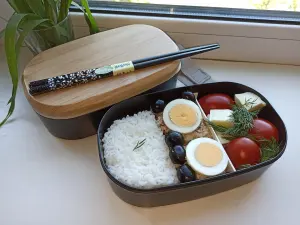
Onigiri fit easily into bento, picnics, train journeys, school events, and work breaks. Their portioned form also makes them useful in emergency food distribution, where rapid preparation and familiar taste can matter. Portability does not remove food-safety requirements, especially when fillings contain animal products or mayonnaise.
Convenience-store packaging
Modern convenience stores sell onigiri through cold-chain distribution and specialized wrappers that keep crisp nori separate from moist rice until opened. Barcodes, labels, factories, standardized fillings, and shelf-life controls make the product an industrial food as well as a cultural icon. Specialist shops and handmade household versions operate through different systems.
Onigiri and sushi
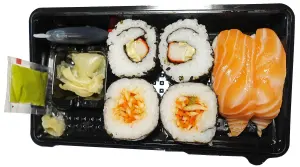
Ordinary onigiri is made with cooked rice that may be salted or seasoned, whereas sushi is defined through seasoned sushi rice or fermented sushi traditions. Both can contain fish and use nori, so appearance alone can mislead. Inari-zushi, makizushi, and nigiri-zushi are sushi forms; a salmon-filled rice triangle is normally onigiri.
Food safety and change
Hands, utensils, surfaces, fillings, cooling, storage temperature, and elapsed time affect safety. Warm rice wrapped too early can create condensation, while antimicrobial reputations attached to salt or umeboshi do not replace proper handling. New fillings, onigirazu, plant-based options, export markets, and rice-promotion campaigns show continuing change rather than a single fixed traditional recipe.
Sources
Last updated: