People
Chōsokabe Motochika
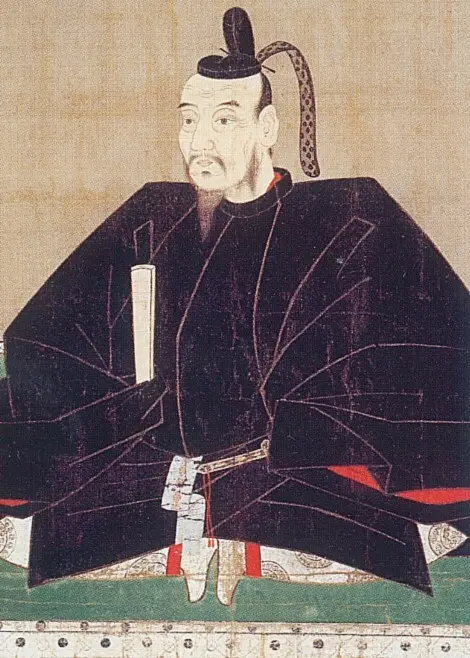
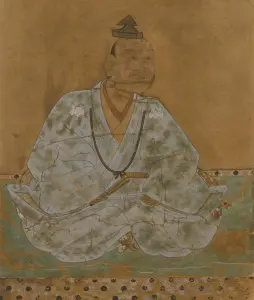
Image: Unknown artist / Wikimedia Commons · Public domain
Overview
From expansion across Shikoku to government in Tosa.
Chōsokabe Motochika (長宗我部元親, 1539–1599) was a territorial lord of the Sengoku Period whose career centred on Tosa Province, in present-day Kōchi Prefecture. From his family’s base at Okō Castle, he overcame rival powers in Tosa and extended his influence across much of Shikoku. The Shikoku Campaign of 1585 ended that expansion: he submitted to Hashiba Hideyoshi and retained Tosa. His subsequent career combined service within Hideyoshi’s political order with the administration of his remaining territory. Land surveys, laws and successive castle sites form an important part of his legacy alongside warfare. His control of much of the island should not be mistaken for lasting, uniform rule over every part of Shikoku.
Okō Castle and the consolidation of Tosa.
Expansion met Hideyoshi’s forces in 1585.
Service and administration followed submission.
Life at a glance
- Japanese name
- 長宗我部元親
- Life
- 1539–1599
- Home province
- Tosa
- Early base
- Okō Castle
- Major turning point
- Submission to Hideyoshi in 1585
- Later seat
- Urado Castle
01
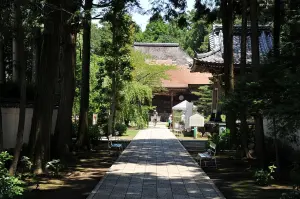
Okō Castle anchored the family’s power
Motochika was born in 1539, the son of Chōsokabe Kunichika. Kōchi City places his first battlefield experience in 1560, followed by his succession after his father’s death. The family’s position was rooted in eastern Tosa. Okō was a fortified residence within a contested provincial landscape, rather than the capital of an already unified island.
02
Provincial victories opened a wider struggle
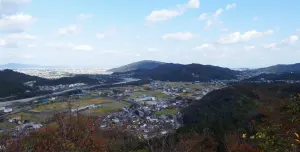
By the mid-1570s Motochika had overcome the principal opposition within Tosa. Expansion into neighbouring provinces brought new rivals and new problems of control. Kōchi’s historical accounts describe authority over most of Shikoku by 1585. This formulation leaves room for contested districts and local powers; the familiar image of a single island conqueror compresses a more uneven process.
03
The 1585 settlement preserved Tosa
Hideyoshi’s forces, with Toyotomi Hidenaga as overall commander, forced Motochika to submit. The resulting settlement confined his territory to Tosa. A surviving letter to Hachisuka Masakatsu thanks the intermediary for helping secure Hideyoshi’s pardon. The document gives specific evidence of negotiation alongside the campaign’s military pressure.
Hideyoshi
Motochika submits to his authority.
Hidenaga
Leads Hideyoshi’s campaign forces.
Masakatsu
Motochika’s letter thanks him for help in securing pardon.
04
Service to Hideyoshi brought personal losses
Motochika subsequently served within Hideyoshi’s military coalition. His eldest son Nobuchika died at Hetsugigawa in 1586 during the fighting in Kyushu. The loss changed the family’s succession prospects. Motochika’s later years therefore belong to the history of the Toyotomi order as well as to the earlier expansion of an independent regional lord.
05
Surveys and castle moves reshaped his territory
Kōchi’s heritage accounts connect Motochika with land surveys, a code of one hundred articles and changes of residence from Okō through Ōtakasa to Urado. These activities concerned resources, administration and access as much as defence. The archaeological remains of Okō include terraces, banks and moats; excavated imported ceramics also connect the site with exchange beyond the province.
06
His own career ended before the family lost Tosa
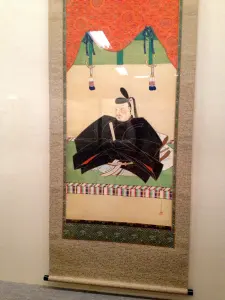
Motochika died at Fushimi in 1599. The Chōsokabe loss of Tosa after Sekigahara belongs to his successor’s generation. Shrines, graves and castle ruins preserve different kinds of memory: a commemorative portrait expresses status, while excavated structures and surviving letters establish other parts of the record. Historical drama offers another interpretation of the life, not a substitute for those sources.
07
Selected chronology
The sequence separates expansion, submission and the later administration of Tosa.
- 1539Born into the Chōsokabe family.
- 1560First battle and succession to his father.
- Mid-1570sConsolidates control of Tosa.
- 1585Submits to Hideyoshi and retains Tosa.
- 1586Nobuchika dies at Hetsugigawa.
- 1599Dies at Fushimi.
Sources
- Tokushima Castle Museum, Letter from Chōsokabe Motochika to Hachisuka Masakatsu.
- Kōchi City, Chōsokabe Motochika.
- Nagahama Castle Historical Museum, Hideyoshi and Hidenaga: the road to power.
- Kōchi Prefectural Museum of History and Folklore, Okō Castle ruins.
- Kōchi Prefecture, Historic sites associated with the Chōsokabe.
Last updated: