Cultural Geography
Tosa Province
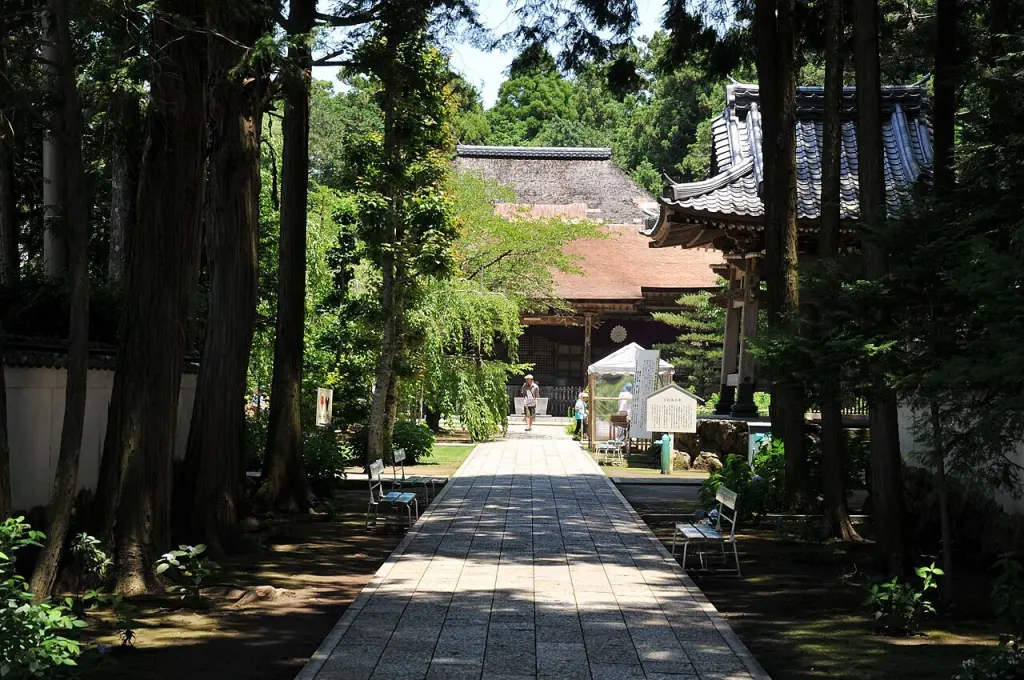
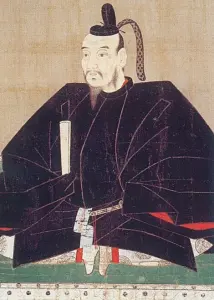
Image: Reggaeman / Wikimedia Commons · CC BY-SA 3.0
Overview
One region, several systems of government.
Tosa Province (土佐国, Tosa no kuni) was a historical province on the Pacific side of Shikoku, broadly corresponding to modern Kōchi Prefecture. Its history encompasses ancient provincial government, temples, medieval regional powers and the later Tosa domain. The provincial centre lay in the area of present-day Nankoku, while later rulers established different castle bases. Chōsokabe Motochika made Tosa the foundation of his sixteenth-century expansion, and the Yamauchi family governed the domain from the early seventeenth century. Province, domain and prefecture are related geographical terms with different administrative meanings. Tosa Province should also be distinguished from the much smaller modern municipality called Tosa City.
An older geographical framework.
A lord’s early modern territory.
A modern unit of government.
At a glance
- Japanese name
- 土佐国 · Tosa no kuni
- Island
- Shikoku
- Position
- Southern, Pacific-facing Shikoku
- Modern correspondence
- Broadly Kōchi Prefecture
- Ancient administrative centre
- Present-day Nankoku area
- Later domain rulers
- Yamauchi family
01
Province, domain and prefecture describe different systems
The province belonged to Japan’s historical geographical and administrative framework. A domain was a lord’s territory under the Tokugawa order, while a prefecture belongs to modern government. Their boundaries and functions should not be assumed identical. The name Tosa continued in regional identity after administrative reform, which explains its appearance in historical writing, cultural institutions and local products.
Tosa Province
- Meaning in this context
- Historical province of southern Shikoku.
Tosa domain
- Meaning in this context
- Early modern territory governed by the Yamauchi.
Kōchi Prefecture
- Meaning in this context
- Modern prefectural administration.
Tosa City
- Meaning in this context
- One municipality within Kōchi Prefecture.
02
Nankoku preserves the earlier political geography
Nankoku’s municipal history locates Tosa’s ancient provincial government in its area. Ki no Tsurayuki served as governor from 930 to 934, and his return journey provided the setting for the Tosa Diary. The connection links provincial administration with classical literary history. It also shows why the modern prefectural capital is not the only place through which to understand Tosa’s past.
03
Kokubunji links worship with provincial institutions
Tosa Kokubunji belongs to the provincial temple tradition associated with the eighth-century state. Archaeological investigation distinguishes earlier layouts and remains from the buildings visible today. The temple is also part of the Shikoku pilgrimage. These overlapping roles connect state-supported Buddhism, the material history of a particular site and later religious travel.
04
Regional rule changed before Chōsokabe consolidation
Medieval Tosa contained rival centres of power. Nankoku’s account associates the Hosokawa administration with Tamura and the Chōsokabe with Okō. Motochika’s consolidation in the 1570s emerged from this landscape. The Shikoku Campaign of 1585 then limited his wider expansion while leaving Tosa under his rule. The province’s identity did not begin with one warlord.
05
Yamauchi rule introduced another political framework
After the Chōsokabe lost Tosa following the events of 1600, Yamauchi Kazutoyo entered in 1601. The domain subsequently belonged to the Tokugawa political order. The prefecture’s historical overview dates the transition to prefectural government to 1871. A change of administrative system altered the organisation of authority without making older regional names disappear.
06
Different sites reveal different historical layers
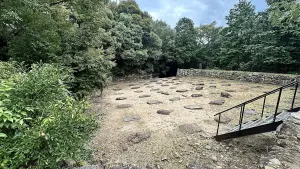
Okō Castle’s earthworks and excavated objects illuminate the Chōsokabe period, while Nankoku’s government and temple sites reach further back. Later castle-town development adds another layer. The Japanese Castles entry explains the broader relationship between fortifications and administration. Reading these places together avoids reducing a long provincial history to either its ancient capital or its most famous Sengoku ruler.
Sources
Last updated: