Cultural Geography
Japanese Castles
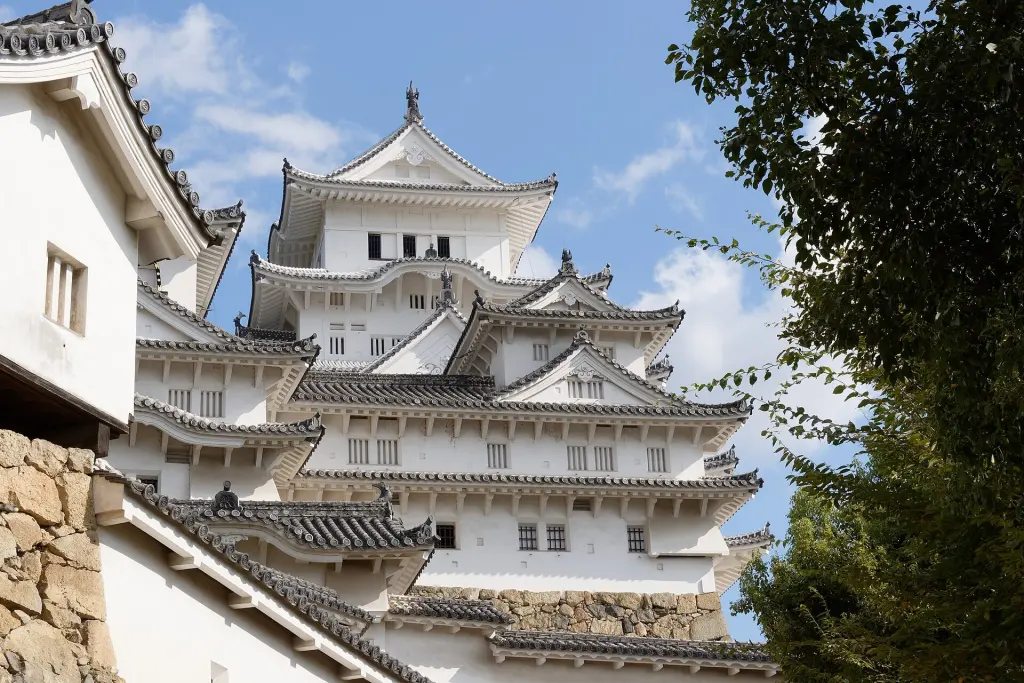
Image: Gilles Desjardins / Wikimedia Commons · CC BY-SA 4.0
Overview
Fortifications. Government. A landscape of power.
Japanese castles are fortified sites whose buildings, enclosures and surrounding settlements developed through changing forms of warfare and government. The familiar multi-storey keep is only one part of this larger system. Stone walls, earthworks, moats, gates, turrets and palaces organised defence, movement and political life. This entry focuses on the late medieval and early modern castle tradition represented by Nagoya, Osaka, Himeji and Matsumoto. These four sites offer different kinds of evidence: surviving timber structures, archaeological remains, repaired masonry and modern reconstructions. Reading them together means asking both what each element originally did and when the fabric visible today was built.
Enclosures, moats and controlled approaches.
Palaces, households and official business.
Architecture made authority visible.
At a glance
- Japanese term
- 城 (shiro; -jō in many names)
- Main focus
- Late medieval and early modern fortifications
- Political role
- Military stronghold and centre of government
- Principal elements
- Enclosures, keeps, turrets, walls, moats and palaces
01
The castle is the whole fortified site
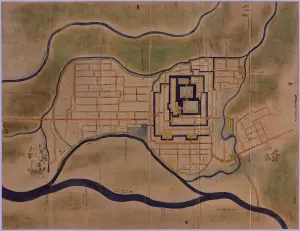
A castle name can refer to an extensive compound rather than a single building. The central enclosure, outer baileys, access routes and town belong to different spatial scales. A photograph of a keep rarely reveals the whole defensive or administrative arrangement.
02
From contested strongholds to centres of rule
Niwa Nagahide supervised work on Nobunaga’s Azuchi Castle, linking an individual retainer’s career to the construction of a major seat of power.
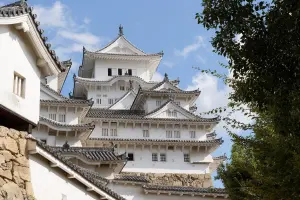
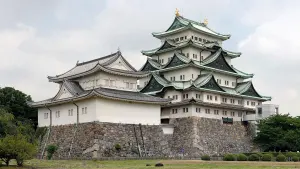
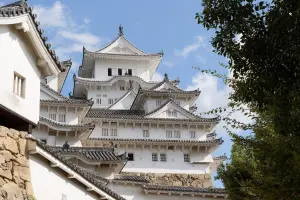
Castle building changed as regional warfare gave way to the Tokugawa political order. At Himeji, early-seventeenth-century expansion created a major fortified complex. At Nagoya, construction beginning in 1610 supported the Owari Tokugawa branch and the development of a new town. These were projects of government as well as defence.
03
Four terms for reading a castle
Castle Structure explains the distinction between a tenshu, or main keep; honmaru, the principal enclosure; yagura, a turret or related building; and ishigaki, stone retaining walls. The terms describe different kinds of things: a building, a space, another building type and a structural system.
04
Palaces and castle towns organised political life
Residential and administrative buildings help explain how a castle functioned outside battle. Nagoya’s Hommaru Palace accommodated residence and official business, while the castle town connected the seat of power with retainers, commerce and craftsmen. Jōkamachi introduces this wider urban setting.
05
Four castles, four kinds of evidence
Nagoya Castle
- What the site helps explain
- Owari Tokugawa power; reconstructed keep and palace alongside surviving structures.
Osaka Castle
- What the site helps explain
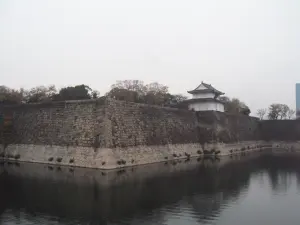
- Toyotomi origins, Tokugawa rebuilding and a 1931 museum keep.
Himeji Castle
- What the site helps explain
- A surviving early-modern timber complex within an extensive defensive system.
Matsumoto Castle
- What the site helps explain
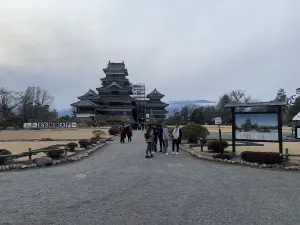
- Connected surviving towers combining defensive and later ceremonial spaces.
06
Survival, repair and reconstruction are different
A surviving historic building can contain replacement materials introduced during conservation. A reconstructed keep can stand amid genuinely old walls and archaeological remains. Neither the age of the keep nor its appearance establishes the age of every feature at a site. Interpretive labels should identify the specific structure and building campaign being discussed.
Sources
Last updated: