People
Toyotomi Hideyoshi

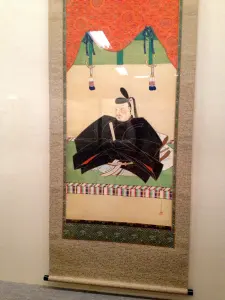
Image: Kanō Mitsunobu / Wikimedia Commons · Public domain
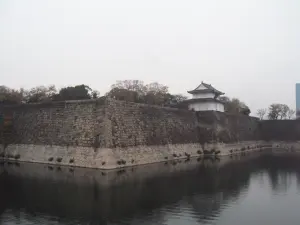
Toyotomi Hideyoshi (1537–1598; some sources give 1536) was a military and political ruler who brought much of late-sixteenth-century Japan under a single authority. Rising in the service of Oda Nobunaga, he combined campaigning, negotiation and imperial court office to consolidate power during the closing decades of the Sengoku Period. Osaka Castle and his relationship with Sen no Rikyū connect his government to Momoyama culture. His rule also involved coercive social regulation and invasions of Korea that caused extensive destruction. He was neither emperor nor shogun: his authority rested on military dominance, alliances and court titles, including kampaku.
Overview
| Japanese name | 豊臣秀吉 |
|---|---|
| Born | 1537; 1536 appears in some institutional accounts |
| Place of origin | Owari Province, present-day Aichi Prefecture |
| Died | 1598 |
| Principal roles | Military ruler; kampaku from 1585 |
| Earlier names | Kinoshita Tōkichirō; Hashiba Hideyoshi |
| Political context | Late Sengoku and Azuchi–Momoyama Japan |
Origins and the limits of the early record
Accounts place Hideyoshi’s origins in a modest family in Owari. Keio University’s portrait catalogue identifies his earlier name as Kinoshita Tōkichirō and his subsequent service to Oda Nobunaga. The familiar story of an effortless rise from peasant to ruler should be separated from what particular documents establish. Institutional sources also differ between 1536 and 1537 for his birth year.
Nobunaga’s death and the struggle for succession
After Nobunaga’s death at Honnō-ji in 1582, Hideyoshi defeated Akechi Mitsuhide and emerged as a leading claimant to his former lord’s political position. Succession was a contest among commanders and alliances rather than a simple inheritance of a unified state. Military success provided opportunities that still required negotiation and the redistribution of authority.
Court office and military government
A surviving letter to Hachisuka Masakatsu documents intercession for Chōsokabe Motochika after the Shikoku campaign, revealing the role of intermediaries in the settlement.
The submission of Chōsokabe Motochika in 1585 illustrates how Hideyoshi’s expansion incorporated a regional lord while reducing his territory to Tosa.
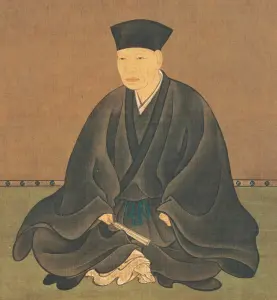
Hideyoshi became kampaku in 1585 and received the Toyotomi name in 1586. Court status gave formal expression to power acquired through warfare. Campaigns and settlements extended his control, including the submission of Kyūshū in 1587 and the defeat of the Hōjō at Odawara in 1590. These processes joined local lords to an increasingly central political order.
The sword hunt and social regulation
The 1588 sword-hunt edict ordered farmers to surrender weapons. Its stated purposes included preventing disturbances and securing agricultural production; the edict also connected surrendered metal to the construction of a great Buddha. Columbia University’s translated document makes the coercive logic visible. An edict expresses a government’s intention and should not, by itself, be treated as proof of identical enforcement everywhere.
Cultural patronage and displays of authority
Hideyoshi’s patronage connected collecting, ceremony and political rank. Kyoto National Museum documents his collection of prestigious swords; portraits place him in formal court regalia. Tea, architecture and valued objects helped make authority visible. Cultural achievement and coercive government therefore belong in the same account rather than in separate celebratory and military biographies.
The invasions of Korea
Hideyoshi ordered invasions of Korea in 1592 and 1597 as part of an ambition to reach Ming China. Korean resistance and Ming intervention opposed the Japanese armies, and the wars devastated communities and cultural sites. Korean artisans were forcibly taken to Japan; their contribution to Japanese ceramics must be discussed alongside that violence, rather than described simply as voluntary cultural exchange.
Death, succession and historical memory
Hideyoshi died in 1598, leaving the young Hideyori as his heir. The arrangement of senior lords intended to protect the succession did not produce a durable Toyotomi settlement. His legacy includes both the consolidation of political power in Japan and the human cost of overseas war. Museum collections and documentary scholarship provide firmer foundations than later anecdotes about personality.
Timeline
| Date | Event |
|---|---|
| 1582 | Nobunaga dies; Hideyoshi defeats Mitsuhide. |
| 1585–1586 | Kampaku appointment and the Toyotomi name. |
| 1588 | Sword-hunt edict. |
| 1590 | Odawara campaign. |
| 1592 and 1597 | Invasions of Korea. |
| 1598 | Hideyoshi dies. |
Sources
- Keio University, Portrait of Toyotomi Hideyoshi.
- Columbia University, Collection of Swords, 1588.
- Columbia University, Korea: Invasion and Seclusion.
- Kyoto National Museum, Hideyoshi’s Favorite Swordsmiths.
- Nagoya City Museum, Hideyoshi and falconry.
- The Metropolitan Museum of Art, Edo-Period Japanese Porcelain.
- British Museum, Samurai: large print guide.
Last updated: