Karate
Shuri-te
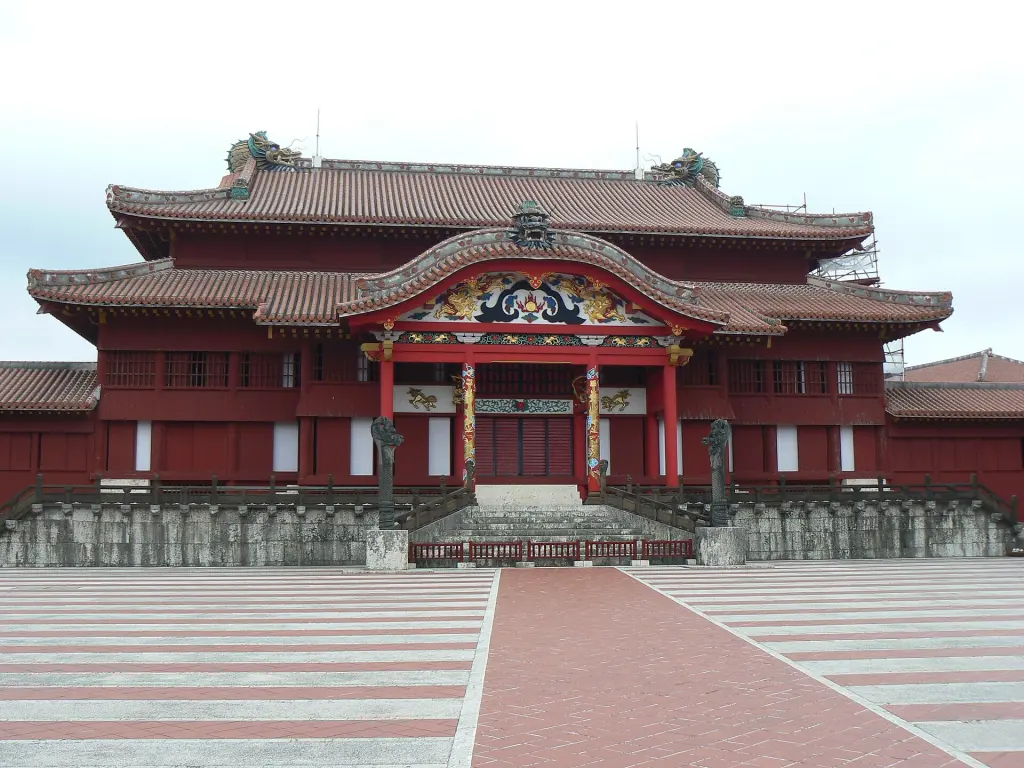
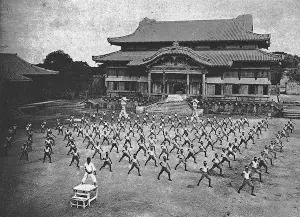
Image: Martinbayo / Wikimedia Commons · CC BY-SA 4.0
Overview
A royal-capital network became one of modern Karate’s strongest transmission routes.
Shuri-te (首里手) is a historical label for te transmission associated with Shuri, the royal capital of the Ryukyu Kingdom. Okinawan forms include Suidī or Suidii. The label connects court-town networks and teachers including Sokon Matsumura and Ankō Itosu. Itosu’s students helped move Karate into schools and onto mainland Japan, while later organisations selected and reorganised different material. Shuri-te is therefore a regional and historical grouping—not one fixed modern syllabus or a perfectly sealed branch.
Court service, education, official travel, and family relationships shaped transmission.
Personal teaching networks connected nineteenth-century practice with modern education.
- Japanese
- 首里手
- Okinawan reading
- Suidī or Suidii
- Place
- Shuri, Ryukyu royal capital
- Associated teachers
- Sokon Matsumura · Ankō Itosu
- Later connections
- Shōrin traditions · Shotokan · Shitō-ryū
- Best understood as
- A regional transmission network
01Name & place
“Shuri hand” names a network around a capital, not an official palace curriculum.
Language and geography orient the history, but neither proves that every practitioner shared one standardised system.
Suidī / Suidii
The Okinawan-language form used in institutional presentation.
首里手
Shuri plus te, “hand”.
Regional label
A modern way to group transmission associated with Shuri.
Shuri was a castle town and administrative centre. Its social world included court service, official travel, education, and relationships among families attached to the kingdom. Those settings help explain contact and transmission. Describing the network as “royal,” however, should not imply that every teacher held the same status or taught an authorised palace syllabus.
02Teachers & transmission
Matsumura and Itosu are central nodes, not endpoints in a single straight line.
Personal relationships matter more than a retrospective diagram of sealed schools.
Sokon Matsumura
Commonly identified as a major figure in Shuri-associated transmission. Surviving accounts vary in detail and emphasis.
Ankō Itosu
His students formed influential Okinawan and mainland networks, and his educational work supported repeatable group practice.
Neither figure transmitted one sealed curriculum unchanged to every student. Instruction moved through individual teachers and relationships; later pupils selected, renamed, revised, and reorganised material in different institutional settings.
03Kata & curriculum
A shared kata name is evidence of relationship, not proof of identical performance.
Sequence, emphasis, application, and even naming can change across teachers and organisations.
Pinan and other kata
Forms help researchers compare lineages, but no short list defines every Shuri-associated curriculum.
All four are needed before drawing a lineage conclusion.
Pinan → Heian
The Pinan series associated with Itosu appears as Heian in Shotokan.
Applications vary
Related sequences can carry different timing, body method, and pedagogical purpose.
For a broader framework, see Karate Kata. It explains why transmission, standardisation, school teaching, and competition can produce visible variation without erasing historical relationships.
04School education & public teaching
Group instruction changed how Karate could be taught and understood.
Public adoption was gradual rather than a single official conversion.
Personal instruction
Small teaching networks and individual relationships shaped transmission.
Repeatable groups
Commands, formation, staged progression, and formal presentation supported larger classes.
Okinawa and mainland Japan
Students and institutions carried reorganised Karate into new social settings.
Historical research shows that educators and youth organisations debated Karate’s purpose, discipline, recreation, and value for physical development. School adoption therefore made transmission broader while also changing the conditions of practice.
05Later lineages & styles
Modern styles preserve Shuri-linked material through additional layers of reorganisation.
Teacher–student links are real; identity across periods is not automatic.
Gichin Funakoshi → Shotokan
Funakoshi studied with Ankō Asato and Ankō Itosu. University culture, organisations, terminology, and post-war development became further historical layers.
Kenwa Mabuni → Shitō-ryū
Mabuni drew on Itosu’s teaching and on Kanryō Higaonna’s Naha-associated transmission.
Shōrin traditions
Several later Okinawan lineages preserve Shuri-linked teachers and kata without forming one centralised modern organisation.
The mixed inheritance visible in Shitō-ryū is especially useful: a modern style can preserve Shuri-associated material without belonging exclusively to one branch of a simple three-part tree.
06Comparison
Geography helps until it turns into a technical stereotype.
“Light and linear” versus “rooted and circular” is too broad to define historical teachers or every kata.
Shuri-te
Court-town and educational networks associated especially with Matsumura and Itosu.
This pageNaha-te
A network associated especially with Kanryō Higaonna and later Gōjū-ryū.
Overlapping later stylesTomari-te
A smaller documented grouping whose teachers and kata overlapped with neighbouring networks.
Not an isolated third boxA stronger comparison names the teacher, kata, date, and later organisation. It also asks whether a claim describes historical transmission, present-day performance, tournament presentation, or one school’s teaching language.
07Historical significance
Shuri-te connects Ryukyuan court-town history with education and global Karate.
The label is most useful when it supports careful inquiry rather than lineage ranking.
Shared teachers and kata
Widely practised styles can share historical material while presenting it differently.
One universal standard
Documents, institutional histories, oral transmission, and embodied practice illuminate different parts of the record.
Sources and further reading
Last updated: