Karate
Tomari-te
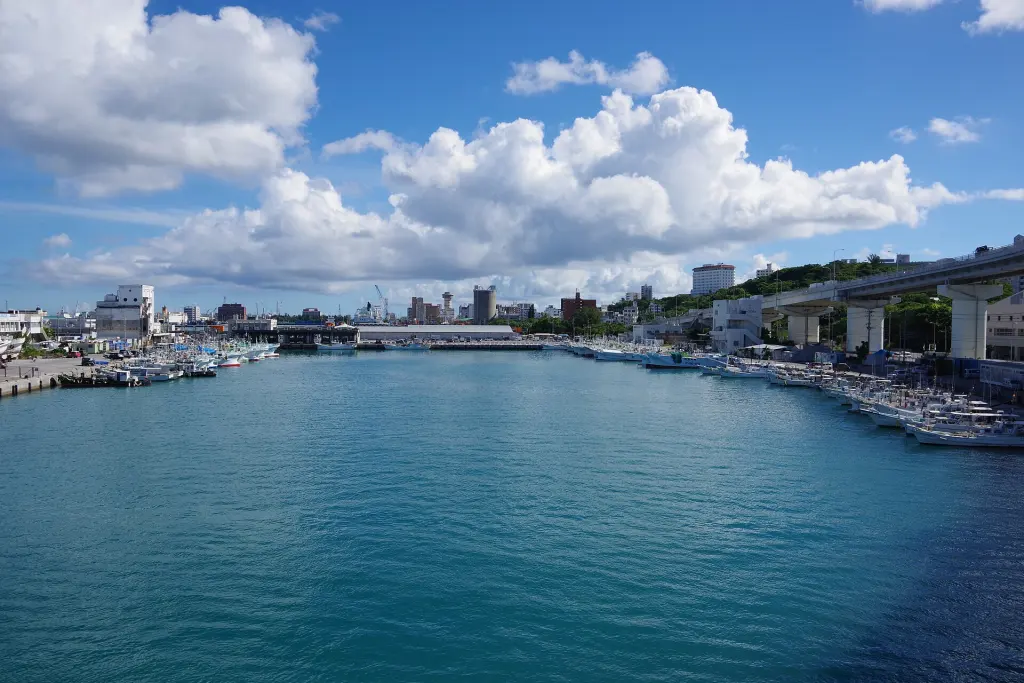
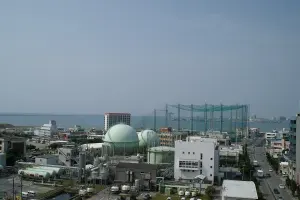
Image: Kugel~commonswiki / Wikimedia Commons · CC BY-SA 4.0
Overview
A smaller port-community network survives in history through overlap rather than isolation.
Tomari-te (泊手) is a historical label for te transmission associated with Tomari, a port community now within Naha. Okinawan forms include Tumaidī or Tumai-dii. Institutional histories commonly identify Kōsaku Matsumora as a major Tomari-associated teacher. Yet teachers, kata, and students moved among neighbouring communities, and later lineages often combine material assigned to more than one regional label. Tomari-te is best understood as a historical transmission category—not a lost uniform third style waiting to be reconstructed.
Movement within the Ryukyu Islands connected the community to nearby Shuri and Naha.
A major nineteenth-century name in Tomari-associated institutional histories.
- Japanese
- 泊手
- Okinawan reading
- Tumaidī or Tumai-dii
- Place
- Tomari port and village
- Associated teacher
- Kōsaku Matsumora (1829–1898)
- Historical relationship
- Exchange with Shuri and Naha
- Best understood as
- An overlapping regional category
01Name & place
“Tomari hand” identifies a community and network whose boundaries changed over time.
Present-day municipal geography should not erase the historical port’s separate role.
Tumaidī / Tumai-dii
The Okinawan-language form used in institutional presentation.
泊手
Tomari plus te, “hand”.
Regional category
A guide to personal transmission rather than proof of one community-wide curriculum.
Tomari served movement within the Ryukyu Islands and lay close to the better-known centres of Shuri and Naha. Modern Naha incorporates the area, but the older place label still helps identify a distinct port-community network.
02Kōsaku Matsumora & transmission
Matsumora is the representative name—and an easy one to confuse.
Romanisation and similar surnames make source checking essential.
Kōsaku Matsumora
Commonly presented as the major nineteenth-century teacher of Tomari-te.
Sokon Matsumura
A different teacher connected with a neighbouring network; Matsumora and Matsumura are not spelling variants of one person.
Okinawan institutional history often places Kōsaku Matsumora beside Sokon Matsumura of Shuri and Kanryō Higaonna of Naha when introducing influential regional transmission. That comparison is useful only when the individuals remain distinct.
03Teachers, kata & movement
Later teachers reveal a network that crossed the map’s neat boundaries.
Kata relationships invite investigation but do not automatically prove exclusive origin.
Kōsaku Matsumora
Provides a historical centre without defining every later transmission.
Personal study connected Tomari with other Okinawan networks.
Chōtoku Kyan
Associated with overlapping study routes rather than a single closed branch.
Chōki Motobu
Another example of Karate developing through cross-local relationships.
Forms sometimes described as Tomari-linked also appear in later schools with different sequences, names, or interpretations. See Karate Kata for a comparison framework that avoids turning one kata name into a complete genealogy.
04Relationship with Shuri-te
Close exchange explains overlap without dissolving Tomari into Shuri.
Personal networks are more informative than a hard boundary on a modern map.
Court-town network
Matsumura, Itosu, education, and later mainland routes.
Teachers and kata
Study relationships crossed nearby communities.
Port-community network
Matsumora and later overlapping lines.
Shuri-te and Tomari-te are frequently grouped because of teacher exchange and overlapping kata. The grouping is useful, but it should not assume that every later Shōrin-related curriculum preserves both in the same way.
05Relationship with Naha & maritime exchange
Two port settings created opportunities for contact without making the labels interchangeable.
A plausible geography is not yet a documented influence route.
Inter-island port community
A smaller network positioned near Shuri and Naha.
Local movementPeople and knowledge in motion
Ports remind readers that Ryukyuan martial history developed through travel and exchange.
Requires named evidenceCommercial and diplomatic port
A different cluster centred most prominently on Kanryō Higaonna’s transmission.
Not interchangeableClaims of technical influence still require a named teacher, route, date, or source. Maritime setting provides context rather than proof by itself.
06Why Tomari-te is hard to define
A later explanatory category can be useful without becoming a complete historical syllabus.
Descriptions such as smaller, less documented, or absorbed only identify the problem; they do not solve it.
Do not invent completeness
No secure central organisation preserves one uncontested Tomari-te curriculum for every period.
Attribute later reconstruction
State which teacher, branch, or institution assigns a kata or method to Tomari.
Show overlap openly
Movement across Shuri, Tomari, and Naha is part of the history, not a flaw in the diagram.
07Historical significance
Tomari-te keeps Okinawan Karate from becoming a simple two-branch story.
Its value is historical and analytical rather than prescriptive.
A port community and cross-local networks
Tomari draws attention to material that later schools inherited through several routes.
A rigid three-box classification
The history becomes clearer when overlap is represented rather than edited away.
Sources and further reading
- Okinawa Prefecture, Okinawa—The Birthplace of Karate.
- Okinawa Karate and Kobudo Record Production Committee, The History of Karate.
- Naha City Assembly, Declaration of Naha as the Town of Karate and Kobudo.
- Akiyuki Abe, “The Process of Establishing Karate in the Modern Okinawan Youth Education System”.
- Naha City Tourism Database, Tomari Port and Nearby Historical Sites.
Last updated: