Clothing & Formality
Furisode
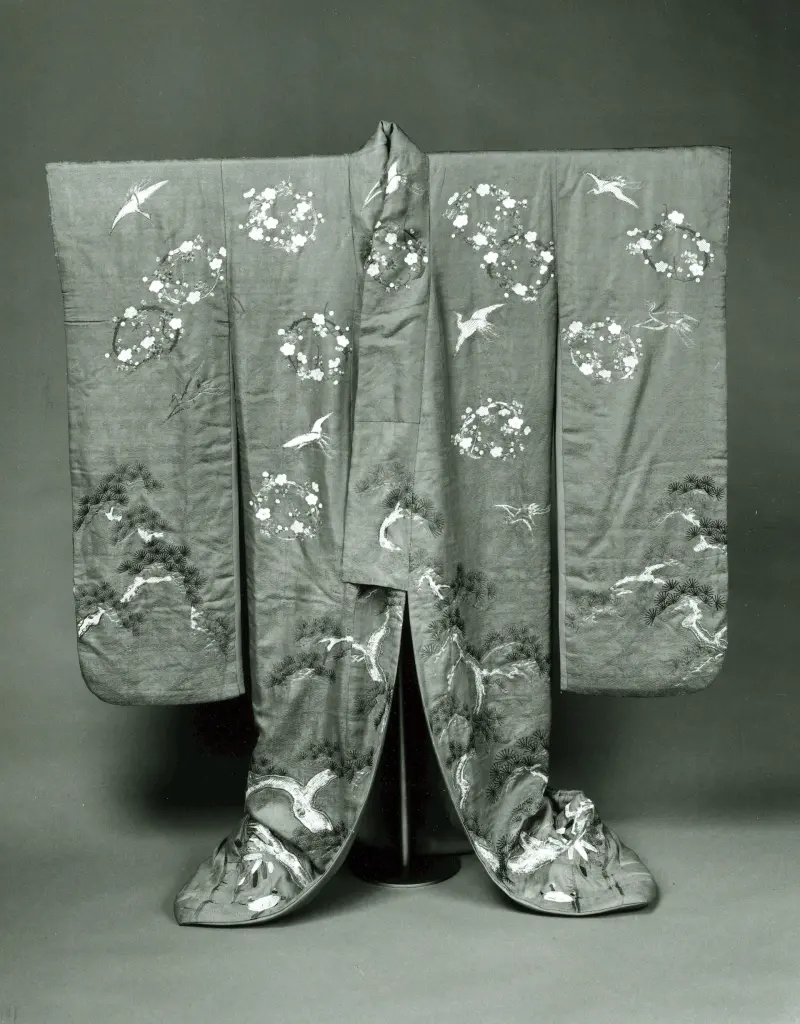
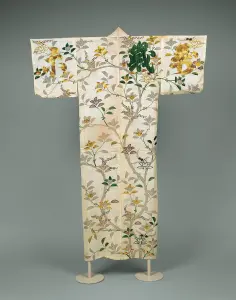
Image: Unknown Japanese maker; digital image by The Metropolitan Museum of Art / Wikimedia Commons · CC0 1.0
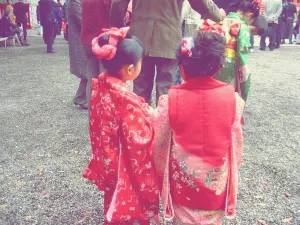
Furisode are kimono distinguished by long, hanging sleeves. In modern dress convention they are strongly associated with formal clothing for unmarried women, especially at coming-of-age ceremonies, weddings, and celebratory photography. The category is defined by construction and sleeve form, however, not by one fixed design, colour, or textile technique. Surviving garments show changing relationships among age, status, fashion, family resources, and occasion from the Edo period onward. Contemporary furisode may be inherited, purchased, rented, or restyled, and commercial labels for sleeve-length subtypes are not perfectly uniform. Understanding the garment therefore requires both its material structure and the social conventions of a complete ensemble, including underlayers, obi, accessories, footwear, and dressing practice.
Overview
| Japanese name | 振袖 |
|---|---|
| Romanization | Furisode |
| Literal sense | Swinging sleeves |
| Garment type | Long-sleeved kimono |
| Modern association | Formal wear for unmarried women |
| Common occasions | Coming-of-age ceremonies, weddings, and celebrations |
Name, form, and scope
The word furisode combines furi, referring to the hanging or swinging portion of the sleeve, with sode, sleeve. The conspicuous sleeve drop distinguishes furisode from short-sleeved kimono categories, but examples vary in proportion, age, material, lining, and intended wearer.
A furisode is not simply any colourful kimono and not every long theatrical sleeve is a furisode. Museum catalogues classify actual garments through construction, period, material, and use, while modern dress manuals add occasion-based rules that may differ by school, retailer, or family practice.
Historical development
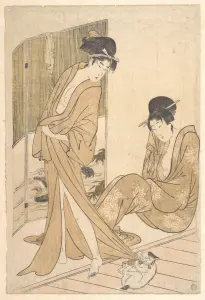
Sleeve shapes in Japanese dress changed over centuries. During the Edo period, long swinging sleeves became particularly associated with young wearers, while kosode-based fashions developed through urban consumption, pattern books, sumptuary regulation, dyeing, weaving, and embroidery.
The modern idea of kimono as a specifically Japanese traditional garment took shape alongside Western-style clothing in the Meiji and later periods. Furisode consequently became more concentrated in ceremonial and photographic settings rather than remaining part of one unchanged system of everyday dress.
Sleeve length and subtypes
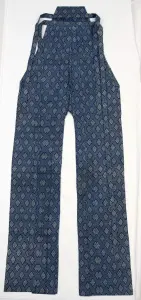
Modern terminology commonly distinguishes kofurisode, chūfurisode, and ōfurisode, indicating relatively short, medium, and long sleeve drops. The longest forms create a broad decorative field and are often chosen for highly formal occasions; shorter forms may be easier to coordinate with hakama or less elaborate events.
Exact centimetre ranges are not universal. Garment size, the wearer's height, period conventions, rental inventories, and trade usage all affect classification. Sleeve length should therefore be described as a proportion and context, not treated as an infallible measure of rank.
Formality and occasions
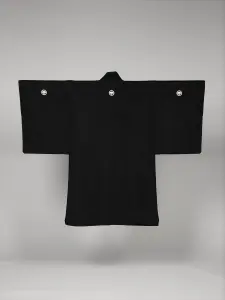
In contemporary Japan, furisode are closely associated with Seijin no Hi and local coming-of-age gatherings, wedding guests, graduation-related photography, New Year, and other celebratory events. A black tomesode, visiting kimono, or other form may be selected instead according to marital status, role, family expectation, and venue.
The familiar statement that furisode are only for unmarried women summarizes a strong modern convention rather than a timeless legal rule. Stage costume, fashion work, inherited garments, regional practice, gender expression, and personal styling create exceptions, while formal hosts or ceremonies may still expect conventional coordination.
Textiles, motifs, and technique
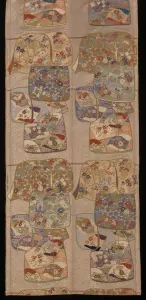
Furisode can combine woven pattern, yūzen resist dyeing, shibori, embroidery, metallic thread, hand painting, and stencil work. Pattern placement may cross seams so that sleeves, body panels, and hem read as a coordinated composition when the robe is worn.
Seasonal plants, birds, landscapes, courtly references, geometric forms, and auspicious motifs appear in historical and modern examples. Motif meanings are contextual rather than a fixed dictionary: colour, technique, season, family taste, maker, and the whole ensemble shape interpretation.
Dressing and the complete ensemble
A formal furisode ensemble ordinarily includes undergarments, a broad formal obi, ties and padding, obiage, obijime, tabi, and zōri, with accessories selected for balance and occasion. The left front overlaps the right, and the long sleeves require attention when sitting, walking, and entering vehicles.
Professional kitsuke is common because the garment's lines and the obi construction depend on many hidden supports. Dressing practice is not merely decorative: secure but comfortable tying, appropriate hem length, and management of the sleeves affect mobility and the preservation of the textile.
Rental, inheritance, and contemporary use
Rental services make complete coordinated sets available for ceremonies and photography, while family garments may be altered, re-lined, or combined with a new obi. Purchasing, inheriting, and renting carry different costs and emotional meanings; none is inherently more authentic.
Designers and wearers continue to adapt furisode through new textiles, graphic motifs, mixed styling, and inclusive presentation. Museums preserve individual objects as evidence of their own dates and makers, not as templates proving that one rule governed all periods of Japanese clothing.
Sources
- The Metropolitan Museum of Art, Kimono: A Modern History.
- Government of Japan, Japanese Fabrics and the Evolution of the Kimono.
- Rie Mori, Changes in the Term ‘Kimono’ in 1870s–1970s Japan.
- The Metropolitan Museum of Art, Furisode.
- The Metropolitan Museum of Art, Long-Sleeved Kimono with Hydrangeas and Cherry Blossoms.
- Government of Japan, Traditional New Year’s Kimono: Haregi.
Last updated: