
Clothing & Formality
Haori
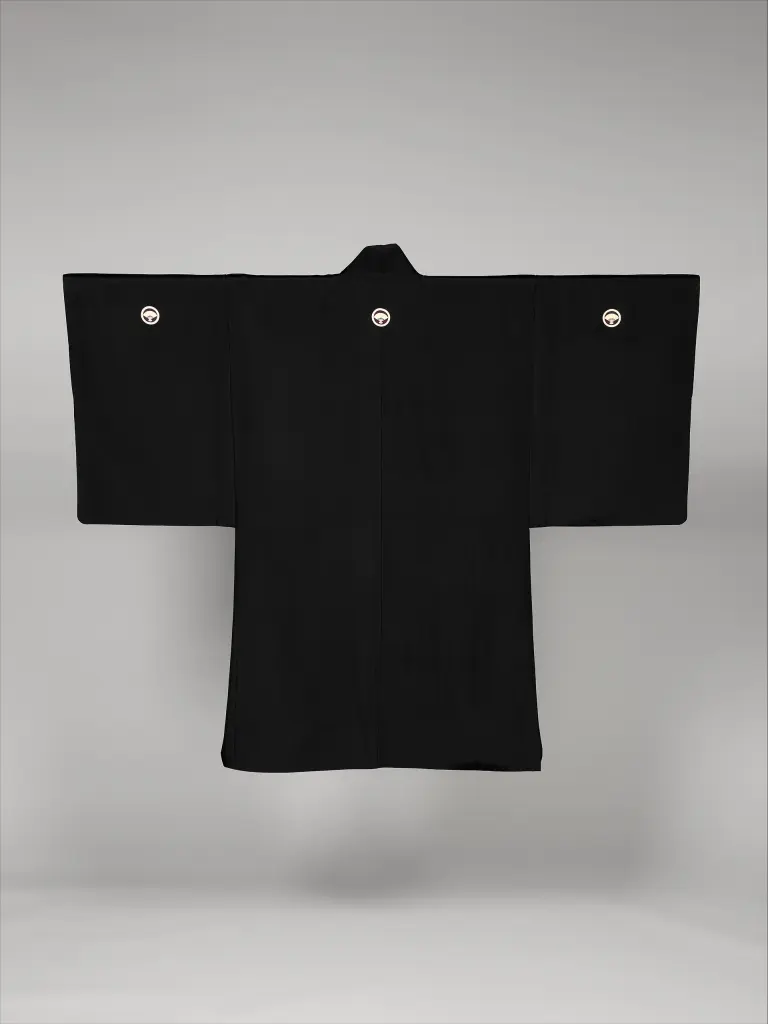
Image: Unknown Japanese maker; digital image by The Metropolitan Museum of Art / Wikimedia Commons · CC0 1.0
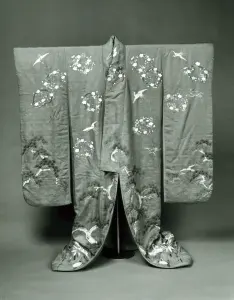
Haori are hip- or thigh-length Japanese jackets worn over kimono. They have a straight, open front, narrow collar bands, and short cords called haori-himo that can connect the fronts without closing them like a robe. Forms developed from early modern men's outerwear and later entered women's fashion, producing a wide range of lengths, textiles, linings, crests, and levels of formality. A black crested men's haori can be part of formal haori-hakama dress, while colourful, woven, or lightly patterned jackets may be everyday, visiting, performance, or contemporary fashion pieces. Haori should not be treated as a generic name for every Japanese coat: hanten, happi, michiyuki, dōfuku, and other garments differ in construction, origin, and use even when English descriptions call them jackets.
Overview
| Japanese name | 羽織 |
|---|---|
| Romanization | Haori |
| Garment type | Open-front jacket worn over kimono |
| Typical length | Hip to thigh, varying by period and style |
| Front fastening | Haori-himo cords |
| Uses | Formal ensembles, visiting dress, fashion, and performance |
Name, construction, and scope
A haori follows kimono-based rectangular construction but is shorter and designed as an outer jacket. Its fronts do not overlap like the fronts of a kimono. Narrow lapel-like collar bands frame the opening, and removable or attached haori-himo may join the fronts across the chest.
Sleeve openings and body proportions must work with the kimono beneath. Length and sleeve form have changed with fashion, gendered convention, and period. English labels such as coat, cardigan, or jacket describe appearance but do not replace the garment's historical category.
Origins and early modern development
Late medieval and early modern warrior outerwear included dōfuku, garments made in prestigious domestic or imported textiles. During the early seventeenth century, related forms developed into sleeved haori and sleeveless jimbari. Haori first circulated primarily in male dress before their wider adoption.
Edo-period urban fashion changed who wore haori and how they were decorated. Courtesans, performers, townspeople, and later women outside licensed districts participated in these shifts, while regulations and local custom could affect acceptable materials and public presentation. No single date marks a universal transition.
Men’s formal haori-hakama
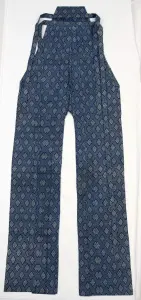
In modern formal menswear, a black montsuki kimono and crested haori may be combined with striped hakama. The number and placement of family crests, textile quality, accessories, and the event help establish formality; a haori alone does not make an outfit ceremonial.
Men's haori often present a restrained exterior while placing pictorial or symbolic designs on the lining. Museum examples include landscapes, historical narratives, technological subjects, and auspicious imagery visible mainly when the jacket is opened or removed.
Women’s haori and fashion
Women's haori became an important fashion category in the modern period, with length, sleeve proportions, pattern density, and seasonal textile changing over time. Meisen silk, shibori, woven designs, dyed pictorial work, and solid colours supported both coordinated ensembles and conspicuous personal style.
Women's haori are commonly worn over kimono for warmth, visual layering, or street presentation, but the precise formality of a particular jacket depends on material, cresting, pattern, and context. Historical rules cannot be reduced to a permanent gender division between plain men's and decorative women's clothing.
Materials, decoration, and linings
Silk is prominent in surviving formal and fashionable haori, while wool, cotton, rayon, synthetics, and blends appear in other periods and uses. Plain weave, damask, ikat, stencil dyeing, hand painting, embroidery, and metallic effects can be used on the exterior or lining.
Because a haori is cut from narrow loom-width panels, decoration may be planned across seams. Linings can preserve a private field of imagery, especially in men's garments whose exteriors are dark or crested. This contrast is a design practice, not proof that all haori conceal pictures.
Formality, season, and coordination
A haori is coordinated with the kimono, obi, hakama where relevant, footwear, and occasion. Lined and unlined constructions, sheer summer weaves, subdued visiting jackets, and crested black formal forms serve different roles.
The jacket is ordinarily worn open or lightly connected by its cords, not wrapped and tied with an obi. It may be removed indoors according to event and custom, but rules vary among homes, tea settings, performances, ceremonies, shops, and contemporary styling communities.
Related jackets and common confusions
Hanten and happi are work, festival, or occupational jacket categories with different histories and construction details. Michiyuki is a coat form commonly associated with an overlapping or shaped front, while dōfuku and jimbari belong to earlier warrior outerwear histories. Labels can overlap in translated catalogues but should not be assumed interchangeable.
Contemporary fashion frequently wears vintage haori with Western clothing, and makers create haori-inspired jackets for global markets. Such use extends the garment's history without making every T-shaped open jacket a traditional haori. Provenance, cut, textile width, collar, sleeves, cords, and maker terminology remain useful evidence.
Preservation, reuse, and contemporary life
Haori survive as heirlooms, rental garments, performance costume, museum textiles, and second-hand fashion. Storage flat or carefully folded, protection from moisture and insects, and textile-specific professional cleaning are important because dyes, metallic thread, silk, and linings age differently.
Reuse may include changing cords, replacing a lining, adjusting sleeve relationships, or styling the jacket outside a complete kimono ensemble. Conservation preserves historical evidence, while wearable reuse makes different compromises; neither approach by itself defines the garment's cultural value.
Sources
- The Metropolitan Museum of Art, Kimono: A Modern History.
- Government of Japan, Japanese Fabrics and the Evolution of the Kimono.
- Rie Mori, Changes in the Term ‘Kimono’ in 1870s–1970s Japan.
- The Metropolitan Museum of Art, Man’s Formal Jacket (Haori).
- The Metropolitan Museum of Art, Recent Acquisitions 2005–2006.
- Government of Japan, What the Kimono and Japanese Accessories Mean to Me.
Last updated:
_MET_DP330782.jpg)