Food Culture
Katsuobushi
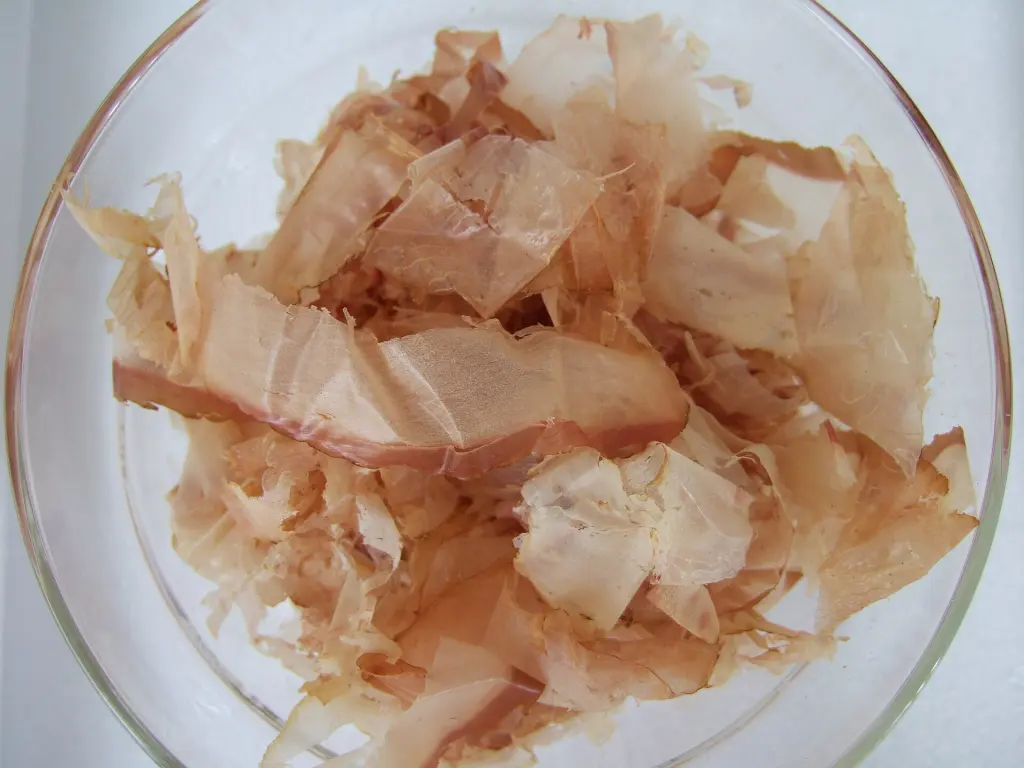
Image: Sakurai Midori / Wikimedia Commons · CC BY-SA 3.0
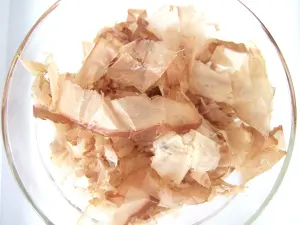
Katsuobushi is a preserved fish product made chiefly from katsuo, the skipjack tuna Katsuwonus pelamis. Fillets are simmered, trimmed, smoked, and dried; some forms are then repeatedly inoculated with beneficial molds and dried again to produce karebushi or honkarebushi. The hardened pieces are shaved into kezuribushi for toppings, seasoning, and dashi. Their inosinate can interact with glutamate from kombu to intensify umami. English “bonito flakes” is a familiar culinary label, but skipjack is a tuna relative rather than the fish called bonito in every biological classification. Nor is every packet of shaved katsuobushi mold-matured: arabushi and karebushi follow different finishing processes.
Overview
| Japanese name | 鰹節 |
|---|---|
| Romanization | Katsuobushi |
| Principal fish | Skipjack tuna, Katsuwonus pelamis |
| Core processes | Cooking, smoking, drying, and optional mold-assisted maturation |
| Common retail form | Shaved flakes called kezuribushi |
| Key taste compound | Inosinate |
Name, species, and scope
The name combines katsuo, skipjack tuna, and bushi or fushi, a term used for processed dried-fish pieces. In English, “dried bonito” and “bonito flakes” are conventional translations, although the principal species is skipjack. Scientific identity, commercial vocabulary, and kitchen English therefore do not align perfectly.
Other fish—including mackerel, tuna, sardine, and flying fish—can be processed into related bushi products. Those ingredients may be blended for noodle stocks or regional dishes, but they are not all katsuobushi in the narrow sense. The broader category kezuribushi refers to shaved processed fish.
Historical development
Dried fish has a long history in the Japanese archipelago, but modern katsuobushi emerged through successive improvements in boiling, smoking, drying, and mold treatment during the early modern period. More durable products could travel farther and helped supply expanding urban markets.
Production knowledge moved among coastal communities, and local accounts name different innovators and dates. Tosa in present-day Kōchi and Makurazaki and Yamakawa in Kagoshima became especially influential centers. A single-inventor story cannot adequately represent this distributed technical history.
Filleting, cooking, and smoking
Fresh skipjack is headed, gutted, and divided into elongated loin sections. The pieces are cooked gently, then bones and damaged tissue are removed. Surface cracks may be repaired with fish paste so that the pieces dry evenly and retain a regular form.
Repeated smoking and resting reduce moisture and add characteristic aroma. Hardwood choices, smoke temperature, chamber design, weather, and the number of cycles differ among producers. The smoked and dried product before mold maturation is commonly called arabushi; shaving its surface produces hadaka-bushi.
Mold maturation and product categories
For karebushi, producers remove smoky surface deposits, inoculate the dried loins with selected molds, allow growth under controlled conditions, and sun-dry them again. Repeating this cycle lowers moisture and changes aroma and texture. Products receiving extended cycles may be called honkarebushi.
These categories matter because the common description “fermented, smoked fish” does not apply equally to every product. Arabushi is smoked and dried without the mold-maturation stage, while karebushi adds that stage. Retail labels and regional grading can use finer distinctions than this basic outline.
Shaving and culinary forms
A hard block was traditionally shaved as needed on a wooden plane-like tool called a kezuriki. Thin hanakatsuo flakes, smaller pieces, thicker cuts, and powder release aroma and flavor at different rates. Modern households more often buy sealed packets, while specialist shops and restaurants may shave blocks freshly.
Flakes appear on chilled tofu, okonomiyaki, takoyaki, greens, rice, and other dishes, while thicker shavings suit some stocks. The moving appearance of thin flakes on hot food comes from rising air and moisture, not from living tissue.
Dashi, inosinate, and synergy
Katsuobushi is rich in inosinate, a nucleotide associated with umami. Brief extraction in hot water produces a clear, aromatic stock. Timing, temperature, shaving thickness, fish condition, and whether the product is arabushi or karebushi influence the result.
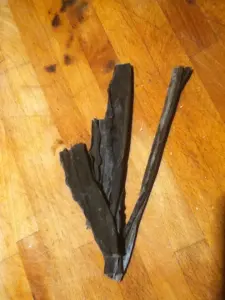
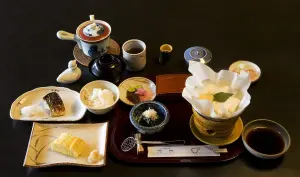
In awase dashi, inosinate from katsuobushi interacts with glutamate from kombu. This sensory synergy is one reason the pairing became foundational in many forms of washoku, but dried sardines, shiitake, and other ingredients support separate dashi traditions.
Regions, industry, and continuity
Makurazaki and Yamakawa in Kagoshima and Tosashimizu and other parts of Kōchi are strongly associated with katsuobushi. Production also exists elsewhere, and raw fish may be caught far from the place of processing. Regional identity can refer to workshops and methods as much as to the fishing ground.
Contemporary producers balance inherited techniques with food-safety controls, mechanical smoking, controlled mold cultures, packaging, and changing fish supply. Resource management and labor are central to continuity. “Traditional” describes transmitted knowledge, not the absence of modern measurement or regulation.
Sources
- Ministry of Agriculture, Forestry and Fisheries, Dashi & Umami.
- Kumiko Ninomiya, Food Science of Dashi and Umami Taste.
- Kenzo Kurihara, Glutamate: From Discovery as a Food Flavor to Role as a Basic Taste.
- Ministry of Agriculture, Forestry and Fisheries, Dried Fish Products in Traditional Foods in Japan.
- Ministry of Agriculture, Forestry and Fisheries, Dashi and Japanese Cuisine Guide.
Last updated: