Food Culture
Kombu
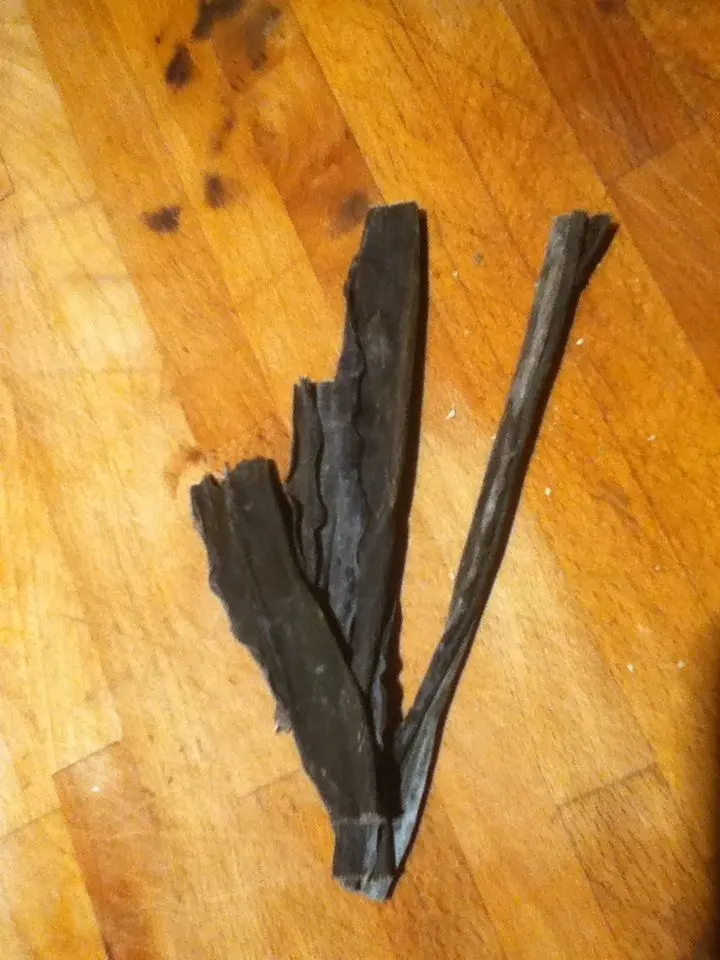
Image: Selinarif / Wikimedia Commons · CC BY-SA 3.0
Kombu is a group of edible brown seaweeds—principally kelps in the genus Saccharina—processed and used in Japanese cooking. Most commercial Japanese kombu comes from waters around Hokkaido, where species, harvesting grounds, drying, and grading distinguish products such as ma-kombu, Rishiri kombu, Rausu kombu, and Hidaka kombu. Dried kombu is a major source of glutamate and is especially important in dashi, often paired with katsuobushi for complementary taste compounds. It is also simmered, seasoned, shaved, wrapped around foods, and used in New Year dishes. Kombu should not be treated as a synonym for every edible seaweed or even every kelp: the Japanese category joins botanical species to particular processing, trade, and culinary practices.
Overview
| Japanese name | 昆布 or こんぶ |
|---|---|
| Romanization | Konbu; commonly written kombu in English |
| Biological group | Edible brown seaweeds, mainly Saccharina kelps |
| Principal production area | Cold northern waters, especially around Hokkaido |
| Major culinary roles | Dashi, simmered foods, wrapped dishes, and seasoned products |
| Named commercial types | Ma-kombu, Rishiri kombu, Rausu kombu, and Hidaka kombu |
Name and scope
The Japanese word is normally written 昆布 and pronounced konbu. The spelling kombu is entrenched in English and on international food labels, so both romanizations are encountered. Historical names and regional product labels do not always map neatly onto modern scientific taxonomy.
Kombu belongs to the brown algae, not to one undifferentiated category of seaweed. Nori, wakame, hijiki, and aonori are different ingredients with different species, textures, preparation, and uses. Even among kelps, only selected species and processed forms are sold under particular kombu names.
Species and production regions
Commercial distinctions combine species and place. Ma-kombu is associated with southern Hokkaido; Rishiri kombu with waters around Rishiri and Rebun and parts of northern Hokkaido; Rausu kombu with the Shiretoko area; and Hidaka, or Mitsuishi, kombu with the Pacific coast of Hidaka. These names can imply different thickness, aroma, broth color, and cooking behavior.
Wild harvest remains important, while cultivation helps stabilize supply. Ocean temperature, currents, nutrients, storms, coastal ecology, and labor all affect a harvest. A regional name therefore represents a marine environment and production system, not merely a flavor brand.
History and trade routes
Kombu moved from northern production areas into court, temple, and urban food cultures over many centuries. Improved shipping during the early modern period carried Hokkaido products through ports on the Sea of Japan and onward to Osaka and other markets.
This network is often called the Kombu Road and overlapped with the routes of Kitamaebune merchant ships. It helped shape regional uses in Kansai, Hokuriku, Kyushu, and the Ryukyu Islands. The resulting foodways were not simply a one-way spread from a national center: northern harvesters, merchants, processors, and regional cooks all changed the ingredient's meanings and uses.
Harvesting, processing, and grades
Harvested kelp is commonly washed or cleaned and dried so it can be stored and transported. Producers sort sheets by origin, maturity, shape, thickness, damage, and intended use. Some kombu is matured under controlled conditions, while other material is cut, shredded, shaved, salted, or seasoned into separate products.
Names such as dashi kombu, tororo kombu, oboro kombu, shio-kombu, and tsukudani describe uses or further processing rather than one botanical variety. Quality rankings also vary among producing districts and sellers, so a grade on one label is not automatically comparable with another system.
Dashi and glutamate
Kombu contains free glutamate, one of the principal compounds associated with umami. In kombu dashi, water extracts soluble compounds without requiring the seaweed to be eaten. Temperature, time, water, variety, age, and quantity affect the resulting stock.
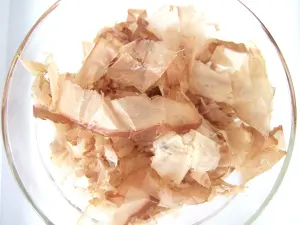
Combining kombu with katsuobushi joins glutamate with inosinate, producing a stronger taste response than either component alone. That synergy explains an important dashi technique, but kombu-only stocks remain significant in Buddhist cooking, vegetarian practice, and recipes seeking a different aroma or clarity.
Foods, rituals, and symbolism
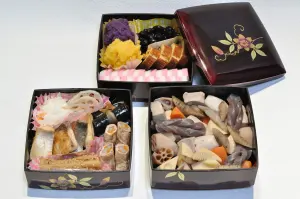
Kombu can be simmered with beans, fish, or vegetables; tied into knots for oden; rolled around herring or other fillings; shaved into fine sheets; or cooked down as tsukudani. Kobumaki is one of the foods associated with Osechi Ryōri and regional New Year tables.
The association of kobu with yorokobu, “to rejoice,” supports auspicious wordplay in celebratory settings. Such symbolism varies by period, region, and occasion. It does not mean that every kombu dish is ceremonial or that one modern osechi arrangement represents all households.
Contemporary production and use
Kombu is sold as whole dried sheets, pre-cut pieces, powders, extracts, snacks, and prepared foods. Restaurant and household cooks choose products for stock, tenderness, intensity, appearance, price, and provenance. Instant dashi and industrial extracts have expanded access without replacing regional whole-kombu markets.
Climate shifts, marine conditions, aging coastal workforces, and market changes place pressure on production. Consumers should follow package instructions for storage and preparation, since moisture, surface condition, and shelf life vary. Culinary tradition does not make every seaweed product interchangeable or exempt it from ordinary food-safety guidance.
Sources
- Ministry of Agriculture, Forestry and Fisheries, Dashi & Umami.
- Kumiko Ninomiya, Food Science of Dashi and Umami Taste.
- Kenzo Kurihara, Glutamate: From Discovery as a Food Flavor to Role as a Basic Taste.
- Ministry of Agriculture, Forestry and Fisheries, Seaweed Products in Traditional Foods in Japan.
- Ministry of Agriculture, Forestry and Fisheries, Kobumaki: Hokkaido.
Last updated: