Judo
Gokyō no Waza
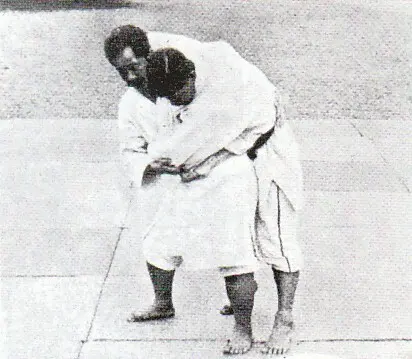
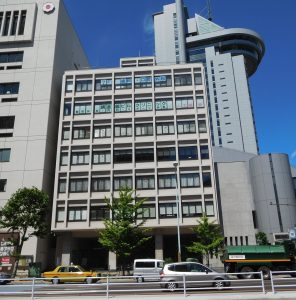
Image: Unknown photographer; published by Nihon Tosho Center / Wikimedia Commons · Public domain in Japan and the United States
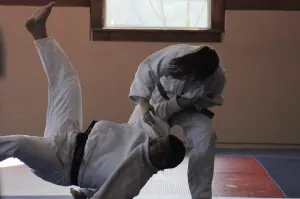
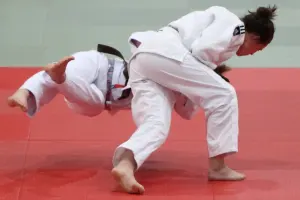
Gokyō no Waza (五教の技, “techniques of the five teachings”) is the Kodokan Judo syllabus that arranges 40 throwing techniques into five groups of eight. The Kodokan introduced an earlier 42-throw system in 1895 and issued the present 40-throw revision in 1920. Gokyō matters because it remains a widely used framework for organising the study of Nage-waza, but it is not a catalogue of every Judo technique. The modern Kodokan list contains 68 throwing names, including techniques restored or newly named after the Gokyō was fixed. Its five groups should therefore be understood as a historical teaching sequence within the broader Kodokan syllabus, not as the definition of Judo as a whole.
Overview
| Japanese | 五教の技 |
|---|---|
| Reading | ごきょうのわざ |
| Romanisation | Gokyō no Waza; common search form: Gokyo no Waza |
| Meaning | Techniques of the five teachings |
| Martial art | Judo |
| Classification | Teaching syllabus of nage-waza |
| Current structure | Five groups of eight throws; 40 total |
| Organisation | Kodokan Judo Institute |
Meaning of Gokyō no Waza
Go (五) means five, kyō (教) means teaching or instruction, and waza (技) means technique. The expression identifies five instructional groups. English sources sometimes shorten it to “the Gokyo,” while Japanese Kodokan materials use 五教の技.
The groups are conventionally named Dai-ikkyō through Dai-gokyō. The numbering describes position in the syllabus, not five competitive divisions and not five Kodokan classifications. The 40 throws still belong individually to Te-waza, Koshi-waza, Ashi-waza, ma-sutemi-waza, or yoko-sutemi-waza according to their technical classification.
Origins of the Gokyō
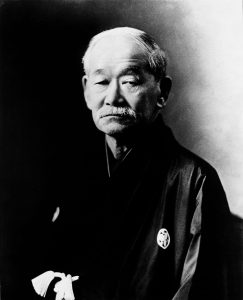
The Kodokan describes the Gokyō as a guide to stages of instruction in throwing technique. It was developed during the early institutional growth of Kodokan Judo, when Jigorō Kanō and senior practitioners were systematising names, methods, and teaching order.
The system was not a claim that the selected throws were the only effective or legitimate nage-waza. Kodokan historical material explicitly distinguishes the Gokyō from throws outside it, including names later recognised through the Technical Research Department.
The 1895 system
In 1895, the Kodokan established an earlier Gokyō containing 42 throws. Its groups were uneven: the first three contained seven techniques each, the fourth ten, and the fifth eleven after tsurikomi-goshi was added near the end of the Meiji period.
The old Gokyō is documented separately on the Kodokan's official technique-name page. It should not be silently substituted for the revised list used today. Some names removed from the teaching sequence remained known Kodokan techniques and were later restored to the official catalogue.
The 1920 revision
The Kodokan chronology records a revision of the Gokyō in 1920. The Institute's technical introduction states that eight throws were removed from the 1895 selection and six added, producing five equal groups of eight. The resulting 40-throw sequence has not subsequently been restructured.
A small dating inconsistency appears in some later Kodokan prose, which has described the 40-technique establishment as 1922. The dedicated Kodokan chronology, technique list, and technical introduction all give 1920, and that is the date used here. The disagreement concerns dating, not the composition of the present 40 techniques.
The five groups
The five groups mix standing and sacrifice throws. They do not reproduce the Kodokan's anatomical classification and should not be read as a simple ladder from harmless to dangerous or from mechanically simple to complex. Their historical function is pedagogical ordering.
Dai-ikkyō
The first group contains eight throws.
| Technique | Japanese |
|---|---|
| De-ashi-harai | 出足払 |
| Hiza-guruma | 膝車 |
| Sasae-tsurikomi-ashi | 支釣込足 |
| Uki-goshi | 浮腰 |
| O-soto-gari | 大外刈 |
| O-goshi | 大腰 |
| O-uchi-gari | 大内刈 |
| Seoi-nage | 背負投 |
Dai-nikyō
The second group contains eight throws.
| Technique | Japanese |
|---|---|
| Ko-soto-gari | 小外刈 |
| Ko-uchi-gari | 小内刈 |
| Koshi-guruma | 腰車 |
| Tsurikomi-goshi | 釣込腰 |
| Okuri-ashi-harai | 送足払 |
| Tai-otoshi | 体落 |
| Harai-goshi | 払腰 |
| Uchi-mata | 内股 |
Dai-sankyō
The third group contains eight throws.
| Technique | Japanese |
|---|---|
| Ko-soto-gake | 小外掛 |
| Tsuri-goshi | 釣腰 |
| Yoko-otoshi | 横落 |
| Ashi-guruma | 足車 |
| Hane-goshi | 跳腰 |
| Harai-tsurikomi-ashi | 払釣込足 |
| Tomoe-nage | 巴投 |
| Kata-guruma | 肩車 |
Dai-yonkyō
The fourth group contains eight throws.
| Technique | Japanese |
|---|---|
| Sumi-gaeshi | 隅返 |
| Tani-otoshi | 谷落 |
| Hane-makikomi | 跳巻込 |
| Sukui-nage | 掬投 |
| Utsuri-goshi | 移腰 |
| O-guruma | 大車 |
| Soto-makikomi | 外巻込 |
| Uki-otoshi | 浮落 |
Dai-gokyō
The fifth group contains eight throws.
| Technique | Japanese |
|---|---|
| O-soto-guruma | 大外車 |
| Uki-waza | 浮技 |
| Yoko-wakare | 横分 |
| Yoko-guruma | 横車 |
| Ushiro-goshi | 後腰 |
| Ura-nage | 裏投 |
| Sumi-otoshi | 隅落 |
| Yoko-gake | 横掛 |
Gokyō and the wider Kodokan syllabus
The modern Kodokan recognises 68 nage-waza. The Gokyō accounts for 40 of them. Eight throws removed from the old Gokyō are traditionally grouped as Habukareta Waza, and additional technique names were recognised in 1982, 1997, and 2017. The exact modern catalogue should therefore be checked through Judo Techniques, not inferred from the five groups.
The IJF technique site also separates the 1895 formation, the 40-technique system used from 1920, and later additions. IJF competition legality is a further question: some Gokyō names, such as kata-guruma and sukui-nage, remain in the Kodokan syllabus even though common standing leg-grab forms are restricted under current IJF rules.
How the Gokyō is used today
Dojo, grading systems, textbooks, and national organisations use the Gokyō in different ways. It can provide a shared vocabulary and a manageable progression, but the Kodokan list does not prescribe one universal timetable for every country, age group, or institution.
In practice, throws are also studied through kata, uchikomi, nagekomi, and randori. The Gokyō gives order to names and representative principles; live practice requires adaptation to stance, movement, grip, body type, and safety.
Sources
- Kodokan Judo Institute, Judo Technique Names.
- Kodokan Judo Institute, Introduction to the Kodokan throwing-technique materials.
- Kodokan Judo Institute, Chronology.
- International Judo Federation, Judo Techniques.
- Ministry of Education, Culture, Sports, Science and Technology, Judo teaching materials.
- Akiyama Yutaka, historical study of the Gokyo no Waza, Japan Journal of Budo.
- International Judo Federation, Sport and Organisation Rules, version 14 August 2026.
- International Judo Federation, Rules documents.
- All Japan Judo Federation, Refereeing regulations and rules.
- All Japan Judo Federation, Application of the 2025–2028 IJF rules from 1 April 2026.
- All Japan Judo Federation, Handling of yuko at non-AJJF-hosted competitions, 21 April 2026.
- All Japan Judo Federation, 2025–2028 IJF rule changes.
- Murayama Terushi, Changes in the refereeing rules of Judo and Kendo, Japan Journal of Budo.
Last updated: