Crafts & Skills
Japanese Textile Arts
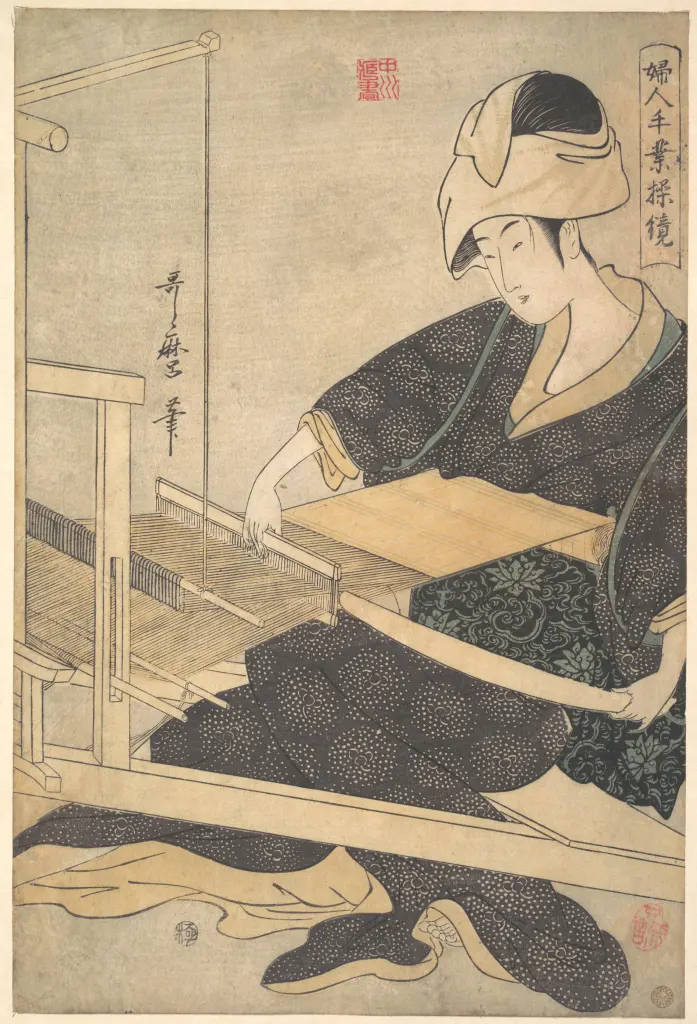
Image: Kitagawa Utamaro / Wikimedia Commons; The Metropolitan Museum of Art · CC0 1.0
Japanese textile arts comprise many distinct ways of making and decorating cloth rather than one national style. Silk, hemp, ramie, cotton, wool, and plant fibres have been spun or reeled into yarn, woven on different looms, dyed before or after weaving, embroidered, quilted, and assembled into clothing and furnishings. Techniques such as Shibori, Yūzen dyeing, Nishijin-ori, Kasuri, and Sashiko solve different technical problems and belong to different regional and social histories. Court dress, Buddhist textiles, warrior and townspeople’s clothing, rural workwear, theatre costume, kimono, obi, and modern design all shaped the field. Accurate identification begins with fibre, yarn, structure, dye process, place, date, and use—not with a presumed timeless “Japanese pattern.”
Overview
| Japanese term | Nihon no senshoku (日本の染織) |
|---|---|
| Core processes | Fibre preparation, weaving, dyeing, and stitching |
| Major fibres | Silk, hemp, ramie, cotton, wool, and bast fibres |
| Representative forms | Kimono cloth, obi, costume, workwear, and furnishings |
| Production scale | Household work, specialist workshops, and industry |
| Key distinction | Woven structure and surface decoration are not the same process |
Scope and vocabulary
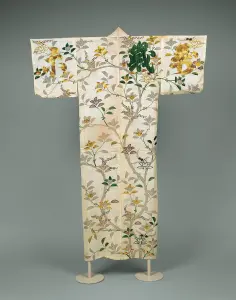
Japanese senshoku joins the ideas of dyeing and weaving, while English “textile arts” can also include spinning, embroidery, quilting, tailoring, and conservation. Neither label identifies a single tradition. A textile may combine several processes—for example, woven figured silk may then be resist-dyed, painted, embroidered, or embellished with metallic material. Museum descriptions therefore separate fibre, weave, dye, stitch, garment form, and provenance whenever evidence permits.
Fibres and yarns
Silk supported elite clothing, brocades, theatrical costume, and fine obi, but Japanese textile history is not exclusively a history of silk. Hemp and ramie supplied cloth before cotton became widely available, and cotton transformed workwear and regional dyeing from the early modern period. Wool and synthetic fibres entered later production. The preparation, twist, thickness, and irregularity of yarn affect sheen, warmth, strength, and the character of the finished surface.
Weaving and structure
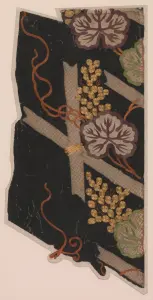
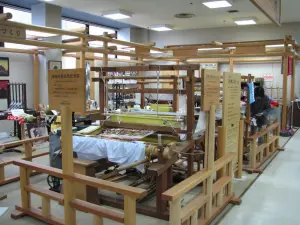
Weaving interlaces longitudinal warp and transverse weft yarns. Plain, twill, satin, gauze, tapestry, and supplementary-pattern structures create different surfaces and functions. In pre-dyed cloth, yarn colour is planned before weaving; in post-dyed cloth, colour is applied to the woven fabric. Nishijin-ori is known for specialised figured weaving, while Kasuri aligns previously resist-dyed yarns so that motifs emerge on the loom.
Dyeing and resist
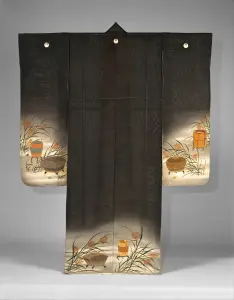
Dyers obtain pattern by controlling where colour reaches fibre. Yarn may be tied before weaving, cloth may be bound or stitched as in Shibori, and rice paste may protect drawn or stencilled lines as in several post-dyeing traditions. Yūzen combines paste-resist outlines with pictorial colour. Indigo is prominent in surviving rural textiles, but safflower, madder, bark, imported dyestuffs, mineral pigments, and synthetic dyes also expanded the palette.
Embroidery, quilting, and construction
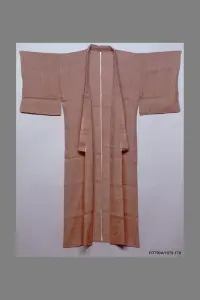
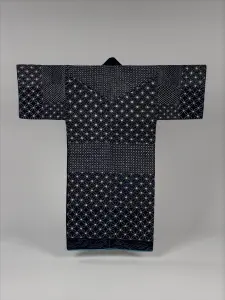
Needlework can add images, texture, metallic thread, reinforcement, or warmth. Sashiko uses running stitches through cloth layers and developed practical as well as decorative forms. Garment construction is another stage: the rectangular panels of a kimono can display cloth with relatively little cutting, while theatre and ritual costume may require different structures, linings, or methods of supporting heavy woven decoration.
Regions and production networks
Named textiles generally refer to a production area, technique, regulated designation, or combination of these—not simply to a motif. Kyoto, Okinawa, Amami, Kurume, Yūki, Echigo, and many other centres developed particular materials and systems. Work could be distributed among designers, stencil cutters, dyers, yarn preparers, weavers, finishers, merchants, and tailors. The romantic image of one artisan making an entire object often obscures this division of labour.
History, industry, and exchange
Textile knowledge moved through East Asia, the Ryukyu Islands, trade networks, migration, and state institutions. Early modern urban markets encouraged fashion and specialist workshops. In the Meiji period, mechanised reeling, chemical dyes, Jacquard systems, factories, export production, and design education altered both scale and appearance. Handwork and industry have continued to interact; a tradition may use old manual skills alongside imported materials, power looms, digital design, or modern retail.
Ryukyu textiles and provenance
A regional label does not establish who wore a garment. The Japan Folk Crafts Museum’s Okinawan holdings include textiles acquired through prewar second-hand markets as well as clothing associated with royalty and senior elites. Its research for the 2026 exhibition Textiles of the Ryukyu Kingdom traced a group of donations from Mizutani Ryōichi to the former collection of Goeku Chōshō, whose family was connected to the Shō royal house.
The exhibited garments also distinguish fibre from technique: examples include banana fibre combined with silk, ramie cloth with warp-and-weft kasuri, and cotton garments decorated with bingata. These examples are evidence of material diversity, not a single fabric called “Ryukyu textile.” Some ownership attributions remain tentative in the museum’s catalogue descriptions and should retain that qualification. Reading fibre, pattern-making process, use, and documented ownership together gives a fuller account than treating every surviving garment as anonymous everyday folk dress.
Use, conservation, and interpretation
Textiles record wear, repair, status, labour, climate, commerce, and changing taste. Light, humidity, insects, strain, dye instability, and earlier alterations complicate preservation, so museums often limit display. Contemporary makers sustain regional skills through kimono, fashion, interiors, restoration, workshops, and artistic practice. Responsible interpretation identifies whose clothing or labour is represented and avoids reducing every textile to luxury, minimalism, or a single aesthetic ideal.
Sources
Last updated: